

 Apple Podcasts

 Spotify

 YouTube

 Amazon Music

 Castbox

 RSS Feed

 Overcast

 PocketCasts
Bajune Tobeta: Ambient Piano Backed by Sleep Science

The Tokyo composer and acoustic researcher joins us through an interpreter to discuss ‘Anechoic,’ his EP in the lineage of Ryuichi Sakamoto’s late work, and the ambient music for airlines and resorts that he backs with medical evidence.
This week we’re putting The Tonearm’s needle on Tokyo composer Bajune Tobeta.
Bajune Tobeta met Ryuichi Sakamoto through his audition radio show and has since written practical, environmental, and his own artistic music.
We talk about why distance between artists leaves room for imagination, music made for people who aren’t listening, and the Sergio Mendes records his father played at home. It’s also our first conversation here through an interpreter, Miki Hirai.
(The musical excerpts heard in the interview are “After the Silence” with Christian Fennesz, “Anechoic,” “Gymnopedie (AOKI takamasa Remix),” and “Satie’s Dream” from Anechoic, and “Agua de Beber” and Febian Reza Pane’s “The Look of Love” from Sergio Mendes Tribute)
Dig Deeper
• Visit Bajune Tobeta at bajune.com
• Purchase Anechoic from Bandcamp or Qobuz and listen on your streaming platform of choice.
• Purchase Sergio Mendes Tribute from Bandcamp or Qobuz
• CROIX Co., Ltd., his functional-music company
Ryuichi Sakamoto:
• async
• 12
Collaborators:
• Fennesz and Bajune Tobeta, “After the Silence”
• AOKI takamasa (commmons)
Sergio Mendes:
• Sergio Mendes & Brasil ’66, Herb Alpert Presents Sergio Mendes & Brasil ’66
• Sergio Mendes & Brasil ’66, Look Around
Books and Records Discussed:
• Haruki Murakami, Hard-Boiled Wonderland and the End of the World
• Max Richter, Sleep
From The Tonearm:
• Midori Hirano’s Hushed Score for an Icelandic Witch Tale
• Musicians at War — How Bowie and Sakamoto Elevated ‘Merry Christmas, Mr. Lawrence’
(This transcript has been lightly edited for clarity.)
Bajune Tobeta answered in Japanese, and Miki Hirai interpreted; his answers below are her English interpretation, attributed to him, and the Japanese is not transcribed.
Lawrence Peryer: Before we talk specifically about the new record, I wanted to ask about the first time you experienced Sakamoto or Yellow Magic Orchestra as a listener and a fan. What was your first experience with the music?
Bajune Tobeta: Well, thanks for that question. I think it was in junior high or high school, probably, that I first heard the album by YMO, and it was this new genre of techno music that had just started at that time. So I was shocked, electrified, and it resonated so deeply with me. And as I listened to more and more of their music, among the three of YMO, Sakamoto-san especially had something that just grabbed me. It's his methodology, it's his style, it's the way he creates his music pieces that really resonated with me.
Lawrence: And tell me how you came to submit your demo to Radio Sakamoto, and what happened after you sent it?
Bajune: Sakamoto-san at the time had Radio Sakamoto, which was actually an audition program. So people would send in their demos, and then he would evaluate them and discover new talent. That's why I applied, and he saw something in me and gave me a very good evaluation. So the radio audition was the very first time I encountered Sakamoto-san in real life.
And afterward, of course, I was still a nobody. It was just the audition. But I, a nobody, asked him if he would appear on my album, and I featured him.
Lawrence: That's incredible. Having that type of radio program, where people could submit their music and have it evaluated that way, what do you think that says about his spirit and his interest in music and musicians?
Bajune: Well, I took part in this program, but before this program, he already had another program that was about auditioning and finding new talent. So from long ago, he was really interested in looking at different new talent and discovering it himself. He was actually quite active in looking for and seeking out new musicians, younger musicians. He really had that antenna up all the time. And to him, I think it wasn't about whether you were established or no one, or if you had a long career. What he looked for was true raw talent, the real essence, and the genuine music of that person. So I think that was what he embodied.
Lawrence: That's a beautiful generosity of artistic spirit. My understanding is that your work Anechoic is placed between Sakamoto's async and 12. I'm wondering what those two records mean to you, and how your record fits with them or how it is in dialogue with them.
Bajune: Well, there are several pieces to this. The first one is that when we recorded Anechoic, you would find a piece called "After the Silence," and I worked and collaborated with Fennesz on this. And as the title suggests, it is after the silence, when Sakamoto-san was no longer with us, and it was between Fennesz and me to think about how we could continue to foster and nurture, or weave in, the music he has left with us. So that's the first part.
Lawrence: And the others?
Bajune: Yes. Well, the second point is, again, "After the Silence" was recorded based on what I've explained earlier. But I myself, having this special bond with Sakamoto-san—that I'm from his audition program and that I asked him to be featured on my album—I knew that I shouldn't be somebody who just reproduces Sakamoto's music. That's not what he would want, and that's not what I would want. It's more about having a different kind of essence and expression from him and being true to that.
So, as you mentioned with Anechoic, you mentioned the two works by Sakamoto. Of course, there's inspiration, but it's not like I'm trying to incorporate them or be very mindful or design something to bring that into my own music. It's just that what I've learned from him is expressed through the new concepts and themes and the way I express my music. So there was no mind to look into the commonality or the inspiration being reflected in my work.
Lawrence: Along similar lines, I'm curious, then, how does the work of Murakami also influence or inform your work? I think my question is really based on your answer just now, because it sounds more like an environment is created, maybe, or a sentiment, or there's something more of an essence in the air. It's not literal. It's more evocative, maybe. It doesn't sound like you're taking directly. You just have it in your spirit, maybe, a channeling. I struggle to articulate it, but I'm curious how the works of others being in your environment impact you.
Bajune: I think regarding Haruki Murakami, the Japanese author, his work Hard-Boiled Wonderland and the End of the World is actually something I did elaborate on in Anechoic. It's about Tokyo, a very noisy city, and then there's this other world, which is surrounded by a wall, a very quiet town, and they alternate between the two locations. This structure was something that left an impression on me, and I tried to interpret it in my own way: it's about one person who experiences this outer world, which is very noisy, and the one who goes deep into the consciousness of one's mind, and they alternate between the two.
So the walled town is very conducive to the anechoic room. It's also a topic for me. And so I think it was about this going back and forth between reality and the silence. And you mentioned the word—it was almost like an essence in the air. I don't know if it's the right way to express this, but the conceptual part was what I got as inspiration from Murakami, as a material or a topic that I could express.
So yes, there is that inspiration aspect of it. And regarding Sakamoto's two works you mentioned, that was more of a sound inspiration, and it's nothing direct. It's almost like the sound is like an air that I am also weaving together, [weaving] it into my own atmosphere. So in Murakami's case, it was more of a direct topic that I used to really express my own topic in the form of Anechoic. And in Sakamoto-san's version, it's more about the sound that was kind of in the ambience, which I was kind of breathing through. So it's not really a dichotomy of something that's very theoretical and non-rational. It's just something that was observed inside of me, and how I consumed that and interpreted that and created my own expression through that.
Lawrence: A few weeks ago, I spoke with Midori Hirano. She talked about ma and the sense of space in her work, and that conversation was with me as I was preparing for my time with you. It seems as though what you just said is bringing us near to the idea of ma, at least in part, in the duality of, especially, the Murakami influence. Do you recognize that or accept that? Where does that ma live in your music, or would you use a different term for what you do?
Bajune: It's very interesting, because I don't usually really think about the word ma when I'm doing everything, but I know that it's deeply seated in the Japanese spirit anyway. So even though I might not be conscious of it, I know I place great importance on the concept of ma, because it's the ambience, the sound of the environment. For example, with the sound of the city I was talking about, I find myself searching for the ma even when I'm trying to create that music, the sound of the city or the town.
Lawrence: Oh, that's very interesting. I'm curious about some of the methodology in this music. Can you tell me a little bit about your way of working with Christian? Just how that worked: the geographies, the separation in space and time. Were those just facts of the working environment, or was there some philosophical resonance in the fact that you were separate and had to communicate and work over long distances? I think maybe my question is, did distance play a role in this?
Bajune: Well, regarding working with Christian Fennesz, and the same with Sakamoto-san, and also with Arto Lindsay, I collaborate a lot with overseas artists, and there's always going to be a distance. But that really has never been a crucial point, because we're always sharing the source of the music, and then we play—I call it play catch—because we engage in dialogue between what their ideas are and what my ideas are. So the distance really has no meaning, because the sound and the music exist, and through that music and sound, we communicate. Distance is never an impediment. So, per your question, do I tap into the distance for some reason? Actually, no, because there's no conscious bias or anything that plays a part in this playing catch of ideas and sound with my collaborator. So I think we live in a very good era, where technology actually helps us overcome the distance without our even being aware of it.
Lawrence: Just one more question on that point. You said that the distance isn't necessarily a negative or a detriment. Does that imply that it's just neutral, or is it in some regards a positive?
Bajune: Yes, that's a very interesting point you touched upon, because I know for sure distance is not a negative, and I think your question is, yes, maybe there's something that is born out of distance playing a positive role. I don't know how to express this very well, but I know it's not negative. But in the case of the music and the sound we're trying to create, as we were discussing earlier, the ambience, the air we create, is so important.
And if you meet directly, you might engage in a jam session, resonate with each other, and create something new. But at the same time, without the distance, you can't really have a direct contact to create something direct. And although there's no aspect of something being born out of the direct contact, by having this certain level of distance, I think it plays a role, or it gives room to intelligence and imagination. By not having the distance, this is all about subtraction. You minus something, and through that subtraction you're able to create something. That, I think, is the underlying creative source, maybe, that you're trying to allude to.
Lawrence: On that topic of collaboration and methods of collaboration, I'm curious about your experience of handing your work over to AOKI takamasa. There's a certain selflessness in turning the music over for someone else to work on: a bit of, I would say, openness, fearlessness. I wonder what it's like to get it back when it's been worked on by someone else, just what the range of experiences is that you have around that. You hear what someone else did with your creation. You hear what they contributed. You hear maybe what they took out. Like you said, maybe they subtracted. I'm very curious about your lived experience of that type of collaboration.
Bajune: Yes. Well, I've had the privilege of collaborating with many top artists, and that has led me to think that when you ask somebody to work on your music, there's no fear involved in it. It's more about excitement and expectations of how it will turn out. And as you pointed out, it's not really about being humble or being open. It's more that you have to have confidence in the collaborator, and trust, or else the collaboration will never work. Of course, it's my own sound, and I might be very adamant, or I might have a sense of having consistency in my music and sound.
So I don't really hand over everything to Aoki-san. Even in Aoki-san's case, he will always come to me with a returned proposal, like, "Is this the right kind of image you had? How about this sound?" We check in with each other, so it is truly a communication, sometimes with words and sometimes with sound. And with Christian Fennesz, again, I say the word: play catch with sound. It was a back and forth between the two of us. And you can only do this based on respect, trust, and confidence. So it was about playing catch with sometimes words, sometimes sound, and it's never about having somebody offload everything to one artist in the process.
Lawrence: You've used that phrase "playing catch," and I'm curious about the element of play, and specifically, is it fun? Is this collaboration fun? I know it's real work, but playing catch conjures up smiles and laughter and skill-building, even. I'm just curious about your use of the term.
Bajune: Yes, because only when artists have confidence and trust in each other does a collaboration truly work. And I say play catch, or catch ball, because when you play catch with somebody you trust, it's fun. When you play catch with somebody you don't trust, it's not fun. It's about, "Oh, no, that's not the kind of sound I wanted. Is this really that person's sensitivity? Why does it become this sound?" You know how it doesn't become fun easily. So at the very foundation is that trust and confidence in each other, and that's the only way you could play catch with your own sound. And I think it's about building the music based on [accord] as well, how that functions. Because there's trust, you're able to build that [accord] together with your collaboration partner.
Lawrence: It's very beautiful, a beautiful manifestation of catch ball and playing catch. Beautiful use of it. I wanted to ask about the piece "Satie's Dream." I am curious about Satie's pursuit of, or interest in, furniture music: music that people would not sit and listen to, that would just be on in the background, or maybe even be utilitarian. I can't help but think of these concepts in relation to some of the commercial or environmental music you've created for the airlines, the resorts. I'm just curious if you could tell me a little bit about Satie and his thinking about music and sound, and how that relates to your work, if at all.
Bajune: Yes, I know that Satie positioned his music as furniture music, because he's not screaming out to have people listen to his sounds. It's as if there is a carpet or a chair in the room. He doesn't want people to really notice the sound, and that's what he promoted in the 1920s. That Satie style is the beginning of environmental music, which is now ambient music. He wholeheartedly denied music that needs to be consciously appreciated. And I've learned a lot from his ambient music, his philosophy, style, and sound. So in that sense, yes, that's been the inspiration.
Lawrence: When you're building the environmental music that you're commissioned to build, like the landing and takeoff music or the resort room music, is your process or approach different from when you're making your own music? How do you know when it's working aesthetically?
Bajune: Yeah, I think the ways we enter into making and building these musics are completely different. Music for landing or takeoff, or for relaxation, is all functional music, and the objective here is maybe to sleep, to relax, to feel reassured and safe when there's a landing or takeoff. And the premise here is that people will not listen to or hear the music and how it functions. The objective is to sleep, to relax, to feel relieved, and all of that is based on having people not pay any attention to the sound they are hearing, and that is a big difference. If it were my own music that I create for myself, the premise is that I want people to be listening to my music. So how we enter is completely different in the two: functional music, environmental music, and my own music.
Lawrence: Speaking of different kinds of music, or different uses and purposes of music, I'm curious about how Anechoic and the Sergio Mendes project sit next to each other. They both come from the same person, you, and I wonder what those two projects represent about you: different parts of your musical life, your upbringing. Just talk to me a little bit about where they are different and maybe where they're similar.
Bajune: Yes, the Sergio Mendes tribute: it was simply that I wanted to pay homage and tribute to the great artist. That was the starting point. And why Sergio Mendes? That comes from a very private part of myself, because when I was very young, maybe even four or five, I was listening to different music, because my father loved Latin music. There were lots of bossa nova and other albums lying around the house, and I listened to Sergio's Herb Alpert Presents Sergio Mendes & Brasil '66 album, as well as the Look Around album. Even as a child, I placed the needle on the record, and I remember the shock and how it felt, and that memory is so cherished and important because it directly impacted me musically.
And later on, as I grew up, I really recognized what a great artist he was, of course. But I think that very first record experience gave me the way to foster bossa nova and Brazilian music in me as one element of my music, and it's just a way to show my appreciation and pay tribute to him. When Mr. Sakamoto listened to my audition demo, he said, "How could a Japanese create such a true bossa nova and Brazilian sound in Japan?" That was the first comment he made, and that was also another background that led me here.
Now, as for Anechoic, of course, as I mentioned earlier, after the passing of Sakamoto-san there was a silence, and after the silence, Fennesz and I discussed how we could create and weave in his music. Another aspect was a theme we discussed, about Murakami-san, that has always been nurturing in my own mind. So it came to be by essence, naturally, because these were two elements of a beacon in my life, and this year they led me to express that in two of my pieces, or works.
Lawrence: It sounds a bit like, with both of these records, you're maybe processing or contemplating very personal experiences with both of these musics. I'm curious where that leads you now. It almost is a reckoning with things from your past, or parts of your development. So where does that leave you today? How do you see the path forward in your music?
Bajune: Yes, well, I think it goes back to the discussion about functional music, music for the purpose of sleeping and relaxation, the music with a premise that it will not be heard. I want to really extend from Satie's furniture music and create ambient music. I'd like to continue to work on this. And then there's the other one, which is on the premise of being heard, and these two seem to be completely opposite, I'm sure. But inside of myself, I know that there's a consistency in both for me. So it's not separate for me, and I really want to make sure I'm able to integrate that into one and make it into a wholesome one. That's the major theme that I think I will continue to pursue, and hopefully position my music and interpret it better to make sure that happens one day.
Lawrence: Wow, that's fascinating. When I was doing my research for our time together, I read the question in your biography: how does sound enter the body? I would be very curious to hear you answer from the perspective of your multiple roles: as a researcher, as a musician, a pianist, and as a listener. Do you have different understandings from those different perspectives, or is it one answer?
Bajune: Yes. I think this does not apply to all the people who are in music as a profession, but I know that in music you require sensitivity, and also you use your senses. And there's also a theoretical aspect of music, like the chords, et cetera. I think as artists we tend to lay importance on that sensitivity, or the way you use your senses. But there's a side of me that is a researcher, and when we're trying to create functional music, you need evidence. It's not only myself; I would get doctors involved, all the medical experts involved. I would have the people who participate in our tests involved. So you do require R&D for such functional music creation, and you need medical, scientific evidence to back up your claim.
For example, Max Richter created music for sleeping. If I were him, I would actually add evidence to that. I would conduct experiments, have many people come into my sleeping experiment, acquire the data, and verify it and use that as part of the functional music. So I guess that's what I am focused on as well.
Lawrence: Your work goes beyond just making the claim for the functional music. You're seeking to verify any claims you make about the music.
Bajune: Yes, that's exactly right. I always say anything that has to do with functional music will have to be backed by evidence. Again, with evidence, you can create the sound with a premise that nobody will listen to.
Lawrence: I think that's a beautiful place to leave it, the sound that nobody will listen to. Thank you both for making this happen today.
Bajune: Yes. Well, thank you. And if I may add just one more point, so that this is clear: yes, we need evidence to create functional music with a premise that it's not listened to. But then I am also going to continue to pursue creating music with a premise of being heard. And for me, there are no boundaries between the two, as I mentioned earlier. And I especially recognize there's much joy that is created out of the sounds, from the music where there's no evidence and where there's no premise of not being heard. Rather, there's a premise of being heard, because you put to work our artists' sensitivity and senses. I think it's all about the beauty of the balance. So I think that's what I would truly like to convey.
Lawrence: Wonderful. Thank you. I very much enjoyed talking with you. I appreciate your time, and I love the music, so thank you so much.
Bajune: Thank you very much.
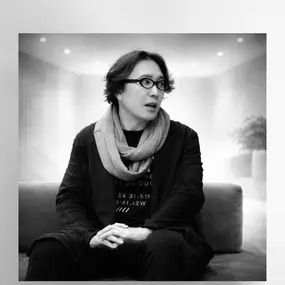
Composer / Producer
Bajune Tobeta is a Tokyo-based composer, producer, pianist, and acoustic researcher whose work holds to a single question: how does sound enter the body? His practice gathers four territories rarely found in one body of work: contemporary classical, ambient electronics, the Brazilian canon, and applied sound research. A graduate of Ryuichi Sakamoto's RADIO SAKAMOTO program and a contracted artist at Sakamoto's Tokyo production house LLP 10°C from 2006, Tobeta has collaborated with Christian Fennesz, Arto Lindsay, Joyce Moreno, Jacques and Paula Morelenbaum, AOKI takamasa, and Shing02. From the late 1990s he composed and sound-designed for the Katamari Damacy series at Namco. 2026 marks the first sustained international opening of his work, anchored by a sequence he calls Anechoic Studies: the single "After the Silence" with Fennesz (June), the EP Anechoic (August, mastered by Denis Blackham), and an authorized Sergio Mendes Tribute Album produced with Gracinha Leporace and recorded in part at Hans Zimmer's Remote Control Productions (September). He is the founder of CROIX Co., Ltd., where his acoustic research has led to collaborations with ANA, Hoshino Resorts, and Fitbit.