

 Apple Podcasts
 Spotify
 YouTube
 Amazon Music
 Castbox
 RSS Feed
 Overcast
 PocketCasts
 Bellbird: Montreal's Jazz Collective Heeds the Call
Claire Devlin and Eli Davidovici of Bellbird talk about the bird whose recorded cry became the foundation of 'The Call', the chordless sound that defines the quartet, and the political commitments embedded in the music.
Today, we’re putting The Tonearm’s needle on the Montréal jazz collective Bellbird.
Bellbird formed during pandemic park jams and has since become one of the more compelling voices in Canada’s avant-jazz scene. The quartet consists of Claire Devlin on tenor sax, Allison Burik on alto sax and bass clarinet, Eli Davidovici on bass, and Mili Hong on drums. No guitar, no piano, just three mostly single-note instruments and a drum kit, which turns out to be more than enough. Their debut, Root in Tandem, earned serious praise. Their second album, The Call, came out on February 6th on Constellation Records. It was built from bird sound transcriptions, Mary Oliver poems, and sessions in the countryside, and it doesn’t sound like anything else on that storied label’s roster.
Two members of the collective, Claire Devlin and Eli Davidovici, are here to take us through the story.
(The musical excerpts heard in the interview are from Bellbird’s album The Call)
Dig Deeper
• Visit Bellbird at bellbird.band and follow them on Instagram and YouTube
• Purchase Bellbird’s The Call from Constellation Records, Bandcamp, or Qobuz, and listen on your streaming platform of choice
• Visit Bellbird’s page at Constellation Records
Individual Members:
• Claire Devlin — tenor saxophone; follow her on Instagram
• Eli Davidovici — bass
• Allison Burik — alto saxophone and bass clarinet; follow them on Instagram
• Mili Hong — drums; follow her on Instagram
Label:
• Constellation Records — Montréal’s celebrated independent label, home to Godspeed You! Black Emperor, Matana Roberts, Sam Shalabi’s Land of Kush, and more
Recording and Compositional Context:
• Hotel2Tango — the Montréal studio where The Call was recorded
• Orford Musique — the Quebec residency center where Bellbird developed the album’s material
Musical References and Inspiration:
• White Bellbird (Procnias albus) — the Amazonian bird whose recorded call Allison Burik transcribed and analyzed as the foundation for the title track
• Mary Oliver, “Wild Geese” — the poem that inspired the track “Soft Animal,” published in House of Light (Beacon Press, 1990)
Montréal Scene:
• Casa del Popolo — Montréal venue and community hub
• Suoni Per Il Popolo — Montréal’s annual festival of experimental music, free jazz, and improvisation, presented at Casa del Popolo and La Sala Rossa
Previous Release:
• Root in Tandem (2023) — Bellbird’s self-released debut
(This transcript has been lightly edited for clarity.)
The Tonearm | Claire Devlin & Eli Davidovici of Bellbird
Lawrence Peryer: So before I get into asking you about the origin story of the collective, I would love to ask each of you about your origin stories with the city of Montréal. Claire, maybe I could start with you. Tell me a little bit about how you wound up in Montréal and about your relationship with the music scene there.
Claire Devlin: I grew up in Ottawa, but I moved to Montréal when I was 18 for school. I went to McGill University for jazz and fell in love with the city and decided to stay. The music scene in Montréal is so vibrant—I was immediately addicted. There are a lot of different genres thriving there, and I was really attracted by that: a really solid jazz scene, but also this amazing indie, underground, free jazz, and experimental scene. I kind of grew into those different areas over the last decade of being there.
Lawrence Peryer: How about you, Eli?
Eli Davidovici: I have a long history with Montréal, even though I grew up in Vancouver. My dad and his family were from Montréal. I spent a little bit of time living there with my grandparents when I was seven years old. Apart from that, I hadn't spent much time there in my teenage years, until a lot of friends started moving to Montréal. There were a lot of musicians I really admired who were from there. I had this plan to visit, move there, and maybe go to school, and it didn't really work out for a while. It wasn't until I was 26 that I moved here permanently. Some of it makes a lot of sense because I have that familial connection, and there was this draw—it felt like a calling. I really wanted to come and move here.
I finally did, and it was like any move: exciting but challenging. It was a few years in when I felt like I'd really settled here and it was like, okay, this is my home. I'm blown away and excited by the music scene, but it doesn't feel foreign anymore. It feels really familiar. I still love Vancouver but don't have that same connection anymore. It's been almost eight years since I've lived there.
Lawrence Peryer: They're both beautiful cities. It's hard to go wrong in either place. How did you and Claire cross paths initially?
Eli Davidovici: I think I asked Claire to play a gig. It was probably a few months after I moved here. I was just trying to meet people. I don't think I'd ever seen Claire play, but I had seen her name around and heard her play, maybe on the internet. My roommate, Pompy—a great musician in Montréal—recommended her for this gig I was doing with him. Claire's name came up. So right away we had Claire rehearse some weird music with us and did a gig at Au Café. That was kind of the origin—the first time we got to play together.
Lawrence Peryer: Claire, tell me a little bit about what was happening at the beginning during the pandemic. Was there some effort to jam in the park? What was going on there?
Claire Devlin: Mili and Eli were kind of the organizers of those park jams up in the neighborhood of Parc-Ex in Montréal. It was just a way to play with people when we were in lockdown. The lockdown in Montréal was intense—there were curfews—and we were dying to play with each other, missing all of the opportunities and the venues. Mili and Eli started doing these park jams. First Allison was doing it, and I joined later.
That was kind of how we all became friends as a group. The band formed somewhat organically from there. I had gotten a gig at the Ottawa Jazz Festival and decided these were the people I'd been playing with, so let's do a collective project where we all bring in music. That was how it began.
Lawrence Peryer: That was going to be my next question—at what point did you realize those pandemic jams needed to become something more codified, a collective or a band? It sounds like the necessity of putting a band together is what drove it.
Claire Devlin: Basically, I got a gig, and these were the people I wanted to play with at that time—and still now.
Lawrence Peryer: Eli, when Claire was speaking at the beginning of the conversation about the musical diversity of the Montréal scene, I couldn't help but think you embody that—you work across a lot of styles and in a lot of different contexts. I'm curious how that stylistic diversity in your own work manifests in Bellbird. What do you bring to this project?
Eli Davidovici: That's definitely a big part of the Montréal music scene, but it's also something I really identify with personally and musically—this space between genres. More than ever, Bellbird feels like it inhabits that space. It's hard to put into one sentence, but when we write music together now, I think we started out more as a traditional modern jazz quartet—bringing in charts, forming the music together, making room for improvising. Since then, it's really changed in terms of how we write music together and plan things out.
When I was in high school, I was playing in rock bands where we would put together riffs and songs from scratch, very collaboratively, without being able to read complicated charts. We wouldn't write things down necessarily, but that felt like a really organic way of writing—slower in some ways, but more immediate in other ways. It felt like we knew the music really well by the time we got it all together, and I think we really tried to bring that into the latest record with Bellbird. Doing that more does change the dynamic.
Apart from that, there are definitely stylistic things. Mili doesn't really play a jazz kit, even though she may be playing things that are stylistically more on the jazz side. There's a bigger sound to the drums. It's not a clean jazz record in terms of the sound and the recording. We're not going for that really pristine, modern sound you hear on a lot of jazz records, which can be great, but it's not really what we're hearing with this music. I don't really know what to call it. We fall into different categories. We've kind of decided we're okay being the weird jazz band instead of the jazz weird band—or the jazziest weird band, if that makes any sense. But we keep kind of—
Lawrence Peryer: I love the idea of walking into the record shop and saying, I'm looking for the weird jazz section. (laughter)
Eli Davidovici: Yeah, exactly. That's what I do. That's what I look for.
Claire Devlin: That's where I go immediately.
Lawrence Peryer: Yeah, me too. There's so much good stuff in that section. Something I wanted to ask you both about, which comes up at least a few times a year when I speak to ensembles that call themselves collectives: I love to explore this idea of what is a collective versus a band, and beyond that, what does it mean in practice when you're in the room together? How do decisions get made? It seems to me, from the outside looking in, there's an ideal, and then there's the reality of having to get things done. I'm really curious about that interplay and what it means in practice. If either of you would like to jump in on that.
Claire Devlin: It's been a really amazing experience discovering what it means for us to be a collective, because I've never done anything quite like this in other groups before. We started with a pretty egalitarian approach. Back when we were bringing in sheet music for each other, we would all bring in compositions and play an equal distribution of everyone's tunes. The way it developed is that, in both the music and the process of making it, we try to function without much hierarchy. Anyone's ideas are valid. There's no primary songwriter, and even with Mili, the drummer—she obviously knows more about drums than any of us—she's open to us saying, "What if you played the hi-hat here instead of the ride cymbal?" Vice versa for all of us—we're open to each other's suggestions and to learning about each other's instruments.
A piece of music might originate more from one person. There's a song on the record called "Murmuration" where I brought in a three-bar melody, and then we created a whole piece out of that. It eventually became this piece that everyone felt ownership over, and there were many parts that didn't come from me at all. It's about being open and patient, because it does take time to do it that way.
Eli Davidovici: And ultimately—and this is what we're still figuring out—it's about knowing each person's strengths and how those can best be manifested in the music and the music-making process. I've learned about myself, how I work, and how I can challenge myself in this group. We are pretty successful with the egalitarian thing, but as you kind of implied, you do have to make decisions sometimes, and how that decision-making happens—it's not that one person says, "I'm going to make the decision and not listen to your ideas because we have to get this done." It's more about how the group itself can become its own self-sustaining thing and how that can best happen.
Sometimes it means I'm going to be over here taking care of one thing, and I fully trust Claire to take care of emailing the jazz festivals. In terms of the music, we're not all soloing all the time, or all improvising and jumping around with complete freedom. We have some very structured music, and I fully embrace being a supportive bass player when I need to be, but I also get a lot of opportunities to fulfill a different role. It's something that's constantly evolving.
Lawrence Peryer: So with all that said, is the designation as a collective a term you use? Is it a mindset, or do you use it interchangeably with the word "band"? Sorry to belabor it. I just find it fascinating.
Claire Devlin: I think among ourselves we do use it interchangeably, but there is a difference, and we do specify "collective" a lot of the time in our writeups because it implies something a bit different than "band." A band could be one person who's the star, the leader, the writer—it's their brainchild. That's really not the case here. What's different about being a collective is just that: the collective, egalitarian nature.
Eli Davidovici: It also shows up in things like the composing credits. It's maybe a detail that doesn't matter as much to many people. On the first record, we had split things up in terms of who had written what song, but most of the songs on this record we just split four ways, because it just feels like a Bellbird song. None of them really feel like my songs and only my songs. There are a few where—Allison wrote "Blowing on Embers" and that feels like their song—but even then we all kind of wrote it together. It feels like it's all going through this thing that's Bellbird, and what's been really great is seeing how Bellbird has grown over time, becoming something greater than the sum of all four of us.
Lawrence Peryer: I'm also curious about something—please set me straight if I have this wrong. My understanding from what I read was that you transcribed the sounds of nature and environment and used those as musical material, as opposed to using them just as conceptual prompts or inspirations. Am I articulating that correctly? I'd love to hear you elaborate on that.
Eli Davidovici: It definitely does serve as inspiration, and the setting we were in—we did a residency in Orford, Quebec—was very inspirational to how we were writing music at the time. It's very personal. Listening to some of the songs on the record, I'm immediately brought back to those moments.
I think we have to really credit Allison with a lot of this—they did a lot of recording, taking transcriptions of bird sounds specifically, and used that for some of the pieces we were writing. "The Call" is the most obvious example on the record, because it's taking the call from the actual White Bellbird from the Amazon. We didn't make this recording—Allison just sourced it. It's a relatively rare bird, but a really remarkable-sounding bird. It has the loudest known bird call, and it's got this amazing timbre to it. It's hard to find the right adjective, but it's terrifying. They transcribed it, spectrally analyzed it to figure out what was going on rhythmically, melodically, and harmonically, and used that as a basis to write the tune.
That's a big part of the song, and on one hand that's showing up as material for that specific song. But also, some of the decisions we made in arranging it, we reflexively went back to wanting to capture our feeling of listening to that sound. The multiphonics in the horns, the drum-bass hits—they all have this feeling to them that is trying to capture that, which is more of an emotional, aesthetic thing we're going for. While at the same time there is this actual musical material underpinning it, connecting it as well.
Lawrence Peryer: I love that you brought up that track. Oftentimes when I'm sent or offered music for the first time, I like to just put it on and see what captures me, rather than study it. And that song grabbed me by my shoulders and made me pay attention. I don't even have an articulation for it necessarily, but it's a very strong, muscular piece. Hearing you describe the bird call, I'm like, yeah, that's exactly it. Those are the attributes of that song. It's a little bit loud. (laughter) Tough. It's a tough song. I really like it.
Claire Devlin: Muscular is a good word.
Lawrence Peryer: It's a really great track. Do you feel as though you're in collaboration with the ecosystem in that regard?
Claire Devlin: I think that's a big theme we explored on this album, especially our relationship with the environment, with nature, creatures, and plants. The idea that there is no separation between us and the natural world—capturing some of those sounds that exist already feels like an amazing way to connect with nature and to try to preserve what is so beautiful out there. Especially because these environments—the Amazon and everywhere—these animals are in danger, the environments are disappearing, and it's an absolute tragedy. And so this is our way to connect with that.
Lawrence Peryer: I'm a big fan of the tradition of the chordless trio—saxophone primarily—and I'm really curious about opening that up in the quartet format. My first assumption is that there's a lot of freedom there, but also a lot of room to fill—it seems like an intentional approach. You said earlier, Eli, that not everybody's soloing at the same time—sometimes you're supporting, sometimes you participate in different ways. I'm really curious about the possibilities of a quartet with no chordal instrument. What does that mean to each of you? Eli, if you'd like to go first, I'm curious to hear your experience of playing in that type of configuration.
Eli Davidovici: It's one of my favorite ways to play. I love playing with pianists and guitar players, but that's a different role that I take in the music, where I'm collaborating on a certain aspect of the harmony. With the chordless quartet, I'm still collaborating in that sense, but I have a lot more freedom—every note I play fills up more of that harmonic space. Not to get too technical about it, but that freedom is really fun. There's more of a sense of movement—if I'm going somewhere and one horn is going somewhere else, you really feel that. When there isn't that space, it becomes part of something bigger than itself.
One thing that's really cool about this group is that you really start to feel that space when you play with a configuration like that, and you figure out how to make it work—how much you should be doing, or how much you should not be messing with that space. It feels very full a lot of the time, and maybe that's just the way we play or how comfortable we are with each other. I forget that we're a chordless quartet sometimes because it feels really big. And I think some of that has to do with decisions we've made.
On this record, we actually considered bringing in electronic sounds and extra textures to play with. But we decided to leave that and explore more what we can do with just these four instruments. After the first record, there was so much more left to try. I think that really had a huge hand in shaping what this record sounds like.
Lawrence Peryer: Claire, how about for you?
Claire Devlin: It is both a beautiful opportunity to try different roles when there's no piano or guitar, and also a huge challenge. We just got back from a tour of Western Canada, and those gigs are exhausting for me. I'm playing way more than in other ensembles—the saxophone is on my face more of the time, because I'm playing the melodies, playing solos, and also accompanying, for a drum moment or a bass moment. So it presents a lot of opportunity for growth because it's quite challenging.
Lawrence Peryer: Something I hear from both of you is that you really get to tap into different musical muscles, in a lot of ways. I'm really curious, Claire, to follow up on that point—the experience of playing with Allison and the different instruments. How does your approach on the tenor change when Allison is switching between instruments? Unpack that a little bit for me, if you don't mind.
Claire Devlin: No one's ever asked me that. It's a lot of fun, because the tenor saxophone and the bass clarinet have a similar range, but the bass clarinet can go lower. So when we're in that configuration, I tend to take the higher voice. I'm up in the upper range of the tenor saxophone, which sings in this really nice way. And it's quite a nice timbre to have the double bass and bass clarinet playing underneath the saxophone melody.
When Allison plays alto, that feels in some ways like a more traditional jazz configuration. I'm playing often just under Allison—in terms of harmony, I'm playing a note that's lower—and that's an entirely different blend we have to find together. Just having those two different instruments that Allison plays, alto sax and bass clarinet, creates a huge world of opportunity for the rest of us, because it changes our approach to our own instruments, to arranging, to composing, and to improvising.
Lawrence Peryer: I love the bass clarinet. With the tenor and the dynamic you described with the double bass, that's a very beautiful sonic space to dwell in.
Claire Devlin: Absolutely. We definitely tried to tap into that more on this second record.
Eli Davidovici: Yeah, absolutely.
Lawrence Peryer: And Eli, tell me about your relationship in the rhythm section. You started to speak to it earlier—the way the boiler room works in this group, with the drum and the bass having their own thing in terms of who's doing what. Or to say it less glibly, the challenging of traditional roles and the reinvention that seems to be going on is another very exciting part of what you all are up to. How much of that is dialogue—verbal dialogue—as opposed to it getting worked out while you're playing? Are you going into that with an intention?
Eli Davidovici: On the first record, that was a bit more unspoken, because Mili and I had played together for years before Bellbird. We had developed a kind of thing between us—talked about in some ways, unspoken in others. In terms of momentum, or who does what and where, some of that is just natural chemistry that you build over time. And with the band, we've definitely built that.
Having spent so much time with Bellbird, especially during residencies and in the studio, we've had more time to talk specifically about what's going on and what we should do. Maybe let's try something a little bit counterintuitive, because we have our tendencies and our attitudes. We'll go in a certain direction, and maybe that's because it feels good. It sounds great, but sometimes it's great to go against that and see what happens if you fulfill a different role—maybe you don't provide the support you really feel you should at a certain time, because you want to build some tension in the music. We've done that a lot more.
There's a natural challenge to just being bass and drums in that rhythm section. You have fewer people to make something feel really big and strong. So many people have done it in the past so well that we have a lot to draw on in terms of influences. And what we're going for still has that strength. But as I said earlier, sometimes it feels bigger than a quartet. That's partly Mili and me, but I can't fully separate it from the two horns—Claire and Allison do support and add strength to a lot of what's going on. Even if they're not strictly part of the rhythm section all the time, there's that bleed into both the rhythmic side of things, and also just the sound and the warmth. Sometimes, as a band and as a rhythm section, you're just providing a feeling before you can even think about the rhythm or the groove—and those things come later. I think as a band we're all doing that all the time.
Lawrence Peryer: We had a chance a moment ago to talk a little bit about "The Call," and there are a couple of other tracks I wanted to ask some specific questions about. I'll start with you, Claire, but if either of you wants to weigh in or hand off to the other, please feel free. I'm curious about "Soft Animal"—the story behind it, the poem that inspired it, and how, in a collective setting, text becomes instrumental music.
Claire Devlin: That was a really unique moment for us—our first time writing music in this way. We were in the middle of the residency in Orford, Quebec. The first week had been spent doing a lot of intensive rehearsing and arranging, practicing really hard material. By the beginning of the second week we were a little burnt out, tired, and ready to make music in a different way. Allison brought in a poem by Mary Oliver called "Wild Geese" and read it to us, and it just hit the right note at the right time. It was really moving—really validating in how you can sometimes just rest. You can slow down and allow yourself to just be, and that's enough sometimes.
It wasn't even supposed to be a musical prompt. But we ended up improvising on it, using the text, the words, as if they were lyrics. As horn players—and for drums and bass too—we imagined singing the words and then played the notes that would form the melody. We did that a few times, recorded it, listened back, and ended up codifying it into the piece that it is, which is now more set in terms of the melody.
Eli Davidovici: That's something that's really interesting to me. The text has its own meaning, and for it to sort of represent that instrumental music—can you still capture that? Sometimes I feel like maybe it's so abstract that it means something to me but won't mean something to someone else. But for me, "Soft Animal" still really captures the feeling we had when we read the poem. When we play that for people live, I really see the same reaction from a lot of audiences. That's really amazing to me. Whenever we play that song, I see someone tearing up at the end. It's so gratifying that you made someone feel something, because that feeling we had was shared and genuine. It's not that we have a perfect method for it—it just worked, it happened, and it was really organic for this one song. But it was really cool to see that translation happen and still be effective.
Lawrence Peryer: I love that the spirit came through.
Eli Davidovici: Yeah, I think so.
Lawrence Peryer: Tell me about "Blowing on Embers." Given the complicated moral, social, and political questions the track is inspired by, I'm curious what instrumental music can bring to that conversation. What's the role of instrumental music in a situation like the one that track deals with?
Eli Davidovici: It's a shame that Allison isn't here, because they wrote the piece and it was their idea to dedicate it to a free Palestine. But we all have a huge emotional attachment to that piece. The role of instrumental music—it's part of a much larger thing. We don't have grandiose perceptions of ourselves as making a huge difference. But when we get to play this live, we get to talk about this thing that's happening in the world, and at least say something about it rather than being completely silent. We get to express something that's real—how we play the piece and how we feel about it. That's kind of all it is.
There's so much we can articulate about what's happening, but there are things that are harder to articulate. Not to make this a cliché, but there is something about music, something about art and playing something that you can't articulate, something you can't quite put into words. This is happening right now, but it's not something that just started—it's been going on for a while. There's still that raw feeling of: this is something unacceptable to us. We're heartbroken about it every day. We want to express that, and that's kind of all we can do and all we're doing with that piece.
But I also just want to say that I love that piece and I love playing it. And just like with "Soft Animal," there's something coming through the music that is much larger than ourselves. Someone asked me at one of the shows how they should listen to the piece, or what it meant. I hadn't really thought about that, because I just take it in every time. To me, it starts off with this really dark, brooding, and haunting melody—this march that has this real vibe to it. But then it opens up into this really euphoric, transformative improvised solo. It takes you to different places you really don't expect—there's this really amazing saxophone cadenza that is one of my favorite moments on the record, taking us into the final melody—a much more intense, fast-paced version of what we do at the beginning. And that whole transformation—taking yourself out of that dark place into something euphoric and beautiful, almost out of your own body—trying to describe that to a stranger at the gig really meant something to me and helped me realize what's so great about this piece, or at least one experience of it.
Lawrence Peryer: Do you have anything to add to that, Claire?
Claire Devlin: No, that was beautifully said, Eli.
Lawrence Peryer: Let me ask you this, Claire. I'm interested in hearing a little bit about the label you're signed to, Constellation. If listeners are familiar with Constellation, there might be an aesthetic or an identity that the label is known for. I'm curious how this group does and doesn't fit within that. What does it mean to be a Constellation artist for Bellbird in particular, and what does it mean for Constellation to have Bellbird—if you feel comfortable speaking to that?
Claire Devlin: When I think about Constellation, it's such a joy to work with them. They're really amazing people, community-minded, and not what you would imagine an industry person to be. I think the way that Bellbird fits into the label is that Constellation chooses music that is, in some ways, countercultural or against the grain of its community. It's not one genre—it's specific artists who are trying something, going for something specific. As Bellbird, we're trying to access a specific sound that isn't super quantifiable, but it is jazzier than most of Constellation's output. It's probably the jazziest thing they've put out in recent years—though I haven't heard all 190 of their releases. I think that's what they liked about the record: as Eli was talking about earlier, the drum sound is not like a jazz drum sound, and the way the saxophones play and the role of the bass—these things aren't typical for a jazz band. We're pulling from other genres, and I think that appeals to their aesthetic.
Lawrence Peryer: It goes back to the weird jazz section in the store.
Eli Davidovici: Yeah, totally.
Lawrence Peryer: Given what you both spoke about earlier—the genre diversity and breadth of music in the Montréal music scene—I'd like to talk about community. Either of you, or Bellbird as a collective: when I hear people talk about scenes, they can often be divided by genre. You don't get to play in the same venues, and maybe there's always the one place that books across genres, but nobody else does. Players don't often know each other outside their worlds. I'm curious what sense of community you have. Is it just identifying generally with the city, or do you feel that there's a community you're part of—of art and artists?
Eli Davidovici: It definitely goes deeper than just the city and just the scene. Something that is really significant to us is this venue that has sadly closed—Café Résonance, which was in the Mile End in Montréal. When I first moved to Montréal in 2018, I was right across the street from Résonance, and I would go there literally every day. There was music every night. There was a lot of jazz, but also a lot of other music, and also just that in-between—it was a jazz band, but they were playing free music. They were playing with hip-hop artists, playing rock songs in a jazz format. There was a lot of that in-between, and a lot of the people who frequented the place had their feet in different worlds. There was a mix of people from music school, great artists living in the Plateau who had come down, and it felt like it's really hard to find a community space like that. I would just go during the day, hang out, catch up with whoever was there, maybe get some work done—the food was amazing too. It was just this really great spot.
I don't think everything originated from Résonance, but it really captured something about Montréal and that particular scene that everyone in Bellbird feels attached to. It's the community, the music, the city. But it's also the group of people who come together and feel this connection to a lot of the music being played on stage. The same thing happens at a lot of the venues associated with Suoni in Montréal, like Casa del Popolo and La Sala Rossa. There's so much different music happening, but there's this enthusiasm to go out and see it no matter what. I really feel connected to that, because I feel like I'm part of a community of really incredible people doing great art and things that are inspiring to me. It's growing, evolving, and changing—and not afraid to change. I'm never afraid of it going backwards or repeating itself.
What's cool too is there are always new people coming through, younger people. People unfortunately move away, but someone else comes and takes their place. There's a long tradition of great art and great music in Montréal, and there's this particular scene that I really connect with that still feels strong—even as it becomes challenging to figure out where it's all happening. Where are we going to play? Who's going to give us the chance or the opportunity?
Claire Devlin: I'd just add that part of what was so great about that venue is that it had a different feeling from the kind of community we were all used to coming out of jazz school. It's homogenous sometimes in the jazz world—obviously, heavily male-dominated—and when you went to Café Résonance there were enough other genres, subcultures, and communities that it felt way more diverse. It was like a safe space, in a sense. There were a lot of queer people there. It just felt different.
At that time I was just coming out of undergrad, in my early twenties, and really needed that kind of refreshing space to create music in, because it opened up the whole world of self-expression that didn't always feel comfortable or safe in traditional jazz contexts. For me, it's all wrapped up in the feeling of that community and being able to express myself musically—it's all one thing.
Lawrence Peryer: Our time together is starting to wind down, and I had a couple of last questions about the music itself I'd love to ask you both about. One is: how does this material translate to live performance, particularly given that it's definitely a studio album? It's got studio elements and production. Did you have to think about that? Does it translate to the stage, or do you just go up there and do what you do?
Claire Devlin: Surprisingly, it didn't feel that hard to translate. It is produced in the way it's mixed, but there are almost no overdubs, I think, and—
Lawrence Peryer: Oh really? Wow.
Claire Devlin: It's mostly live off the floor. We can actually play most of that music in the album arrangements as a live thing. The sound will obviously differ in terms of timbre, but it's pretty playable, actually.
Eli Davidovici: It kind of went the reverse order of that—we were already playing it live by the time we went to the studio. So it was more about trying to capture the energy in the studio. That wasn't the challenge exactly, but it was something we really wanted to make sure we did, because we've done records before where there are more overdubs, or maybe it's live off the floor, but it feels a little flat compared to playing in front of an audience that is really engaging with you. We were really mindful about that. We talked about it a lot, because playing live for people is a huge thing we love about playing with Bellbird, because there's a lot of engagement and back-and-forth with the audience—even more now than before.
It feels a lot more explicit than it used to be. Allison always gets these solos that have this really cool energy and always end with a big flourish, and people cheer. And that kind of reaction happens after a bass solo too.
Lawrence Peryer: I cheer the bass player, by the way. I just want to go on record. I cheer the bass player. (laughter)
Eli Davidovici: Thank you. You're doing the Lord's work. But that still comes across on the record, and it's not so much of an issue playing it live because the music already has that live element to it. But it is an interesting thing that does happen sometimes—once you go in and record, it changes the music a little bit. So you adapt it to your live thing. But I feel like it's always added something to our live performance, rather than us feeling like we had to make up for something missing.
Lawrence Peryer: You used the word "flat" at the beginning of your remarks just now, and this record is anything but. It's a very dynamic record. My last question has to do with the way Bellbird engages with the theme of the climate crisis—the commentary in the music and the interplay with the natural elements you used. That's a large area to investigate. I'm curious how you see the next iteration of this ensemble. You all do so much work in other contexts, yet you're both speaking about this as a living, breathing project. I don't get the sense that we've heard the last of Bellbird. Is Bellbird the place where you come to explore the world thematically? What does it mean to each of you to come back to Bellbird, and what are you looking for?
Claire Devlin: I think it's a bit like what Eli was saying with "Blowing on Embers." We're not trying to take on the issues of the world in a way where we think it's about some kind of tangible effect. It's more that these are the things that we care about, and so we write music about them. I think that will continue to be the case for future records with Bellbird. We don't have some kind of ten-year plan for future themes, but I think that will always be the case. There are world issues that we care deeply about, that we talk about, and those things come into the music on their own.
Eli Davidovici: It's all connected. It's easy to say, "I'm just playing instrumental jazz, so that doesn't really mean anything to me, and I'm just not going to mention this thing that's happening in all our lives." But it doesn't feel like something we hide—how we feel about these issues. It's pretty explicit. We're not under any illusion that we're making a huge change, but we do want to be part of something bigger than ourselves. We took our music off of Spotify and Amazon to be part of this. Constellation was a big part of that, and something we were really engaged with—we don't accept what these companies are doing and we don't feel like it represents us in any way. The least we can do is say we're not going to work with them. Maybe one person—my mom—is not going to use Spotify now because Bellbird isn't on it. It's not that we think we're making a big difference on our own, but it does feel good to be part of a bigger movement of artists saying that this is something we don't accept—and we're going to use the power we have, however small that is, to at least make a statement.
I do feel that empowers Bellbird for me—when I come back to Bellbird and know that when we play together, I'm playing with people who really represent my values. That strengthens us. We're all such great friends and we have this really close connection. And musically, it's exciting, because we're at that part of the process where the record is out. We went through the whole thing—writing the music, playing the music, touring the music—and what's next is always a really fun question. The possibilities are really open right now. It's nice to sit in that for a little bit, because we could incorporate new elements we haven't before. There's also just this thing I've seen since the first record—the energy in the music is kind of growing into this bigger thing. Riding that for a bit and seeing what we can do to keep that connection between our live performance and our studio performance, which you were talking about before. How can we keep that energy exciting for us as musicians and performers, but also engaging for an audience—thinking about an actual listening audience even when we're in the studio? Those are the things I'm thinking about, but I think we just love getting together, playing, and improvising, and I'm sure we'll keep doing that no matter what.
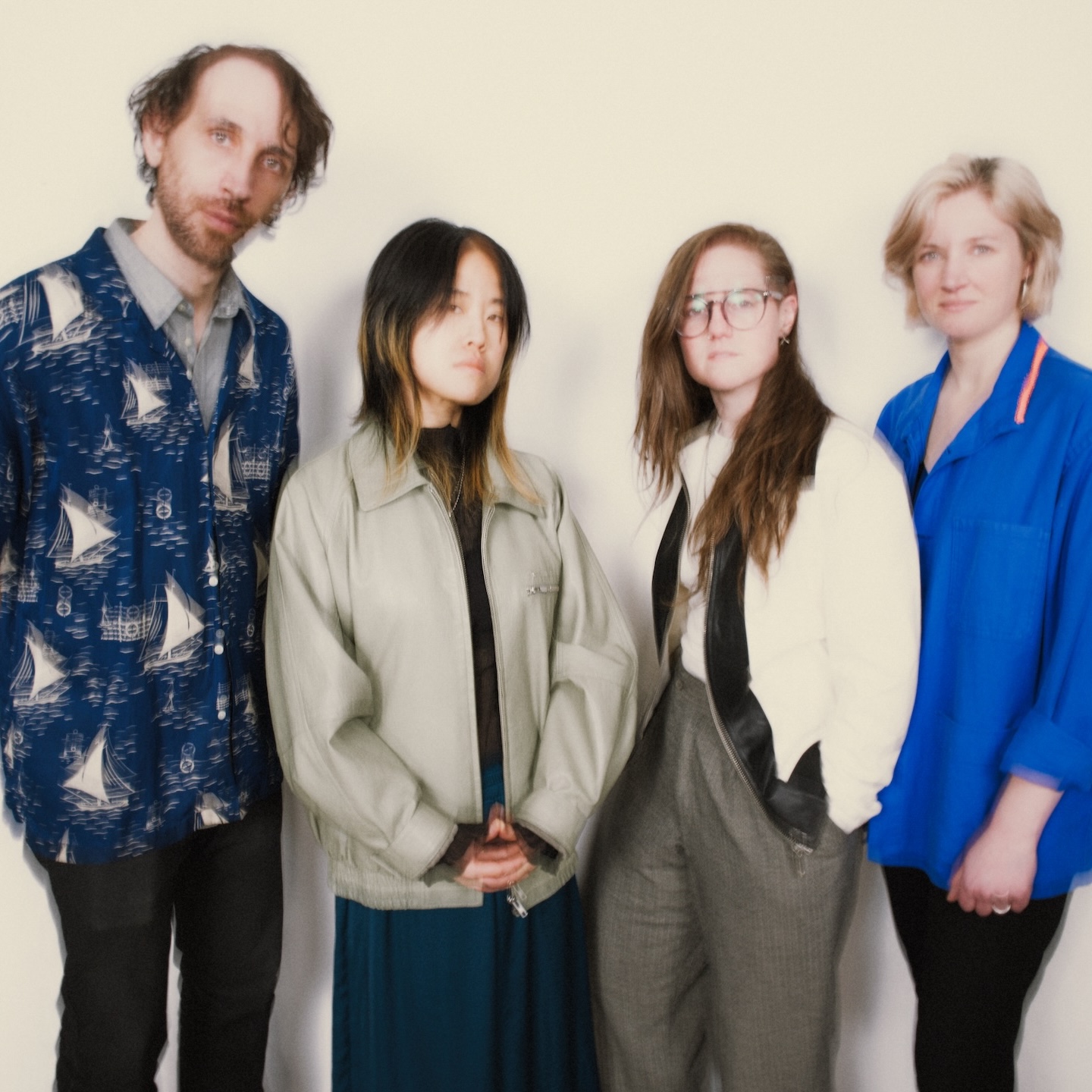
Band
Bellbird is the Montréal-based quartet of tenor saxophonist Claire Devlin, alto saxophonist and bass clarinetist Allison Burik, bassist Eli Davidovici, and drummer Mili Hong. While firmly rooted in modern jazz, Bellbird’s music incorporates stylistic influences including atonal counterpoint, rock grooves, folk melodies, Minimalism, and a reigning (post)punk spirit. Growing up in disparate situations spanning three countries and emerging from different musical scenes, the quartet met and coalesced in Montréal’s fertile genre-bending underground. Bellbird’s 2023 debut Root In Tandem was praised as “remarkable…with chip-on-the-shoulder confidence” (All About Jazz) and “a solid debut statement featuring thoughtfully structured compositions and empathetic group interplay” (Textura). Following an acclaimed run across Canada’s Jazz festival circuit in 2024, the band began writing its follow-up album The Call during a residency at Orford Musique later that year, and signed to Montréal label Constellation in 2025.