

 Apple Podcasts
 Spotify
 YouTube
 Amazon Music
 Castbox
 RSS Feed
 Overcast
 PocketCasts
 Billy Polo: Audio Engineer as Archaeologist
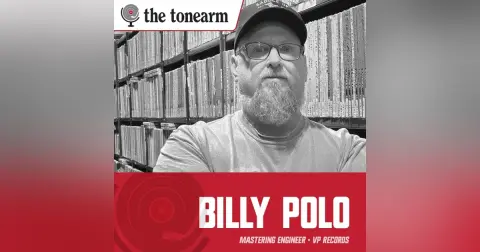
From the Black Ark tapes buried in Lee Perry's yard to unreleased Dennis Brown sessions, Billy Polo on the forensic pleasures and urgent stakes of reggae's analog archive.
Today, we’re putting The Tonearm’s needle on Billy Polo, in-house audio and mastering engineer, at iconic Jamaican music label VP Records.
Billy has spent years restoring and remastering some of the most important recordings in reggae and dancehall history. Works from Peter Tosh, Dennis Brown, King Jammy, Sly and Robbie, and dozens more. Billy works with the original analog tapes, often in rough shape, and brings them back for today’s and tomorrow’s listeners.
We talk about the restoration process, what vintage tape actually sounds like when it’s failing, and what Billy’s doing to make sure this knowledge doesn’t disappear.
(The musical excerpts heard in the interview are Prince Jammy — “Second Generation”; Augustus Pablo & King Tubby — “The Big Rip Off”; King Tubby with Max Romeo & The Upsetters — “Three Times Three”)
Dig Deeper
• VP Records on Bandcamp
Artists and Projects Mentioned:
• King Jammy — official site
• Lee “Scratch” Perry — official site
• Augustus Pablo at VP Records
• Junior Murvin — Police & Thieves
• Linval Thompson — Wikipedia
• Dennis Brown — King Jammy Presents: Dennis Brown Tracks of Life on Bandcamp
Studios and Labels:
• Channel One Studios — Wikipedia
• Clive Chin and 17 North Parade — United Reggae profile
Collaborators and Engineers:
• Wharton Tiers — Tape Op interview
• King Tubby — Wikipedia
• David Amram — official site; composer of Splendor in the Grass and The Manchurian Candidate
Gear Referenced:
• Drawmer Electronics — manufacturer of the Drawmer dynamics processors mentioned in the episode
• Tascam 424 — the four-track machine that started Billy’s home recording life
Atmos and Immersive Audio:
• Anthrax — Among the Living (Atmos) — available on Tidal and Apple Music; one of Billy’s standout Atmos listening experiences
(This transcript has been lightly edited for clarity.)
Lawrence Peryer: Hi, Billy. How ya livin'?
Billy Polo: Not bad, not bad.
Lawrence: You're not putting down a beer at, uh—
Billy: No, no. This is the old Canada Dry. (laughter) Although I have been doing a master today that would warrant maybe having a couple.
Lawrence: It's driving you to drink.
Billy: I tell you.
Lawrence: So what makes a master drive you to drink?
Billy: With anything, each one of them has its own individual set of circumstances. With reggae stuff, the kick and the snare are usually a lot louder sometimes than the rest of the music, because this is big speaker music. When it comes booming through the sound systems, when you have all that bass getting juiced, it might flood out vocals, it might flood out the drums and stuff. So on these mixes straight off of the tapes — the original mixes — sometimes that doesn't always translate to digital the best way. You've got to kind of finesse things a little bit and make sure that they sound good digitally. Otherwise you just get vocals and a kick drum and you're like, "All right, that's the song, huh?"
Lawrence: Is that because a lot of times the mixing engineers don't know how to prep something for mastering?
Billy: The stuff that we're working on is primarily all the old tapes. The era that I'm working in a lot lately is the eighties, early eighties — the Joe Gibbs, Jammy era. It's actually kind of the opposite. These guys down in Jamaica, the mastering process was cutting to vinyl or cutting your lacquers for your dub plates, or for your record that would go into production.
Lawrence: Interesting.
Billy: Yeah. I have the good fortune of working with Paul Shields, who's here. Any questions that I have — like, how did you guys do it in the seventies? How did you do it in the eighties? What was the thing? — he's given me more information than I could ever think of. Things I wouldn't even have imagined.
It's nice being around some of the older school guys, the foundation guys who were there. So if something doesn't make sense to me with my modern ears, or later-era ears, I can ask him, and he would be like, "Oh, we just did that because it worked out well," or "We already knew the mix was good, and we'd just send that straight to cut, straight to production."
And a lot of times these mixes would get cut in the studio, and then that same night they would be playing on the sound system on an acetate. So who's got time to master something when you want to just get it out to the people?
That's kind of the wildest part of some of this. I was talking to him a couple weeks ago. He was like, the way the studios were dialed in, the consistency was always there. Like if you could listen to something that Jammy tracked, or even coming from Channel One — like Soji would track, or Barnabas would track, and then somebody else would maybe mix it — the essential recording was always the same because they were going through their console, and the console was your preamps. It's not like now, where it was like, "Oh, I'm going to use the quad eight on the kick, and then the Drummer on the snare." Within their consistency, it was just an elegant simplicity that duplicated the same great result all the time. That was pretty amazing.
He would tell me about how they would cut a lacquer and then not even go get it plated, and would just turn that test cut into a grandmother, grandfather, and just go get it — just put it into production.
Lawrence: Wow. That's crazy.
Billy: It's pretty wild, some of the stuff they were doing.
Lawrence: Tell me a little bit about your origin story, both with the music and with audio engineering. What's the chicken and the egg? Were you already into engineering when reggae became part of your life, or is it the other way around? What's the Billy origin story?
Billy: I come from — I'm the sixth of seven kids. Music was always just kind of a part of the family growing up. My oldest brother — and I'm not just saying this because he is my brother — is one of the best guitar players I have ever been around since I got into music. He's ten years older than me, so there was a stretch there where, when I was young, he would take me to the studios with him when they would go and do recordings. There were some sessions I would go to, and you're like a twelve-year-old kid in a recording studio and you see all the dials and it looks like a spaceship — that kind of piqued my interest.
Fast forward to when I was maybe eighteen, nineteen. I started really getting into reggae music. I used to work at this graphics place, and there was this guy there, this punk rock kid — his name was Hells — who found out that I was into reggae and then just gave me this mixtape that a friend of his had made. It was not most people's entry into reggae, where they get Legend or something like that. This was deep stuff right off the bat — hearing Augustus Pablo for the first time, the King Tubby stuff. Hearing that and thinking: you can be just as creative as a musician playing a drum part — because I'm a drummer myself — by doing a mix where you express the same creativity as an engineer. Dub got me hooked into it that way.
I just bought the old Tascam 424 four-track machine. Then we had a van back in Milwaukee before I moved out here, and in my parents' basement I had this Stadium Audio controller — this eight-track mixing board. To somebody first getting into it, it was like, "Oh my God, this is the coolest-looking thing ever." It was the size of a Volkswagen, eight channels, and we had everybody go into the board and then recorded it to a cassette deck at the end. So then I also had it configured where I had a cassette deck in front of it. We would record to one cassette, then take that cassette, put it in the front, play it into the board, and do our overdubs over that onto the next cassette.
Lawrence: You're like George Martin.
Billy: Without the skill or the brains. (laughter)
Lawrence: It's the hacker mentality, though.
Billy: Exactly. And to me it was the coolest thing ever. I was like, "Oh my God, we're doing overdubs." But then once I started digging further and further into the four-tracks and the eight-tracks, that really piqued my interest. I had an okay grasp of it, and then from there it was just kind of throw yourself into situations and sink or swim — figure it out or do something horrible for somebody and never get hired as an engineer again. (laughter)
Lawrence: When you were screwing around with the four-tracks and eight-tracks early on, how did knowledge get transmitted? Were you on an island by yourself, just trial and error? Or were there elders you could go to, or friends who knew a little more? How did you learn in the old days before you could just go on YouTube and take a masterclass?
Billy: I really didn't start learning-learning until later. What I've found out over the years — now that I've been doing it for as long as I have — is that my brain just works practically. Engineering, whether it's audio engineering or mechanical engineering or electrical engineering, practicality is kind of the basis of it all. As an engineer, your job is to solve problems or come up with solutions to problems. I've always just thought very practically and come up with things that seemed to work because they were practical.
Fast forward to when I had the chance to work around some seasoned guys and some well-known guys — that's really when it started going from practical application to technique. I was a partner in a studio called The Kennel in Brooklyn for a while. Wharton Tiers — the engineer who did Sonic Youth, well known in the nineties indie and post-punk hardcore scene — was a partner in there too. Hanging around his sessions, watching how he did things, asking him questions. He is one of the greatest guys I know in the business that way.
I knew I was getting better when he would come in the next day and I would have a change set up for recording or mixing, and he would be like, "Why did you have that going into that?" It forced me to have to answer, which meant I had to think about what I was doing instead of just routing something I thought would work. His questions went from "Why did you do that?" to "How did it sound when you did that?" That's when I knew I was starting to get better in his eyes — I was coming up with new and interesting ways, or things that made sense to somebody who wasn't me, which means a lot.
Lawrence: If you had to explain to a listener who loves music but has never touched any gear why signal path matters — what gets plugged into what and in what order — is there a layman's way to say it?
Billy: This is one of those things where it could be a very simple, easy answer, or you could get into esoterics—
Lawrence: No physics! We don't do physics and we don't do math on this podcast. (laughter)
Billy: Ultimately, you just want the cleanest, purest signal. I've been doing less recording and working more in archiving and transferring lately, and I really made a point to not — even though we're using multiple machines and multiple formats — use a patch bay when going from tape machine into the computer. When you're archiving and digitizing, having the purest straight-off-the-machine signal matters. When you add additional connections, you can potentially introduce phase problems, more noise, a buzz — the more connections, the more potential problems you might have.
Lawrence: You talked about those early exposures in the recording studio, seeing the console, then hearing some of those dub forefathers, and realizing that the mixing board was an instrument. I think of the board as something between an instrument and a compositional tool — a very unique role in that music.
Billy: A hundred percent.
Lawrence: What's your self-conception broadly? There's the engineering — and even within that there's new music and the archival work, which I really want to dig into in a minute. But then there's also, you still create music. Like, if I run into you at a party and say, "What do you do?" — what do you say?
Billy: I do stuff on things. (laughter)
Lawrence: I'm going to steal that.
Billy: I'm just a musician who got into engineering. First and foremost, I'm an artist writing music, producing music. There's nothing I love more than playing drums — absolutely nothing. Next, producing. I love producing. Getting in there with artists and exchanging ideas, bouncing around stuff. I like it when people get passionate about their ideas, because then they'll fight for them, which means they're trying new ideas, trying all kinds of different things. I'm a musician who got into engineering and found his niche.
Lawrence: What I'm curious about as it relates to that is: in your archival work, how much of an artist are you allowed to bring to it? In a way, you're working with somebody else's project or vision. There's the historical restoration and preservation, but I assume there's also an interpretive part. If the original people aren't there and you don't have the manual to what they were doing that day — and I'd imagine a lot of tapes come in without session notes — there's art and science, right? Can you pull those apart and talk to me about when you're doing scientific work — restoring, preserving — and when you're doing more interpretive, artistic work?
Billy: On the artistic side, when the A&R team wants to do a release — and I've done this with some of the stuff from Jammy's catalog — they would put out an original mix that was mastered at, say, Townhouse or Trident Studios back in London in the early eighties. Those masters, the low-end information is there, but it's not meant to be cut onto the record. It's meant for the listener or the sound system to turn up the bass and really make the song bloom. But those masters sometimes don't translate to digital as well as you'd like.
In some cases we have the mix that Jammy did that didn't go to Townhouse, so we have the mix Jammy did, the master Jammy had, and then the master that Townhouse had. The master that Jammy did was more bass heavy, a lot warmer. I will usually opt for Jammy's mix for a digital release because that mix translates to digital a lot better. That's where the art side of it comes in. The A&R guys are just happy the record is going out, and when I tell them we actually have three versions of it (laughter) — as the engineer, that's where you get to apply your ear. My taste thinks this would translate better to digital. Now, if we were doing a physical release, I would go with the Townhouse master, because that was specifically designed for that format.
We just finished the Dennis Brown project — unreleased stuff and unreleased mixes. Sometimes you audition these things and see which one is best for which format. Because at the end of the day, all I really want to do is bring out the original idea or the original vision that the artist and producer had.
Sometimes there's a lot of actual noise that gets in the way, or when people transferred these tapes, maybe the left side was out of phase. So that's where the science and the art kind of fold into one. Sometimes I'm leaning maybe ten percent more artist, or ten percent more scientist, but it's all a hundred percent archaeology. (laughter)
Lawrence: I would imagine every box you open is like going into another King Tut's tomb, or unsealing another chamber.
Billy: Yeah.
Lawrence: Can you talk a little bit about the conditions of things? Are you in a race against time in terms of degradation and deterioration, or is the material generally in better shape? What happens when you open a box? Is it exciting every time? Do you know what's inside? What's that all about?
Billy: There are some things that are just in our archive. You open it up and there's a handwritten note, or an invoice from 1973 to, like, Robbie Shakespeare — Robbie Lynn — and just kind of, with the multi-track tapes, there are unique track sheets from Dynamic Studios, or a Byron Lee session, or other things. Sometimes there's nothing there. You bake the tape, you put it on, and you're completely surprised. Other times you bake the tape and there's nothing on it, but the box is labeled, and you're like, "I was hoping that would at least yield something." And sometimes it's like the end of Raiders of the Lost Ark where they open up the Ark and everything comes flying out.
Lawrence: Don't look! (laughter)
Billy: Yeah, exactly. A lot of times, finding old track sheets, finding Linval Thompson's phone number on something — those little things are always interesting. There's also a good percentage of what's written on the box that is not actually what's on the tape. That's what I always find interesting. You get through the tapes and then all of a sudden there's maybe ten minutes left. As an archivist, you've got to run the whole thing because you never know what's at the end. And all of a sudden, pow — there's something you had no idea existed. Then I bring it to the A&R guys, Carter Van Pelt and Chris O'Brien. These guys are encyclopedic. If they say, "Wow, I don't know what that is," then I totally know we just stumbled upon something.
Lawrence: Does that happen often?
Billy: One of the interesting things here: when I started, the key to it all is you just have to start from one, because the reason so many things get lost is that people start to cherry-pick. What's written on the box is not what's on the tape a lot of times. So you just have to start from one and work your way down, and when you hit the end, then you know what you have. There are always some gems. There's always that end-of-tape surprise, or the jam that's not mentioned, or the song that on the production master faded out — but on the tape there's ten more minutes of guitar solos.
Billy: One of the common ones I come across here: because the standard for a seven-inch single is the vocal on the A-side and an instrumental or a dub on the B-side, when you look at the entries from the tape boxes in the database, if you see five songs listed on a ten-inch reel, it's the vocal version and then the dub or the instrumental — so there are actually ten songs on there, but they wouldn't specify the version because it was just the fashion of doing it. If you saw the vocal, you knew the version was right there with it. So when you're looking at things in the database, you're only seeing five songs. If you're looking for a version of "Police and Thieves" instrumental, you only see the Junior Murvin "Police and Thieves" — but the version is right next to it. It's just not written on the box.
So when I started here, I did a revamping and started from one. Now we've got the catalogs itemized — not what's written on the box, but what's on the tape. The A&R guys, Chris and Carter, have been loving it because they're like, "This is actually what's on the reel." Because the boxes — things get swapped, things get lost, things end up in the wrong place. There are so many auxiliary factors. Next thing you know, you think you're sitting on all this stuff, and then you go listen to the tape and you're like, "Oh, actually this is all gospel music."
Lawrence: Is your work primarily driven by the needs of A&R, or is there still an archiving and restoration strand that goes on where it's not reactive to a request — you're still just building the vault? How should I think about what you do day to day?
Billy: Yeah, totally. They do give me a little bit of freedom. If I come across something that I think could be turned into a product, maybe not this quarter or next year but eventually — go ahead and restore it, go ahead and master it, or at least get it into a condition where if we were going to turn it into a product, it would be ready. I can fire shots for the A&Rs, but I always like to have bullets in the chamber for when they run out. They give me some freedom to conceptualize. If I know the audio is good, I'll go ahead and finish it, get it ready, alert the A&Rs, and they'll run with it.
And I have clients outside of here as well. I did the composer David Amram — Splendor in the Grass and The Manchurian Candidate, the original soundtracks and scores. He is a phenomenal composer. Some of that work was amazing — recording Carnegie Hall in 1968 with two microphones, these pieces he would write. The archaeological side of your brain starts kicking in and you can kind of hear the setup and visualize yourself there.
Those clients — and maybe it is a race against time because of the tapes. We're at a point now where, no matter how well your tapes are stored, some of these things are coming up on sixty, seventy years old, and the lifespan is about eighty for these things. That was one of the things I didn't expect to have to learn — the composition of tape and formulas and all of that science-y stuff. Now I know about Agfa and all the rest of it.
Lawrence: Do you like knowing that? Is it interesting?
Billy: It's definitely helpful. I've been putting together a list that maybe I'll publish as a manual in ten years or so — it's kind of information that's not really out there. If you're into the archival side, it would be like a service manual for archiving tapes. There's acetate-based tape, there's Mylar-poly — I'll never be able to say that word, but I'm glad they call it Mylar.
I learned a lot from a gentleman who was a tape rep salesman, had been in the business for about sixty years. I bought a bunch of empty tape boxes off of him. I was on the phone with him one day asking about the boxes, he was asking about tapes, and we just ended up talking for like two hours. He was giving me all this information — "Oh, this tape, and then in this year it switched, and this is how you can tell the difference between an acetate tape and a Mylar-based tape just by holding it up to the light." All these trade secrets, inside info, salesman knowledge — "this is the composition of that, and then they stopped it because it was having shedding problems or it didn't adhere, and then they switched the formulas." Just incredible information you're never going to find in any book. It's not there.
Lawrence: That seems super valuable.
Billy: Yeah. I do want to do a call with him one day and just ask, "Can I record our conversation?" Because that's the thing — a lot of these guys are of advanced age, and when they go, so much of their information goes with them. It's a hit to the industry.
Lawrence: What do you find on the hardware side? Because you're working with a fairly consistent archive, do you not necessarily need weird archaic machines, or are you always having to go find hardware? Are there people to fix the machines? Tell me a little bit about the universe of hardware you have to exist in.
Billy: Some of the machines we have here are preview decks or playback decks — they're not for recording. We have a couple of these MCIs that are meant for cutting to lacquer, so they have all these different speed controls, which is really interesting and helps a lot. I'm big into DSD. I do all of my archiving to DSD and then convert that to PCM or wave files.
Lawrence: Tell people what that means.
Billy: DSD is a format that's not big with the mainstream, I guess, because the file sizes are enormous. It's not editable other than adding some metadata to the tracks. It's a .DSF file. When you have a wave file, you have, say, 24 bits and 48 kilohertz. Whereas DSD is a one-bit technology and it samples in megahertz, so you're getting one bit sampled 5.2 million times.
Lawrence: Jesus.
Billy: Yeah, it's incredible. So I do everything to DSD first. I used to run audio tapes at 24/192, and that's the only time I ever really noticed any difference between 96 kilohertz and 192 — just doing audio tapes. Essentially what I do now is record to DSD, then convert that to 24/96, and do all of our editing, mastering, or anything we have to do in 96, then deliver it to the DSPs at 24/96. So by the time you hear the audio streaming on a DSP, there's been zero conversion from when we put it into the world of PCM. Once we made it a wave file, it's essentially the exact same wave file we made coming off of the tape.
Lawrence: Any considerations from the streamer for bandwidth settings or quality settings? They're just transcoding on the fly?
Billy: Yeah. Tidal, for instance, will always play the highest quality your subscription allows. So if you have the hi-def tier, it always plays at the highest. But we're not delivering the lower-res version — they're transcoding to it. We just let it avalanche down. It's been kind of interesting just hearing how different formats translate through the conversion process. I've never had it go bad, never heard it and thought, "Oh God, this is the worst thing I've ever heard." But DSD is also expensive, and it's an extra step or two to convert.
Lawrence: A lot of storage, right?
Billy: Oh, yeah. Pretty hefty. There are just different schools of thought on it. I love it. I think it's really good, and it really shines when you have the right machines to go along with it. If you come up with your formula and it sounds good, you've got your formula.
Lawrence: And how about fixing gear? Do you guys do that, or is there a band of high priests that come around and service the equipment? (laughter)
Billy: For the tape machines, tried and true — the almighty Bob Schuster, Midnight Bob, for anything and all things tape. He is a New York institution at this point. One of those people where you think, "This guy knows everything about everything." The gear we have here and my own personal gear — he has probably done ten machines for me. I send everybody to him.
Even those guys, it's like — I heard about this guy whose name was Al Grundy, who was the lathe guy in New York. All the old school guys learned from him. Bob Schuster took reels to him. He brought up his name, and I'm like, I never had the chance to meet him or work with him because I wasn't around at that time. But that's where it hits me — once these guys are gone, so much of their information goes with them. Even on the tech side, a guy like that goes and everybody takes the hit.
Lawrence: Tell me a little bit about lineage. There are these figures you're referring to, and if we keep looking at the guy behind us and the person before us, the pool of people who came before actually gets smaller and smaller. Ultimately you get back to whoever made the tape machine or knew everything about all the tape machines. There are these pioneering characters, and that's in every one of these sections — the physical media, the hardware, the music. You're in a lineage of artist-technicians, whether it's the dub plate pioneers, Jammy, King Tubby, Augustus Pablo. How do you situate yourself? Any modesty aside — because at some point there are going to be people who turn around in line and see you, and they'll have questions for you. You've already talked about preserving the knowledge in a book, and conversations like this become part of the historical record. How much are you able to think about your role in the chain?
Billy: I'm just happy to be a link in the chain — to hold my little part together for the whole thing. Even with David Amram's archive, there's audio I transferred that was turned into records that are part of the history of a composer's life. Contributing to Jamaican history by preserving and archiving this music and having that spill into cultural life and Jamaica in general — yeah, just being a link in the chain is fine with me.
You mentally make the switch at some point. I think it's where you mature as an artist, or engineer, or even as a human. When you first get into these things, you think, "Oh, I came up with this idea, this is my secret, I keep it close." And then as you keep going and either start to level up or just expand your circle, you find that you get better the more you talk about things and trade information with other engineers. Because there's always so much to learn, and that helps spread the information. You might exchange some info with another engineer who's doing something similar, and maybe they have an intern right now who could go on to be the next Alan Parsons or George Martin or something like that. Sharing information and conversation is huge. It's not worth holding on to anything — because when you go, if you have anything substantial and you haven't shared it, you're kneecapping anybody coming after you. And we all have something to say.
Lawrence: How much opportunity have you had over the years to either professionally work with, or just co-mingle with, the elders — those who came before you? Have you had the chance to talk with or learn from some of these figures, whether in Jamaican music or the broader engineering community? Is there a brotherhood and sisterhood of people that exists?
Billy: When I started working here, they sent me down to Jamaica a few times. When I go down there, I go to Jammy's Studio. I've been learning a lot directly from him — whether it was me giving him a call and asking him something, or just being there. Obviously I worked with Clive Chin — we worked together running his archive for about four or five years, and that was being with him every day and having the opportunity to ask him all kinds of questions, as well as being here.
Asking Christian, who was a cutting engineer — he was an incredibly smart man as well. Whether it was larger music industry things or very specific questions, like noticing a certain pattern of people delivering tapes and asking what that meant — the guys are still around, a lot of them, and they're some of the coolest people you'll ever meet. They have no problem answering questions or sitting down for a chat about most things you'd want to know.
One of the guys I really wish I could have met — though this is way before my time — was Graham Goodall, an engineer at Federal Recording. Back in the days before you could go to the store and buy a Mackie or a Midas, your studio was built from the electrical outlets all the way to the windows. I worked on a lot of his tapes. I remember the earliest one I worked on is from around 1963, and the latest from somewhere in the early seventies — and his formatting, everything, was exactly the same across that whole stretch. You could recognize his work instinctually after a certain point. You could just tell by how it came off. Guys like that — I really wish I could have conversed with him, met him. But then again, everybody would love to meet Jimi Hendrix and talk to him too. That's the level of my wishlist.
Lawrence: Tell me about Lee "Scratch" Perry. Did you spend time with him?
Billy: I ran a couple of shows. One was at a place on the West Side — my friend Josh Werner was playing bass with him, they put the band together, and they had me come in to run sound and do dub stuff. Doing dub in a live dance situation is a little tricky because you want to stay out of the way of the vocalist, you want to make sure the song comes across, and a lot of times I've seen it just turn into mush. So I was definitely not going to experiment on the Lee Perry show. (laughter) My personal exposure to him directly was somewhat limited. But I have worked on a lot of his music — Black Ark-era stuff. I've put my hands on the tapes that he had buried in his yard.
Lawrence: Wow.
Billy: We have some Lee "Scratch" Perry tapes that I have run. When a tape sheds, there's the magnetic side and the adhesive side, and when tape sheds, pieces — even in their worst condition — will just fall off. They'll separate and you'll get these big chunks of tape. I ran Lee Perry tapes where the tape is hitting the head, and after it hits the head, it's turning into glitter particles going into the air.
Number one, the music is magic. It's the only time I've ever heard something come off of tape where I'm thinking, "There's a spirit in the room with us right now. There's something bigger than just a really cool song coming off of the tape." And then you look over at the tape machine and there's all this sparkly glitter going off into the air, coming off the head. Everybody's just sitting there not saying a word, totally sucked in. So even beyond the physical, the magic is on those reels to that extent. There have been tapes where I've heard Marley stuff, Tosh stuff — just beautiful, beautiful music — and you get drawn in. But once in a while these Perry tapes, man. It's like you're in the Black Ark and you just feel differently. The air in the room changes. Whatever kind of juju that is, it's real.
Lawrence: The last thing I wanted to ask you about is Atmos.
Billy: Okay.
Lawrence: I've done a little bit of work in Sony 360. I'm curious about Atmos, especially as it relates to reggae and dub. I haven't listened to any reggae or dub in Atmos, but I'm curious about your work in the format, your thoughts on it, the opportunities around it. It's a really open-ended question — I'd just love to know how you think about it.
Billy: I cut my teeth on immersive audio at Sony. Atmos and 360 and all those things were starting to really come about. One thing I learned: I always saw it as something that would run parallel to stereo mixes rather than replace them. The Atmos mixes I've worked on — I have a dub record done in Atmos that I've been sitting on for a couple of years. I'm also back and forth with Jammy about doing some dub stuff in Atmos with him, because if anybody should be the first reggae artist to drop a dub record in Atmos, it should be Jammy.
I think it depends on context. In a cinematic thing, go nuts — left, right, center, up, down, diagonal, ceiling, floor, in front of you, behind you. It's beautiful that way. But I think one of the underutilized ways to use Atmos in music is this: there's no compression. You have all the space in the world, so you can actually release a record the exact way the artist wanted it to be visualized. During the mixing and mastering process, you eventually have to take sixty-four tracks and smush them down to one left and one right, and things inevitably get lost. Now you have all the space you want. You can lay things out where, like, that little guitar part you never heard in there — it was really that much more of a part of the song, but it got lost in the stereo mix. So Atmos' biggest benefit is that you could release something the way the artist actually wanted it to sound, instead of going, "Let's take the horn line and make it sweep from left to right and hit you in the head." With music, that's distracting. It's like when there's a bad frequency in a song — your ear is going to be drawn to what's annoying you instead of what you find enjoyable.
My friend Clay Wells Holley built an Atmos studio and was doing some Atmos mixes for us at VP Records. I'd go in the studio with him, and we'd just listen to some stuff and throw ideas around. He did one mix of a Beres Hammond song in Atmos where the mix is laid out beautifully, and there's this really nice horn line, and then the horn line just kind of comes at you, and when it ends it goes left and right — like a little augmentation, something extra that adds to the listener's experience without being distracting.
Lawrence: It requires taste, right? Some delicacy. Because it's easy to make it gimmicky.
Billy: Exactly. One of the best things I've ever heard in Atmos: Anthrax's Among the Living. That Atmos version was really, really interesting — all kinds of stuff in there that I was like, "Wow, I'm listening to this record all over again, brand new for the first time." There was also an Elton John record, I think from the late seventies or early eighties — a live performance, just piano, guitar, and drums — and whoever did that mix laid it out so beautifully. When you use it in instances like that, even for a live performance, it's really, really cool.
There's some Bee Gees stuff — the backing vocals are behind you, slightly separate from the other backing vocals and harmony. And anytime you get to hear harmony vocals separated a little bit from each other, so you can hear the components of the harmony — I love that. Obviously guys like Andrew Scheps doing Atmos mixes are incredible — super high level, bringing a certain amount of taste, but maybe decorum is the word too.
Lawrence: Restraint, almost.
Billy: Yeah, exactly. It's like a David Gilmour guitar solo. Every note is just the right move.
Lawrence: I dig that. Thank you, man. It's great to talk to you. It's fun.
Billy: Likewise, man. Thanks for having me. Good to see you doing your thing — the show is great.
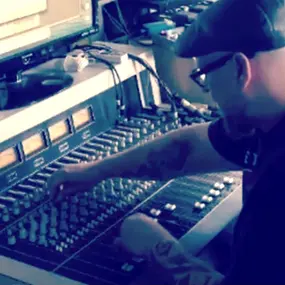
Audio Engineer/ Audio Restoration / Dub
Billy Polo is a versatile audio professional with a deep footprint in the Reggae and Dancehall scenes, renowned for his mixing, mastering, and audio restoration. With a career spanning over two decades, he has become a trusted collaborator for both legendary icons and modern innovators in the industry. As in house engineer for VP Records he has been responsible for mastering and remastering classic works including the iconic One Two by Sister Nancy, Youthman Skanking by Wayne Smith, and other classics and unreleased material by King Jammy, Junjo Lawes, Peter Tosh, Dennis Brown,Gregory Isaacs, Frankie Paul, Barrington Levy, Beres Hammond, Sly and Robbie and the Roots Radics to name a few. An early adopter to Dolby Atmos, Billy has collaborated on immersive versions of tracks for Reggae superstars such as Yellowman, Wayne Wonder, Romain Virgo, Shaggy, Sean Paul, and Beres Hammond. Under his own name and the label PPR Musik, he has released albums Disinformation Dub, Halfway Dub, Axis Mundi, Universal Souljah by Bajah, Out From the Nest by Quizflo, Nothing Shall I Fear by Ruff Scott aka David Culture and After Hours by Morgan Price