

 Apple Podcasts
 Spotify
 YouTube
 Amazon Music
 Castbox
 RSS Feed
 Overcast
 PocketCasts
 Josh Mason: Punk and Circuitry, Zippered Together
The Florida sound artist joins us to discuss 'Kicking A Dark Horse,' a modular album bound into a hardcover book, with each half composed to fill the silences left by the other.
This week we’re putting The Tonearm’s needle on Florida sound artist Josh Mason.
Mason’s new album, Kicking A Dark Horse, is out now on greyfade as a hardcover book paired with modular synthesizer music, the two built to zipper together rather than stand apart.
We talk about the punk rock roots underneath all that circuitry, why only the album’s first and last tracks have a fixed place, and what Cortázar’s Hopscotch has to do with any of it.
(The musical excerpts heard in the interview are from Josh Mason’s Kicking A Dark Horse)
Dig Deeper
• Visit Josh Mason at joshmason.info and follow on Instagram and Bandcamp
• Purchase Kicking A Dark Horse — Bandcamp (FOLIO hardcover + digital)
• European orders — Soundohm
• Kicking A Dark Horse — full catalog page, credits, and press
Label and Format:
• greyfade
• The FOLIO format — greyfade’s hardcover book music edition; Kicking A Dark Horse is the third release
• Josh Mason’s greyfade artist page
• greyfade listening platform
Collaborators:
• Joseph Branciforte — greyfade founder, co-producer, mastering engineer, and FOLIO interior designer
• “In Conversation: Josh Mason & Joseph Branciforte” — the long-form interview at Branciforte’s Patch Notes, covering the gear, the writing, and the punk ethos in Mason’s own words
Instruments and Method:
• Xaoc Devices Leibniz subsystem — the binary-logic modular system the record was built on, which Mason has called “the final boss… in terms of instrument design that made no sense to me”
Literary References:
• Hopscotch by Julio Cortázar — the 1963 novel with an alternate scrambled reading order, translated by Gregory Rabassa
• The Unfortunates by B.S. Johnson — the 1969 “book in a box,” 27 unbound sections with only the first and last fixed
• How to Write One Song by Jeff Tweedy — the songwriting book Lawrence cites on writing by removal
Art References:
• Mark Rothko at Tate Modern — the Rothko Room, hung according to the artist’s own lighting stipulations: “The light, whether natural or artificial, should not be too strong”
Selected Press for Kicking A Dark Horse:
• IGLOO
• PopMatters
• Brainwashed
• Textura
• 15 Questions
• Foxy Digitalis
(This transcript has been lightly edited for clarity.)
Lawrence Peryer: I wanted to start by asking you about the mashup of idioms in the project's title. As someone who's always looking for deeper meaning, I'm curious whether it was fun wordplay, or what that was about for you.
Josh Mason: There is certainly a little bit of both. It's fun wordplay, but I think the title also speaks to how I look at Florida and my home—both the state and the state of mind.
It's this idea that it has so much potential. It has the possibility to do great things and come back, but it's also very much a child that refuses to tie its shoes and then trips, unsurprisingly. It's this great thing, but it can't seem to get out of its own way. So it was a way for me to acknowledge both as being equal in terms of how it affects me, how it affects my work, and how it affects my day-to-day life in terms of how I interface with other people.
Lawrence: Are you a lifelong resident?
Josh: Yes, I was born and raised here. I spent a couple of years in Georgia for school, and then I lived in a couple of other random places, but for the most part I've been here since I was born.
Lawrence: In my lifetime, Florida seems to have changed so much. As an outsider, that's just my perception of it, and how I thought of it as a younger person.
It's interesting to hear the point of view from somebody there, as opposed to making judgments and pronouncements about it from afar. Would you be at all comfortable articulating a little bit more about what you mean about the state getting in its own way?
Josh: Yeah. If you look at the history of the state, in modern history it has always been essentially the backyard playground of the wealthy. Since Flagler built his railroad down here, it has become this thing that slowly just became untenable for the average person. I think there's this sense that people see stuff on the news and they just assume that it's the Wild West, and the reality is that a lot of us are living a very suburban life in a medieval sense, in that we are living on the outside of the castle walls, so to speak, because we just don't have access to certain levels of income or opportunities or whatever it may be.
And you see that in evidence in the day-to-day with the average person. I think there's a lot of a tendency for people who live outside the state to think that everybody is down here at the beach, tanning by the pool or whatever.
And the reality is most of us are not doing that. It's actually the inverse. I think most of us are just trying to get by, and sort of make sense of both our government and how we're perceived by the rest of the country, and to kind of make a name for ourselves in a place where we have so much access to things like environment and opportunity within that environment.
But we constantly have a voting populace and a general community sense of, we're going to vote against our best interest. So it cuts off a lot of people's access to things that, in places like the Pacific Northwest, at least I have found, are just sort of understood—that everybody should have access to this.
There are a lot of systems in place where I stand around and think, oh, it makes sense that they're doing it this way, because everybody should feel this way. Whereas here it's a little bit more stifled, I guess, is probably a good word.
Lawrence: What's fascinating to me about a lot of what you've said is that it reminds me of that concept I hear political commentators talking about now—the horseshoe, and how the far right and the far left have much more in common at the extremes.
That's part of what I see up here: you get the very extreme libertarian-minded folks, and the very extreme, maybe more socialist-leaning folks. Both care very much about the outdoors, or about access to the outdoors, or ecology and preservation. They might go about it in different ways, but they share the priority.
It drives home for me how much of a microcosm of what's going on in the country at large is really playing out in your home. It's really kind of crazy.
In my preparation for our time together, I've read some other interviews and looked at some other things you've said and done. You mentioned that what you're doing here is essentially a flavor of punk rock. Could you tell me about that in your words? What does that mean in ethos and in execution?
Josh: Sure. My first real exposure to music was the punk rock community. I think the first punk band I was in was in seventh grade or something like that. Ever since then, I have existed in this world, made up of a lot of people who are not only supportive of other people, but who fostered this sense of the DIY ethos—the idea that there is nothing you cannot do, and if you cannot do it yourself, we'll help you. It becomes a community thing in some form or fashion.
Growing up in that world taught me to give myself a lot of license to do things that even I didn't really know how to do. Some of my first bands were just screaming, throwing guitars against the wall. It wasn't really even about playing the right notes. It was just about those people in that room that night.
It was a cathartic thing, and that was something that was really important. In addition to that, I learned a lot about music as a vehicle for communication. Anything I've ever done musically—whether it was throwing a guitar against the wall, or making a tape loop, or whatever it is I'm doing now—has always been about giving somebody a reason to reach out.
I've long said that if I reach just one person with my art, then it was worth doing, because it meant I could connect to somebody and have a meaningful exchange, which is becoming harder and harder, as you might imagine, in the modern world where everybody's so cut off from one another physically and in other ways.
That carried into the music I'm doing now. I'm no longer screaming about political injustices or social injustices or whatever else, but I do it with that same thing in mind—connecting to people, and giving somebody a place to feel like anybody can reach out to me if they want to talk about the record, if they want to talk about the gear I used on the record, if they want advice.
I've always tried to be as much of an open door as possible when it comes to that, because all of the things I know how to do have been because somebody else opened the door for me. It just seems like a natural extension of that. It's less violent, it's a little bit less random, but it's still equally as chaotic and meaningful to me to continue this process.
Lawrence: That resonates very profoundly, because when I talk to people about what I'm doing here in interviews in the podcast—this forces me, or allows me, the time to sit with an album for a long period of time, or to sit with a book, or to rewatch a film multiple times, or whatever it is. I have to do it.
I get that luxury to immerse myself in another person's work and their little universe, but also to then spend an hour just sitting down and talking to somebody. It's a pretty selfish act for me. I'm doing this for me.
Josh: Sure. I think especially in this sort of little niche of experimental music, for lack of a better word, that I kind of exist in, there is a tendency for it to be nameless. Not without purpose, but it's very neutral.
I'm glad that it gives somebody the opportunity to sit down with what I'm doing, because what I'm doing is not devoid of a message or a story or a narrative. I want people to be immersed in the things I'm thinking about, whether that's listening to the record, or reading the book, or just emailing me.
I'm happy to provide that, because there are things I want to communicate and there are things I want to get across. And I feel like, especially in the modern world, people feel very removed from the artists who create the art they care about. That's sort of another extension of the punk rock thing: when I was a kid, we played on the floor with everybody. You were an extension of what I was doing, and I was an extension of what you were doing.
I try to maintain that as much as possible, because it's meaningful to me to spur somebody on to think about whatever it is—whether they like what I'm doing or they don't.
Lawrence: The construct of the stage is really interesting. When I was younger and I played music, I can remember situations like what you just articulated: being on the floor with the audience versus being on a stage. When there's a stage, the act of walking up those two or three stairs—by the time you're onto the stage, you're in a different mind space.
The stage is a fascinating transformation that happens even inside of you. You have to counter that. You have to be careful about that. I can understand why rock stars go crazy.
Josh: Yeah. It was something that to me always seemed unbalanced and out of place. Even now, I play shows with the work I'm doing now, and I still would prefer not to be on stages. I would still prefer to be on the ground, quite literally, with other people sitting with me.
It's a very sort of ceremonial act. Again—throwing guitars, or tape loops—I think the idea of equality in art, and that kind of communication, is just crucial to people feeling connected to it.
I mean, I think the more steps, the more feet, the more barrier between you and what's possible for you.
Lawrence: Speaking of connection, I'm really curious about understanding the connection between your new project as a book, your new project as a listening experience, and the relationship between the words and the music such that they exist. What might you feel or think or have to say about them being separate and standalone? Can a reader experience the book without the music, or is that incomplete in your mind?
Josh: I would say, without being harsh, it is an incomplete experience. It was really designed to be two sides of the same coin—the way the music was composed and the way the words were written. I think of it like a zipper.
There's space in the book, the way it's written, but also the way it's typeset, the way it's laid out on the page, and the way the music was composed, taking into consideration things like dynamic range. The idea is that it's supposed to fill in the gap. As you're reading, there are lulls in the page—whether it's a couple of lines, or sometimes pages entirely that are blank.
The idea is that the music is supposed to fill the gap, and then vice versa. When there's a lull in the music, the words, or your ability to read them, takes over. I realize it's a little difficult for some people to read while they're listening to music, and some people can't listen to music while they're reading.
That is not to say that you can't experience them discreetly, but I think to get the full experience I had intended—it's more of a window into my mind to do them at the same time, because I hear all this music while I am experiencing this world. To me, to separate them is not really an option.
It's just this, again, zippering of these events unfolding and the things in my mind being composed.
Lawrence: I feel somewhat validated by that answer, because there were a few points, as I had gotten a little bit more immersed in both of them, where I had that perception or experience of, oh, the layout of the book feels like the way the music sounds.
Some of the music is a little glitchy. It has that stutter stop, and the page was laid out that way. When I first realized it, I was like, oh—it was really a great unfolding and a great discovery. It really was quite a thing to experience.
Josh: That's awesome to hear. I'm really glad you were able to tap into that, because the idea of it being essentially a nonlinear experiment, both in the audio domain and in the words on the page—it's difficult to get people to do that.
There also is a tendency to think, well, this part of the book—if I start reading and I hit play, then it's going to line up perfectly, in a kind of a Pink Floyd Dark Side of the Moon kind of way. But that's not necessarily fixed that way. The idea is that at any point you can hit play, and at any point you can pick up the book and go to any page and just start reading.
There is no real beginning. I tried to allude to that in the beginning, where I said, perhaps I'm getting ahead of myself—this idea that the book is starting before it's supposed to start. I think that's exactly the kind of reading and listening experience I was hoping people would get from it.
Lawrence: So with all that said, did you know it was going to be this companion work, or did Joseph propose that? How did that all come to be?
Josh: When he originally approached me about working on this, it wasn't really a "Hey, do you want to do a book?" I think he was interested in the work I've been doing over time, and he just thought it would be fun to work together, and I think I might have actually been the one to suggest the book part.
I really loved the work he did with Ken and Taylor before. Those books are incredible—from the quality of the physical object itself to the immersive depth, the amount of levels they drilled down on those things was just incredible.
Lawrence: The Taylor book's intense.
Josh: Yeah, I love it. That whole project was just mind-boggling to me—that they even finished it. So at some point I proposed, I really love that series and I would really love to be a part of it. I don't really have any classical training in writing. I don't have any education towards that. It's not something that's a normal part of my practice.
But I like words, and I like talking, and I like connecting with people. So I figured if he was willing, then I could probably find a way to try a more experimental approach, where I gave myself permission to say, well, there are no real rules with what I'm doing with music, so why should I apply rules to what I'm doing with writing?
He seemed to be interested in that idea, and at some point I wrote a couple of pages and sent it to him and said, this is kind of what I was thinking about. He was really excited about it. I think it kind of subverted his idea of what even his project could be. I don't think he ever really anticipated for the FOLIO series to be strictly academic, or strictly in essay form, or things like that.
I think he always hoped it would morph and turn into what it needed to be for whatever given project was assigned to it. So he just kind of let me run with it. It ended up where it ended up, over the course of about two and a half years.
Lawrence: It really strikes me that the label and Joseph have leaned into this idea of it being a format—just like the vinyl format. You might have a 12-inch, or a concept album, or a greatest hits record. The FOLIO project really is a platform more than anything else. It's fascinating.
Modular synthesis in particular seems to me like it's prone to influencing the creative process in terms of the man-machine interface, if you will—the work that goes into the generation of sound and tone and manipulation. Are these just tools you pick up to articulate a sound in your head, or are you an explorer in front of the machine? Can you not dissect it? Are you too close to it?
Josh: That's an interesting question. It's a little bit of all of that. I have been called monomaniacal about this to a degree. There's always been a part of me that has taken whatever I'm doing and tried to push it without really having to totally understand it.
At the outset, I had no idea what was going on. The idea of control voltage was totally foreign to me. At best I understood it as helping hands, an extra pair of hands that would work for me so that I didn't have to dial stuff in—it would just do it automatically. But I spent a lot of years early on with it just, as you say, exploring: plugging stuff in, sometimes inputs to inputs or outputs to outputs, having no idea how this thing's supposed to operate.
I've been working with it now for close to 15 years, and it mostly does not surprise me anymore. I'm the kind of guy who reads every manual 50 times. During COVID, I had a lot of time on my hands, so I taught myself electronics from the ground up, and I started designing my own synthesizers and building my own circuits from scratch.
After a while you start to see that there are only five different paradigms. You can only connect these things in so many ways, and after a while you realize, oh, this isn't actually that complicated. It looks like a bunch of spaghetti, but there's only so many things you can do with it.
So now I'm at the point where I would say 99 percent of the time, I know exactly what's going to happen when I connect A to B. In some ways that's great, and it's productive, because I can get to what I need to get to quicker.
But it also is missing the magic. I'll go back to the punk rock thing: you go to a show and you never really know what's going to happen. You have an idea of what this band sounds like, but you have no idea what your experience is going to be by the end of the show.
That was why, with this album specifically, I chose the pieces that I chose—because it was the last part of this ecosystem that I didn't really understand. The guys who built the modules I used had a very interesting way of going about how they all worked, and I didn't understand it. It was helpful for me to have that impediment in place, and it gave me rails to basically say, okay, you can experiment within this sort of pen of animals and they can run around, but they can't go outside of this perimeter.
I do enjoy happy accidents. I do enjoy sort of incidental sound and things like that. But for the most part, it's not really a mystery to me anymore.
Lawrence: Is there a qualitative comment on that? Is that good or bad? Does that imply mastery, or does it imply boredom?
Josh: That's a great question. (laughter) It depends on what mood you find me in at the time, and whether or not I am missing a deadline.
Lawrence: You mentioned that COVID got you into building instruments and playing with circuits. Were you on that course? Would you have gotten there anyway, do you think, or was it just opportunistic?
Josh: If you ask my parents, who are both engineers, they would say eventually I would get there. I've spent many hours with my dad over the phone talking about the things I had taught myself to build, and he just gets really frustrated, because he's waiting for me to jump from analog to digital. I keep trying to force analog stuff to do things it's just not really designed to do.
But I think eventually I probably would have landed there. I'm just not capable of letting things go. Whether it's a synthesizer or a hi-fi stereo system, I need to understand all the ins and outs to best optimize and do all these things. So I think it was only a matter of time, where I looked at how expensive these things were and how much this was costing me, both in equity and time, to say, well—
Can I do this for less? Can I do it faster? Can I invent something that hasn't been made before? Is it possible for me to fill in the gaps in my systems with the things I want, and not try to force myself to fit into whatever pigeonhole some other manufacturer or designer might want for me? So I think it was only a matter of time.
Lawrence: My original framing for asking you that question was going to be about whether it was filling a need or a want for you. Were you compelled to do this, or were you hearing sounds you couldn't otherwise articulate, so you said, I got to make it myself?
Josh: I think it was more about proving to myself that I could do it. There's a tendency, especially with the modular stuff, to think about it as if it's black magic—like it's some black box that you just cannot crack. A lot of people really enjoy the, let me just plug a bunch of random stuff together and hope that it sounds good. That was never really enough for me.
From day one, when I first started working on them, I was like, I got to figure this out. I got to make sense of this. I got to understand. So it was definitely a need, so that I can sleep at night.
Lawrence: To a certain extent, a book is linear, right? It's got a front and a back and a middle, a beginning and an end. Records, barring shuffle or random, are kind of the same way—they're sequenced, they're in an order, they're put into the world at least in a linear way.
I'm really curious about the role of narrative, because I feel like I've either misunderstood, or I heard a little bit of a tension between two things: you mentioned that you like narrative, but you also mentioned that this work in particular could be dived in and out of, and didn't have to be experienced linearly.
Josh: Yeah, sure. I think it's possible to experience narratives in ways that are not necessarily linear. A great example of this would be a book called Hopscotch by Julio Cortázar. I'm not sure if you're familiar. It is a straightforward novel that you can read from beginning to end and get something out of it. Or you can go into the beginning of the book—there's a page that has a bunch of page numbers, seemingly scrambled—and if you go back and read that book in that page order, you get a different story, using the same text.
It's things like that that have always been fascinating to me. This idea that, not unlike experimental music, it can be whatever you need it to be.
Another example of this would be The Unfortunates by B.S. Johnson, which was a book—quote, unquote, a book—which was actually a box. It's shaped like a book, with a bunch of separate folios, so a couple of pages stapled together, and a loose page that was the beginning of the book and a loose page that was at the end of the book.
You have to read the first page first and the last page last, but everything in between you can read in whatever order you choose. It's fixed text, but it'll still more or less give you a story that, again, is within that sort of pen of animals that can't get outside of the perimeter. I find that that lights up a part of my brain that reading War and Peace doesn't.
I need to be able to use my imagination to fill in things—not necessarily with the meaning of the words, but also the timing of when they arrive, and when certain characters or plot devices enter and exit. Being able to manipulate that on my end is, I think, a really interesting invention of the author, which most formats don't really take into consideration because they are limited.
As you say, a book is an inherently linear format. Same with things like film or tape. So it's just personal—the way that I enjoy media, I guess.
Lawrence: Do you play with chance, or chance games, or like the I Ching? Do you throw sticks? Do you use that in your personal or creative work?
Josh: Not as such. There are ways that I introduce chaotic things, usually because I have been so focused on the modular thing. There are devices in that paradigm that will emit chaotic signals and will emit random signals. In a lot of situations, the gear has a tendency to drive itself, and I have to then corral it.
I have to kind of chase after it and make sure it doesn't fall off the table, so to speak—not so much in the physical world, in terms of some sort of device that I might use to introduce something like chance. It's usually within the instrument itself. It has a built-in chance.
Lawrence: It's like the physics of the machine, almost.
Josh: Yeah, kind of. One way I like to talk about it is spinning plates. I tend to get as many plates spinning as I can until it starts to coalesce into what I hear in my head, and then I spend the rest of the time the way a conductor might be conducting an orchestra—trying to make sure the plates keep spinning without all crashing to the floor.
Lawrence: What are some methodologies for that? Is it removing elements, or is it just a balancing act?
Josh: It's mostly a balancing act, because there's a lot of control signals that sort of run independently of my involvement. I don't have to touch them—they'll just freak out and do all the things they do. It's really just about making sure that it stays in its lane, so to speak.
Lawrence: I remember reading a few years ago, there was a book that Jeff Tweedy from Wilco wrote about songwriting, and he was talking specifically about lyrics. His lyrics are often kind of archaic and cryptic. He likes to write lines and then just take out random words and then rewrite them. It ends up oftentimes being much more evocative, cryptic—but he finds the poetry in it by actually taking out some of the sense making, if I understand correctly. Do you follow a removal process in your writing?
Josh: Definitely, yes. The things I've written, especially in this book—there are many lies by omission, I'll say. I purposely wrote the way that I wrote about what I wrote, such that it's really difficult to tell what is editorial, what's observational, and what is just plain fiction.
There are things in the book that most people are probably going to assume there's no way that happened, or there's no way that's true. And I can say it almost certainly is. That's usually how I arrive at that: by leaving out some very specific details perhaps, or maybe not leaving them out, but massaging them in a direction that sort of glosses over a fact that might be critical to understanding the bigger picture of what it is I was talking about.
So I certainly do understand that type of process.
Lawrence: What's your training? Are you entirely self-taught? Do you have an academic background in music and art?
Josh: I have no real training in music, aside from a couple of years of orchestra, and I was in a jazz band in middle school and high school—and by "in it," I mean it was the class, an elective.
Besides that, and the little bit of chord progressions and stuff my dad taught me, I have pretty much made my own way when it comes to music. Professionally, I am a graphic designer by trade, so I have an education in the arts. I had originally gone to school to be a painter, but decided that I didn't really want to live in a dumpster, so I thought I should change my degree and my career path to something that was actually going to help me pay the bills.
That certainly has played a role in the way I experience music, whether it's listening to it, or writing it, or recording it. I pull a lot from the visual world into the sounds that I make, even though I probably couldn't tell you on paper musically what I was doing. There are direct correlations between the fine art world and the music world.
Lawrence: I do feel that there's certainly a design element that's explicit in the book. There is a color element in the music as well, and that's not introduced by the book, because the book is very specifically not in color. That makes very much sense—that there's a design theory element to the music.
Josh: Yeah. One of the things you learn very early on in fine arts training is color theory: how certain things work together, how certain color beats against another color. Because I didn't really apply any of that to physical, tangible artistic practices, I still took a lot of that with me.
So in the music and in the recording process, there's nothing there that I didn't want to be. I tend to lean into a lot of things that most people get frustrated by—signal-to-noise ratio, for example. Some people want to make the cleanest possible recordings they can.
The way I tend to look at it is, it's almost impossible to paint a painting without making a mess to some degree, whether it's on your person, or accidentally licking the wrong end of the paintbrush and you end up with paint all over your face. Your palette itself becomes a mess of paint as you are producing your thing.
To me, there's evidence of the process. It's not something that I feel can be mutually exclusive. The end result is directly connected to the process, and there's evidence of that process sprinkled in the thing that you're hearing or the thing that you're reading.
Lawrence: I'm really intrigued by, in instrumental music or more creative or abstract music, the role that sequencing plays in an album. Given all the things you've told me about this album and how it can be experienced, where you had intention—how much thought and energy went into the actual sequencing? Because I can imagine a world where you'd say it didn't matter at all, or you'd say it's highly important.
Josh: It's a little bit of both, in the sense that I knew I needed the first song to be the first song, and I knew I needed the last song to be the last song. But everything in between, with one exception, probably could have been in multiple different orders.
The only real important part of it was that the sounds being made in certain songs were connected to certain experiences, some of which are actually in the book. There are things I was directly responding to in my mind—what I was seeing, what I was recording, capturing word-wise.
Besides where it began and where it ends—sort of like where the loop starts and where the loop ends, which is kind of on top of itself. If you think of it as a continuous experience, as if the album never really ended, it's not necessarily the first song and the last song. It's the splice point. Everything in between could be overdubbed and reversed and whatever else you wanted to do with it.
Or in this case, it could be played in a different order if you'd prefer. But that's pretty much the extent of the sequencing, because really you could jump in anywhere you want. That was the whole goal with, again, having the book written that way and the music written the way that it was—that you could really kind of jump in at any point.
I don't tend to think of what I do in terms of start and stop. I try to just drop people into what's already happening, so that regardless of where the drop-in point is, there's something to experience.
Lawrence: You've explored this sort of new format world now with this project. Are you done with that, or is this an interesting new way to create? Do you see this continued pairing of words and music?
Josh: I think in some ways the answer is yes. I can see a path forward where I don't feel compelled to connect them, because this album specifically provided me with an ability to do both. But I could see a path forward where I don't feel like one of them has to rest on the other one.
I could see a path forward where I'm just focusing on words, where I'm not writing any music at all, which I think would be really interesting. When Joe and I were talking about this album, I would send him a new version or an updated proof that I had written, and he would ask me, are you close to finishing it? Do you still think you want to work on it some more?
And I said, the reality is, this thing, Kicking A Dark Horse, is never going to be done. I could write this book, I could write this record, for the rest of my life. But at some point I was going to have to just call it done, quote unquote, for now, so that the object could be produced and people could experience it.
The reality is I could fill volumes of this stuff for as long as I live, just because it's how I operate in the world normally. So it's just a byproduct of my life and my mind and the things that I experience. Now, whether or not I feel compelled to do that is something else—but I could do N plus one volumes, essentially, of this album.
But it has certainly also got me starting to think about other things, and maybe doing things a little bit less experimentally, and writing a little bit more in a linear fashion, just to see if I can—not unlike the synthesizer thing, just to prove to myself that I can do it.
Lawrence: There's this idea of, I could take this book and I could put it in one of those little free libraries. I could divorce this book from the other half of it in a way that you guys can't control. And yet you talked about how it would be sort of an incomplete work then, but the book doesn't make that explicit anywhere.
It's so fascinating to me that it's like, do not consume this on its own, you know? I find it part of the work, in a way—there's a bizarre, almost performance art aspect of this being out there now.
Josh: Yeah, it's an interesting idea, and I think it's something that is sort of an inherent problem with physical media. This is something that Joe and I have talked a lot about, and I know Joe's thinking about this all the time, in terms of how do you bridge that gap between availability and the experience.
I was somebody that grew up listening to albums. I read liner notes. I sat down with it. The idea of a single, or a streaming shuffling of streaming songs, was just—my brain just does not resonate that way. So yeah, you can divorce it. I can't control that, obviously, with how people choose to interface with it. But I can make it known that this is my intention.
The same way that you might find instruction from a sculptor or a painter when you go to a museum, saying this is designed to be stepped on, or stepped around, or looked through at a certain angle, or however. Rothko famously wanted his paintings lit a very specific way, and the gallery could choose to ignore that entirely.
The viewing public might not even realize that it's a necessity, and they're going to experience it and take away what they want from it. But at least he made his wishes known, I guess, as it were.
Lawrence: If I had been the publisher of this, I would have done the completely hack thing and included a bookmark with a QR code, or I would have made the connection permanent and explicit. And I think it's really impressive that it's not.
Josh: In that way though, there is a QR code in the book.
Lawrence: Really?
Josh: And you can listen to it, theoretically. It's still connected. We tried to go as far as we could to not separate them.
Lawrence: That's amazing. That's the downside of my random access in the book—I didn't come to page 14. That's actually kind of fun.
Josh: That's good. That's the idea: it's designed to be explored, regardless of what you get from it.
Lawrence: Thank you so much, Josh. That was a trip, man. I really enjoyed talking with you, and I'm really enjoying the work. I can't thank you enough.
Josh: Awesome. Thanks so much for having me, man. This has been great.
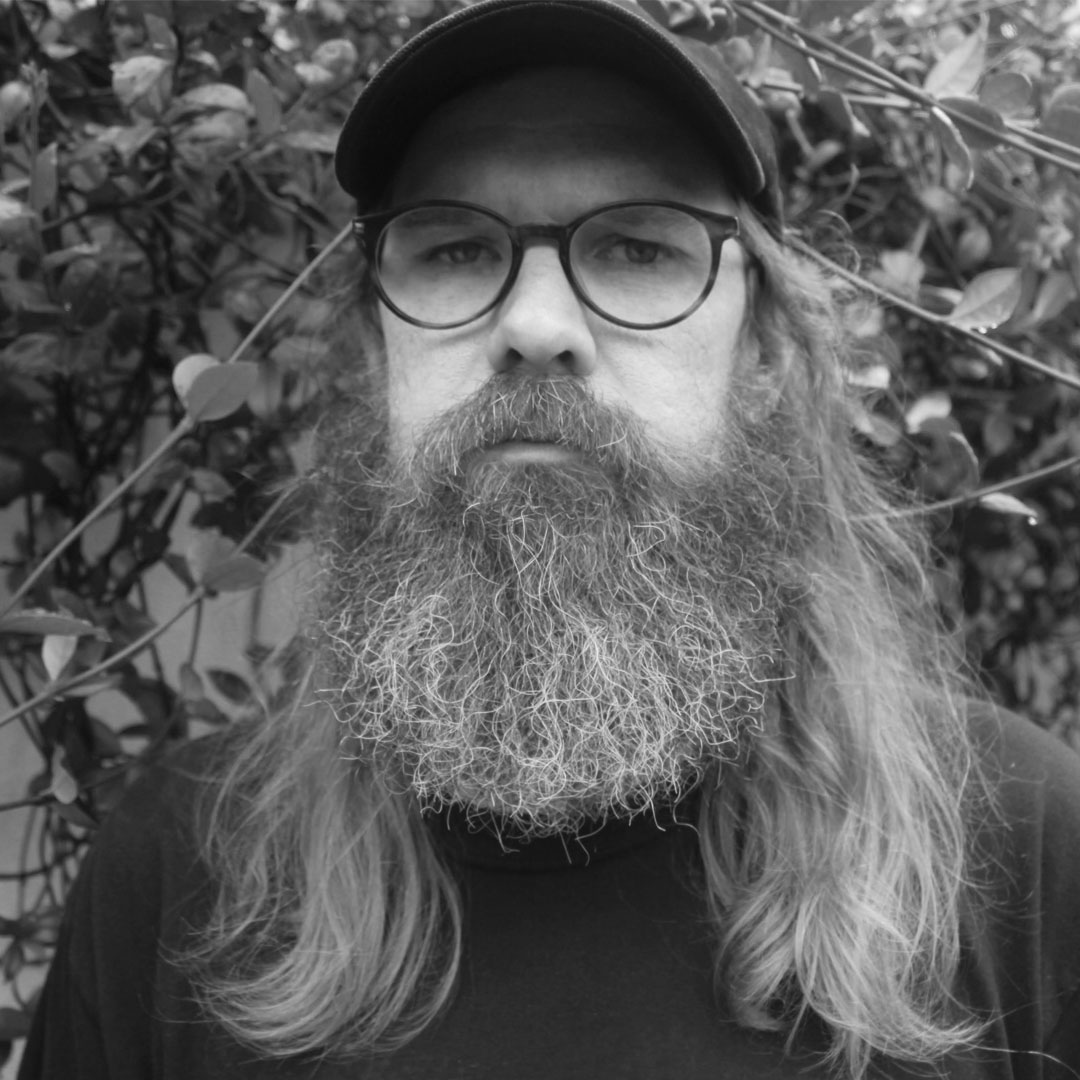
Artist
Josh Mason is a musician and sound artist based in Florida, whose practice brings together modular synthesis, guitar, and electronics in works that are at once exploratory and deeply personal. Since the early 2010s, Mason has released solo recordings on labels including Students of Decay, Longform Editions, Dauw, Florabelle, and his now defunct Sunshine Ltd imprint. His catalog spans the austere meditations of L+ (2018), the place-inflected atmospheres of Coquina Dose (2019), and Utility Music (2021), a multi-modal book-and-CD project that intertwined his circuit-level engineering knowledge with a reflective, diaristic approach to composition and documentation.
Mason’s music is distinguished by an intimacy that treats sound as a vessel for lived experience, often engaging lyrically with themes of landscape, biography, family, and friendship. This personal register is balanced by a rigorous material curiosity, which extends beyond composition into instrument design through Primitive Coastal Electronics. By crafting custom circuits that yield distinctive timbres and serendipitous articulations, Mason creates a feedback loop between technology and memory, engineering and affect.
His work occupies a singular position within contemporary experimental music, where sound is never only an abstract medium but also a site of narrative and remembrance - a means of giving form to the fleeting textures of the everyday.