

 Apple Podcasts
 Spotify
 YouTube
 Amazon Music
 Castbox
 RSS Feed
 Overcast
 PocketCasts
 Michael Graves: The Patient Philosophy of Audio Restoration

Five Grammys and a working museum of tape machines later, Osiris Studio's Michael Graves reflects on the ethics of restoration, the problem of artist intent, and why the work never stops surprising him.
Today, we’re putting The Tonearm’s needle on Michael Graves, a five-time Grammy-winning mastering engineer and the founder of Osiris Studio in Los Angeles.
Michael’s work is restoration as archaeology—pulling performances off deteriorating tapes, damaged acetates, and obsolete formats, then deciding how much intervention is too much. He’s done this for recordings by Hank Williams, Aretha Franklin, Stax songwriters, and field recordings from Cambodia, Sudan, and Mississippi. His most recent Grammy came in 2024 for Written in Their Soul: The Stax Songwriter Demos.
The deeper question his work raises is curatorial: where does restoration end and revisionism begin? What gets rescued, and what stays buried?
Dig Deeper
• Visit Michael Graves at osirisstudio.com and follow Osiris Studio on Instagram
• Michael Graves—Osiris Studio: About
• Michael Graves (sound engineer)—Wikipedia
Key Projects Discussed:
• Written in Their Soul: The Stax Songwriter Demos—7-CD box set on Craft Recordings (2023), Grammy Award for Best Historical Album (2024)
• Blondie: Against the Odds: 1974–1982—box set via Numero Group and UMe (2022)
• Chris Bell: I Am the Cosmos—definitive reissue on Omnivore Recordings (2017)
• Chris Bell: The Complete Chris Bell—6-LP box set, Omnivore Recordings (2017)
Labels:
• Omnivore Recordings
• Numero Group
• Dust-to-Digital
• Analog Africa
• Craft Recordings
• Rhino Records
Artists and People Referenced:
• Chris Bell—Big Star co-founder; I Am the Cosmos recorded in the mid-1970s
• Big Star—Memphis power pop band co-founded by Chris Bell and Alex Chilton
• Geoff Emerick—engineer and producer; produced and recorded Chris Bell’s post-Big Star sessions
• Eddie Floyd—Stax recording artist and songwriter; known for “Knock on Wood”
• Johnny Mercer—American lyricist, songwriter, and Capitol Records co-founder; his archive is held at Georgia State University
• Leonard Cohen—Canadian singer-songwriter; Graves worked on his personal archive
Institutional Archives and Collections:
• Johnny Mercer Collection—Georgia State University
• Alan Lomax and George Pullen Jackson Collection of Sacred Harp Music (1942)—Library of Congress
• Sacred Harp singing—Wikipedia
• Stax Records—Wikipedia
• Stax Museum of American Soul Music
Professional Organizations:
• The Recording Academy
• Association for Recorded Sound Collections (ARSC)
• Audio Engineering Society (AES)
• The Dust-to-Digital Foundation (Graves is a board member and technical advisor)
Other References:
• Mobile Fidelity Sound Lab (MoFi)—audiophile reissue label referenced in the source tape discussion
• The Sacred Harp Publishing Company
• Grammy Award for Best Historical Album
(This transcript has been lightly edited for clarity.)
The Tonearm: Michael Graves
Lawrence Peryer: Tell me your origin story. I want to go back as far as you think is relevant. A lot of people who work in music were never on the investment banking path and then suddenly decided music sounded good—maybe now that's more true of the tech crowd. But I'm curious: how did it start, and how did you realize that your interest in music could become a career path?
Michael Graves: By accident. I wasn't a banker, but I was loading airplanes for Delta Airlines—and cleaning lavatories.
Lawrence: That's like the perfect training for that. (laughter)
Michael: Absolutely. My life in cleaning. I did grow up in a sort of musical house. My mom was a music major, so she was always teaching piano lessons or voice lessons. The soundtrack of my childhood was somebody doing scales—that's all I heard. I've got two older brothers and sisters, and they all had different musical tastes, so I was taking all of this in as a kid. Everybody likes music, but I feel like I liked it in a slightly different way than most people. There was a point in high school when I had my Walkman on and I started dissecting the different instruments in whatever I was listening to. I would rewind the tape: okay, there are the drums, let's listen to that; rewind, let's listen to the guitar. Just trying to pick out the different instruments.
I really had no designs on getting into music at all. Right after high school, I started working for Delta Airlines and did that for eight years. I always had a creative side, more inclined toward art and drawing. There were commercial art classes in high school that I took, and I was really good at detail work. I realized early on that I'm not good at coming up with something out of nothing, but I'm really good at finishing something. I was really good at taking an image and fine-tuning it with these little tools called technical pens—they're pins about the size of a hair. I got really into detail work, and that's still what I do now. When I started working that way, I lost track of time. Four hours later I would still be over the sketchpad, just lost in those details.
I started working for Delta Airlines out of high school because my family was conservative—the whole "you can't make a living, son, time for a real job" conversation. I liked working for Delta. I got flight benefits. But after eight years I left for different reasons and went back to school to get a business degree. I was not the best student; I barely graduated high school. Delta was good for me, though, because I wasn't working at McDonald's as an 18-year-old. I couldn't mouth off.
I was working with guys in their thirties who had families. I had to grow up pretty quickly and learn responsibility.
Lawrence: You had to show up.
Michael: That's right. I had deadlines every day—three flights that had to go out on time. I got really used to working on a timetable, doing what needed to be done to get things finished. That was good training.
But where I am now was completely by accident. When I graduated college in 1998, that was about the time you could buy a CD recorder. I got this four-hundred-dollar CD recorder—the thing you buy for twelve dollars now. And I plugged it into my computer just because I had a big record collection. I've always had a big vinyl collection. I'm fifty-six years old. I graduated high school in 1987, so my formative years were the eighties. I collected a lot of records, a lot of twelve-inch vinyl. I was really into English imports and all kinds of import records. A lot of those twelve-inchers had B-sides that weren't on the album and weren't on CD. So the idea of taking that stuff and digitizing it to CD was just really intriguing to me. I started doing that, and as soon as you put a record onto a CD—or a cassette, for that matter, since those of us of a certain age would take records and record them to cassette—
Now, I love dropping a needle on a record and hearing the surface noise. I have no problem with that. There's a randomness to it; your mind sort of filters it out. But once you fix that to a cassette or a CD, those pops and crackles are fixed forever. They become part of that mix, for lack of a better phrase.
Lawrence: They become part of the arrangement. You hear them.
Michael: Forever! There are songs you hear to this day that you had on a cassette where you're expecting a noise or a pop. It drives me crazy. So when I started doing this to CD, I knew this was a thing. The next step was discovering tools that can remove pops and clicks, and I started going down that hole. This was early days for that kind of thing, especially at the consumer level—it was all strictly a hobby. Then you start doing this and you realize, oh, you can do this. But you're also doing good things and really bad things. You're taking out stuff that shouldn't be taken out, like drum hits. These were all pretty remedial tools back then. I was just trying to figure out how to get the most transparent sound.
Back to when I was a kid working with those little pens—I sort of lost myself in the detail of figuring this out. I started working for individuals with record collections, then found institutions. I was in Atlanta at the time and started working for corporate archives, digitizing their collections, learning as much as I could about different media types. At the beginning I was only focused on grooved media—78s, LPs, 45s, EPs, anything like that.
Tape I really wasn't into at all, and thankfully an older engineer pushed me at one point. "You need to get a tape machine and learn how to use it." I pushed back at first, but I did it. Thank God, because that's such a significant part of the work we do today.
Lawrence: I often think of tape machines as like motorcycles or boats. You better know how to work on them.
Michael: Totally. And that's the other thing about living in Atlanta—we live in LA now. We moved out here about eight years ago. I started collecting these machines in Atlanta. I realized they're old, they're not making new ones, and you've got to find a good tech. It's hard to find a good tech anywhere other than New York or LA because there are just so many machines out here. The infrastructure is just so much greater. You can't throw a rock without hitting a multi-track tape machine around here. There's a lot of institutional knowledge, a lot of guys who came up in the day who know this stuff. When we moved to LA, that's when we really started collecting more tape machines. We've got a working museum of tape machines at this point.
Lawrence: So you first sort of commercialized this interest by helping other collectors and then moving on to more corporate clients. I'm curious about how Osiris came to be and what was the big idea. What were you going to do?
Michael: Here's what I knew: I really enjoyed taking something dirty and polishing it up—not dirty as in a bad recording, but removing the noise, polishing it up, and presenting it to somebody and saying, "Here, listen to this." The idea of making money from it was purely by accident. A neighbor saw me doing this in my basement. I started with a folding card table and my lawnmower sitting next to me—that's how I was doing this stuff. He said, "I've got some records, would you mind doing it for me?" And he paid me about twenty dollars. I thought, I never thought about doing this for money. It was purely just to work on my own collection. Then somebody else asked, one thing led to another, I started getting paid for it, and I was between jobs at that point. It just seemed to work out.
The biggest commercial job I got was when I started doing some work for the archives at Georgia State University's special collections. They have the Johnny Mercer archive. If you're familiar with him—and you should be—Mercer was a great American songwriter, one of the founders of Capitol Records, and also a great performer. So they have his entire archive there. I started working on that, and I was getting paid for it. Again, I'm like, I'm getting paid for doing this thing I sort of just came up with in my basement. It was all very intoxicating.
Lawrence: So let's talk about Osiris a little bit more. It's not exactly a subtle name for the company, given what you do—the Egyptian god of resurrection. I'm curious if you could talk about, not why you landed on that name, but what resurrection implies in the context of the work you're doing.
Michael: First of all, I like the name and also regret it because it's difficult to spell. Nobody knows how to spell it—they always try to put a U in there. I would love to say I was some kind of genius about coming up with that connection. But honestly, the first restoration software I bought was this remedial stuff from a company in Germany. They made a fairly primitive DAW—digital audio workstation—and you could buy a plugin that had a de-clicker and de-noise tool. They called it Osiris. That company went out of business pretty quickly, but I was still using the software and nobody around me had ever heard of it. I thought, well, I'm going to snatch that name because I like it. It just made sense to me. I like the idea of resurrecting recordings that, for lack of a better phrase, if they sound like crap, nobody's going to listen to them. So I can give them a new life.
Lawrence: Could you talk about a recording you worked on where you really felt like you brought something back from the dead—where the transformation of the source material was so complete that you either felt like, wow, I did it, or, wow, we're going to get a new understanding of this artist or this recording? Is there something that really stands out as profound?
Michael: I wish I could think of something specific. The first part of my career was all working with 78s—recordings from the 1920s and '30s, 78 RPM shellac records. A lot of those old Paramount pressings were notoriously bad. There was literally dirt in that shellac when they pressed it, so the noise of the medium buried the performance. Just doing that restoration work was enormously satisfying.
More recently, I did a large collection of recordings from Stax Records—all songwriting demos. Some of these tapes, as you can see from a photo on my website, have tire marks on them. There were chunks of plaster on the reels. So there's a physical restoration component: I'm actually removing plaster and mold, then splicing the tape back together because it's going to break all over the place. The sound itself wasn't great, so there's a lot of restoration involved in just making it listenable and enjoyable.
A lot of times someone will bring me something in a bag with spiderwebs or dead cockroaches and ask, "Can you do anything with this?" And usually we can. There's also a thing called an acetate—aluminum core with a lacquer surface—and a couple of things can happen with those. Because the core is aluminum, they bend really easily. That's okay if it bends slightly, but if it bends too abruptly, the needle's not going to stay on it spinning at 78 RPM. It's like a little ski jump every time. Some of these get dinged on the corner and have a huge divot, so they're completely unplayable until I can figure out how to play them.
Here's something I always say about restoration: when people hear the phrase "audio restoration," they usually think of digital audio restoration tools. Those are great, and I couldn't do my job without them. But there's so much restoration that happens on the analog side before anything gets digitized—cleaning mold away, fixing bent records, even down to your signal chain choices, the stylus you're using for a record. What I try to do is remove as much noise as I can in the analog world before digitizing, so the computer has less work to do. I want to end up with something that sounds analog and pure and transparent. The less computer processing, the better.
Lawrence: That's interesting. It's very similar to the approach in photography or filmmaking or even in a recording studio—you don't want to fall back on "we'll clean it up later." You want to try to get the original source material in as good a shape as possible.
Michael: Absolutely. When I'm talking with other engineers—mostly tracking and mixing engineers who have no idea about this world I live in with needles and playback heads—I equate it to microphone placement. If you're getting a vocal take and your microphone is wrong or in the wrong place, sure, you could try to fix it later, but you're better off getting the right microphone in the right place before it's even captured. It's all about getting the best signal to begin with, and then working on it afterward if you need to.
Lawrence: There's this interesting line between restoration and revision, and you just alluded to it. Even phrases like "cleaning it up" or "removing" something—there's some meddling with the source there. I'm curious how precious you have to be about it. There must be endless trade-offs and decisions. When you get to one of those crossroads and it's like, am I preserving this or am I modifying it?
Michael: Every day. That's every day. And I learned that early on. It's not a bullseye—it's a range. There are different ways to interpret things.
My overarching philosophy is this: whether we're talking about something on an old 78, a tape, a vinyl record—whatever—there's a performance on there, a piece of art, that I'm trying to preserve. Unfortunately, that piece of art lives on a medium that is inherently flawed or damaged. So I'm trying to separate those two things. It's a bit like archaeology. I'm trying to lift that performance off the old record as delicately and transparently as I can, and I'm still going to try to scrub it as completely clean as I can—keeping transparency in mind the whole time. I never want one of my projects to sound like it's been touched by a computer.
A lot of times those two goals can seem at odds. Sometimes you'll hear people say that if you scrub it too clean, you can take all the life out of it. Sure. But my definition of "scrubbing it clean" may be different from someone else's. I want to put you in the room with that performance. That's my overall goal, and it takes care of a lot of the questions that come later.
There's another part of this that gets even trickier. Here's a good example. What the hell—I'll talk about the project. The artist is Chris Bell from Big Star. After he left Big Star, he recorded a song called "I Am the Cosmos." When we were doing a reissue of his recordings for Omnivore, I started working on the song. It's a beautiful, great song, but there's a tape flub in it—sounds like a tape crinkle. So I fixed it. That's what I always do: the performance is one thing, an inherent defect in the tape is another, and I'm going to fix that. And it sounded great.
When I handed it back to the engineer, he said, "Wow, it's really cool that you did that—but is it cool that you did that?" Because unbeknownst to me, when Chris recorded that song, Geoff Emerick produced and recorded it. Those guys were all huge Beatles fans, and Geoff made that splice. He found a piece of tape on the floor, cobbled it together, and made a somewhat clumsy little splice. Sonically it wasn't great, but Chris was attached to it because Geoff Emerick had made it. It was somehow sanctified.
So we went round and round about what to do. Chris is no longer with us, so we asked his brother to weigh in. He said, "You know what, long term, Chris was a perfectionist. Let's go ahead and fix it—make it sound like the splice was never there."
I don't know if that was the right call. As far as I'm concerned, it's such insider baseball. There may have been five people who knew the story about why that splice was there. Everybody else probably just heard it as an annoying little sonic defect in the recording.
Lawrence: The context is everything in that case. There's really no right answer. Trying to interpolate what an artist would have wanted is such a fool's errand. You got as close as you can get, and if that's the person responsible for managing the legacy, then that's what you do.
I had a project that I probably won't name. We were reissuing an album and couldn't get good enough masters. We wound up finding a Mobile Fidelity CD edition of the album—about as clean a transfer as you can imagine. The original producer did a transfer of that, and he said, "I don't hear any difference between this and the master tape. I don't hear compression. This is even better than the master tape because it was transferred when the album came out in 1988." It's always bothered me. That was a great solution at the time, but I just don't know how I feel about it.
Michael: You should feel great about it. I do that all the time. For so many reasons, we can't find masters and have to work from what I wouldn't call "compromised sources," because what I end up giving the client is not compromised at all. In fact, I've had situations where we've gone through that exercise and then actually found the master. I can't help myself—I compare what I did to the master, and it's usually very, very close.
Lawrence: What's the preferred source tape? I know we agreed not to go too far down the technical rabbit hole, but my listeners do like process. What does somebody hand you that makes you say, "Ah, this is great"?
Michael: The answer isn't as obvious as you'd think, and it's not the same every time. You'd think the master is always best. But the master gets played a lot. If it's from the seventies or eighties, that master was played a lot to cut vinyl from. So in some cases the safety master might actually be better because it may not have been played. Now, you're one generation away and you've got a little more hiss in there. But sometimes the safeties aren't great either. You really just have to listen. If someone gives me both a master and a safety on a project, I transfer them both and listen to see which one sounds better.
Lawrence: And what size tape—actually, let's not do that to each other.
Michael: We could go in. That's the thing. People say, "Oh, half inch is better than quarter inch." It really depends. There are so many variables. You can't say one format is inherently better—it also comes down to how well it was recorded.
Lawrence: If you could control for everything else—how it was recorded, degradation, storage, all those things.
Michael: Half inch, thirty inches per second, recorded on an ATR. Perfect.
Lawrence: I had a project during the pandemic—I don't remember the format now, but when I describe it to you, you might know what I'm talking about. It was a multi-track of a live album recorded in 1992 in London. The multi-tracks were on this weird Sony format, and the tape was like metal. I couldn't find a playback machine. I eventually found somebody out west and we sent them the tapes. They had never been cracked open since they were recorded, and they sounded—
Michael: Oh—
Lawrence: It was preserved. Like finding a time machine.
Michael: Those are fun moments. We do a lot of preservation work out of our business. A lot of times we'll preserve artist estates—large collections that I may never touch as a mastering engineer. My main gig is mastering and restoration, but because we live so much in the historical world, we do a lot of preservation of large collections. We did the entire Leonard Cohen archive, for instance. He was prolific enough, and had the funds, to record on whatever the format of the moment was. So it was really fascinating to see all those different formats. He always worked with top-notch engineers, and everything sounded great—whether it was analog or digital.
People take the human factor out of the equation when we talk about what sounds better, which format is superior. You have to look at who recorded it, who did the work to put it on that medium. That's so important.
Lawrence: When you were talking earlier about removing surface noise and realizing you'd accidentally taken out a drum hit—I imagine you can now pinpoint frequencies and noise with much better precision.
Michael: Yes. And I have a technique I came up with about ten years ago where I sort of separate the two. Let's just talk about vinyl records. De-clicking and de-crackling are still the main tools I use. There's AI stuff now and all that, but honestly, ninety to ninety-five percent of what I do involves no AI at all. It's all just H.I.—human intelligence. (laughter)
So: anytime you put a de-clicker to work—your audience probably knows from the name what it does—it removes clicks, which means it's removing transients. That could be a click, a drum hit, a finger snap. It takes that little top edge off of it. If you hit a de-clicker too hard trying to remove surface noise, the drums suffer. You lose that little exciting edge at the very top. Instead of a sharp crack, it'll be a dull thud, and you lose so much energy and excitement.
I figured out a way to hit it pretty hard with a de-clicker and then save the delta—what it's taking out. So I now have a file that contains only transients: the good drum hits and the finger snaps, but also the surface noise ticks. Then I put a gate on that to get rid of the low-level noise, so now I'm left with just those transients that are supposed to be there. Then I combine that with the de-clicked file—call it the dead file, because I've taken the life out of it. I stack it up like a multitrack: the song that's been de-clicked on top, and this other file with just transients underneath. As I play the song through, I can visually see what's supposed to be there and what isn't, and I can highlight and delete the surface noise while keeping all the transients. It's detail work. You get lost in it, and sometimes you get mired in it, but there's something really exciting about coming out the other end thinking, I did this thing that seemed impossible. I saved this recording.
It's also gratifying when I'm working with living artists. A lot of times I'm not, because I'm working with such old recordings and the artists are long gone. But when I am working with artists in their seventies or eighties, there are usually tears—because they thought maybe this song was completely unsalvageable, that whatever art they created was going to be lost. And I've helped resurrect it, for lack of a better phrase.
Lawrence: Have you had cases where you're working on something and you're thinking, the juice isn't worth the squeeze here—there's no commercial case, they just want this for emotional reasons? How do you evaluate what's worth the effort, or is it simply: you're here to serve, you take the job, you do it?
Michael: That's it. I'm sort of a pushover. I don't care if it's somebody's personal recordings. I get a lot of personal acetates—around World War II, servicemen would go into these little recording booths before they shipped out and record little one-minute messages. They're cardboard acetates—cardboard with a lacquer surface, rather than the aluminum core I mentioned earlier.
These things float around in cardboard bins, and there are so many problems with them. I can't charge someone off the street what I would charge a label. The sentimental value is beyond putting a number on. A lot of times I've done these projects for a son or daughter of someone they never met because, a few weeks after this recording was made, that person was killed in the war. I've learned to keep boxes of tissue in my studio, because when you play these back and see people's reactions hearing this voice for the first time, it's deeply emotional.
On the music side, I've learned early on that I can't judge anybody's art. Everybody's song is someone's favorite song. I listen to things with a Western ear. When I started working with recordings from Southeast Asia or different countries in Africa—honestly, when I first started working with it, I thought, this is noise. But I kept telling myself: this is somebody's heart. I'm going to try to make this the best it can possibly be. It's always a personal challenge, even if I don't like the music. Can I do this thing?
Lawrence: It's interesting you mentioned that about the serviceman. Right after the holiday, a local friend of mine reached out—he had an acetate, and his uncle was a trumpet player in the sixties and seventies, in the Navy big band. The uncle passed away young in a car accident, but the family had this acetate they'd never heard. It was unmarked, just had his last name written on the wrapper. So he brought it over and we transferred it. It was a big band—single-sided acetate, I think four tracks. One of the tracks had a little bit of studio chatter, but it was so muffled and low level I couldn't decipher what anybody was saying. I don't have the setup you have. But we took photos of all the labels and everything and did a little bit of research. I'm sure you probably know all the brands involved, but it looked like it was a company that did those kinds of booths where you could go and record an acetate and leave with it.
Michael: A lot of times there was Pepsi—Pepsi had these little booths set up—but you could also go buy these things at Sears under the Silvertone brand. People had home recording setups. Some of the most memorable projects I've ever done are honestly home recordings of people sitting around in the living room, hooking up a machine, and recording themselves playing music. We don't think about it much, but people had to make their own entertainment in the thirties and forties. I'm always amazed at how good the talent level was on some of these recordings—the vocal work, the instrumental work. It's always really fascinating.
Lawrence: Art education was so important, not only in the schools, but it was such an aspirational part of moving to the middle class. Every family had a piano in the sitting room. They sat around and sang. They went to church and sang. Music was integrated—it wasn't a passive activity all the time.
Michael: Right. And you couldn't just go out. I know we're not doing video, but right behind me I'm working on some Alan Lomax recordings from 1942—Sacred Harp recordings. You can Google what Sacred Harp is; it's too hard to do it justice in a short explanation. This was recorded in Alabama. People from surrounding counties would come in and do these singings—four, five, six hundred people just singing as loud as they can. You're going there to participate, but also to be an observer, to be part of this thing. If you've ever been to a Sacred Harp singing, the paint on the walls comes off. It's a spectacle. Whether you're religious or not—and this is all sacred music, obviously—the idea is they're not going to see a movie, they're not going to watch TV, they're not going to see a concert down the road. This was their entertainment, a big day out. And like you said, the banter between the songs is just as fascinating as the performances.
Lawrence: Speaking of behind you, I see some Grammy hardware. And when I think about reissue projects, box sets, liner notes—a lot of craft categories. I think they're especially gratifying. It's a really special thing to recognize this work.
I wanted to ask you about the Stax project, Written in Their Soul. Can you talk a little bit about some of the challenges or rewards in working on that project and that music in particular? It's an important body of music in American pop culture, in American Black culture—tied to the civil rights movement, tied to empowerment.
Michael: Everything you said—totally true. And I would say it's not just important to American culture; what was coming out of Memphis was having ripple effects across the world. So when I get a project like that, the weight of it is not lost on me. I get excited, and I always want to do my best, even more so with something like this.
These recordings were songwriting demos—they were never meant to be released. Because these are Stax songwriters and Stax performers, when someone had an idea for a song, they would just go down the hall to a studio, pick from the best session musicians in the world, and lay these songs down quickly. It was a demonstration, off the cuff, unpolished. To our ears today, it just sounds amazing.
Lawrence: It's like if you're in LA in the eighties and you have Toto as your demo band.
Michael: Exactly. I did the demos for Christopher Cross's first record—the green one with the flamingo. It was so polished and perfect I don't know why he even bothered doing demos. But anyway, back to Stax.
Somewhere in the eighties or nineties, all these tapes got transferred to DATs. My feeling—and I can't verify this—was that a lot of these recordings sounded really muffled. If you work with tape, you know what playing a tape on its reverse side sounds like. A lot of these sounded exactly like that. My sense is that someone had a stack of tapes collecting dust and thought: let's move these to DATs for protection, future archiving, smaller footprint in the archives. They probably had an intern transfer these reel-to-reels onto the DATs, maybe without enough knowledge of how tape works. With quarter-inch tape—especially acetate-based tape—it can look brown on both sides, and the play side is only slightly duller. If you get a tape flipped around, you'll get sound, but it'll be muffled. My feeling is someone hit play, heard sound, and kept going because there were a hundred more tapes behind.
Most of the recordings sounded great. There were some digital issues along the way. But the biggest problems were some of those upside-down tapes. Then the DATs started going bad and introduced additional noise, and when people realized the DATs were deteriorating, they had them transferred to hard drives. These digital files then got sent around all over the place. When I think about all the different noises I've internalized and how I compartmentalize them—is this a digital noise, is this an analog noise, where did this come from?—I have an encyclopedic knowledge of noises. (laughter) You don't realize how much you've accumulated through experience, having worked with thousands of hours of recorded music.
When I started training a new mastering engineer and restoration specialist about six years ago, you don't realize how much you've accumulated until you start trying to pass it on to somebody else. He asks, "What do I do here?" And there's never a single answer. This is what I would normally do, but sometimes you do this, sometimes you do that. It's all in context.
A lot of these Stax artists have passed away. Some of them are still around. Getting their positive feedback on what I had done—that's just the best drug you could get. When you get someone like Eddie Floyd thanking me for helping him save these recordings, it's amazing.
Lawrence: One of the most frustrating things is the demo, the outtake, the songwriting session, the rehearsal—going through a box of tapes, often DATs, where the mission as directed is: let's see if there's anything commercial, anything usable. And I find gems. I'm thinking, we have a song here, or this rehearsal is so amazing, or this bizarre thing where the artist was in the studio with another great set of musicians—a historical artifact that even the bootleggers don't have. And then you go do a playback session and the artist is like, "Eh, there's a reason it got stuck in a box."
Michael: That sort of goes back to what I was saying earlier about everybody's song being someone's favorite song. You just never know. I was in a meeting one time with a current record label that specializes in reevaluating the past—the kind of label that's a darling of Pitchfork and that crowd—and they were evaluating an artist who'd sort of been forgotten. Also in that room was an industry veteran who had worked for Columbia Records, one of the guys who had decided back in the day that this artist just wasn't worth much, and he stood by that to this day. So you've got the original people from the seventies saying, "Eh, this is just mediocre." And you have a new crowd coming up with new ears saying, "This is amazing." I don't know how you make those distinctions.
Lawrence: You work with so many cool labels that specialize in releasing this kind of work. And it's a really amazing ecosystem. As a music industry person, I look at some of these projects, especially when they're treated with such love and care and come out packaged beautifully. And I can't help but think: what are the economics behind this? These aren't labels with massively deep pockets. How is this stuff happening?
Michael: As far as the labels deciding whether or not to do a project, there are financial decisions I'm not part of. I'm sometimes an observer, but I'm not the decision maker. Sometimes I'll give them a deal. The Stax project, for instance—if you look at the hours I spent on it, I was working well below minimum wage on parts of it. There are multiple reasons why I did that. I'm a fanatic: I can't stop myself from trying to make things perfect, so I'll even go in the hole on some of these. I'm not the best businessperson in that respect. But also, it's such an important label, such an important body of recordings. It's part of my résumé, too. There are so many reasons why I'll take a loss on something like that.
Lawrence: Got a Grammy.
Michael: You're right. There's that thing back there that you can't buy. So there are all kinds of reasons. The thing about restoration is that the labels doing this work typically aren't super well funded. I can make a living at this, but if I had to charge for every hour, this stuff just wouldn't exist. I make it up with mastering. Mastering is fast, I enjoy it, and I can sometimes charge more for a straight mastering project than for a mastering-and-restoration project. It just depends on who you're working with. Usually contemporary artists are a little better funded than a historically focused label. But I also just love what I do. I want to be working on things that are fun and challenging and that are going to mean something in the world. Other projects make up for the shortfall. It's a bit like actors doing independent work and then a major studio film—it all works out.
Lawrence: A portfolio approach to your career.
Michael: Exactly. And I'm still learning after almost thirty years. I still love it when I come across something I haven't experienced before. It all goes in the mental tool bag.
Lawrence: I'm curious about your work with the Recording Academy and being a technical advisor to other individuals and organizations. What are you teaching people? What do you hope to convey about this work?
Michael: In the Recording Academy it's really more about the professional organization side. The Recording Academy is known for the Grammys, but it's the professional organization for people who work in the music business. It's flawed, but it also has some really great aspects. It's put me in the room with people I never would have met otherwise—some of the producers I work with today I met through the Recording Academy. It's a way to interact with your tribe. The Grammys are fun, but that's not really why I'm interested in it.
I do like talking to younger engineers about this work. Usually a young engineer is more interested in producing current music, but occasionally I'll find some kid who's interested in the same stuff I do, and I'm talking to them and I can see their eyes go huge. I'm affecting someone. I'm passing on knowledge they won't find anywhere else.
Lawrence: Giving them the bug.
Michael: As far as technical advisor—I think you may be referring to specific organizations—I just have this weird set of knowledge, and wherever I can be effective or helpful, I'm happy to share it. I have no secrets. I'll show you my complete techniques, everything. My dad used to say, "Don't give away all your secrets, son." But part of me thinks: this is a hard business to make a living at. If you want to take my techniques and try to make a living doing it, go for it. Because it is not easy. I'll show you everything I do and how I do it.
Lawrence: It's not the tools—it's the accumulated ability to apply them.
Michael: Totally. Anybody can buy Photoshop, but not everybody can make great pictures. Same with Pro Tools—I own Pro Tools, and I cannot mix to save my life. They're tools. It's all about how you use them.
Lawrence: What prompted the move to Los Angeles? Was it business opportunities, or something else?
Michael: That was the main thing. As I was becoming more known in Atlanta and getting more work, I realized I needed to be in either New York or LA—that's where the recordings are, where the bodies are buried. I love New York, but it's a little too cold. I had come out to LA a lot for business and really liked it. It's not cheap, so it was a huge risk to throw all our chips in and move out here. My wife started working with me—she manages the studio and handles a lot of our operations—so it's a mom-and-pop shop. We decided there was just more opportunity out here. Numero Group is based partly here, as well as in Chicago. My contacts at Omnivore are here. I knew some of the guys at Rhino. And like I mentioned earlier, I wanted to collect more vintage playback machines and needed reliable technicians—people who can work on these things when they act weird. And they act weird all the time.
Lawrence: I have to ask: is there a holy grail recording or collection you'd love to get your hands on that you haven't had access to yet? A white whale you're chasing?
Michael: Not really. I don't even have time to think about that, honestly. I stay busy, and I'm always surprised when a label I work with brings me something I had no idea existed. When Numero Group brought me the Blondie box set, I never thought that was ever in my future—working with a band as iconic as that. I got to remaster all their classic records and then outtakes, directly from the tape. There was some weight there too.
With an unknown artist I have a lot of latitude—I hear the recording, I hear the flaws, I can dial in what I think serves that song best and send it out into the world. When you're dealing with Blondie, people have gotten really attached to those recordings, flaws and all. The minute you start changing things, you're going to hear about it. That was weighing on my mind heavily—how are people going to perceive this? Is this going to end my career if I get Blondie wrong? Fortunately it was received well. But there are all these different things you have to keep in the equation—how far to go. Public perception is part of the stew, but you can't get too lost in it. If you start thinking about public perception too much, you start making bad decisions.
Lawrence: There are several moments throughout this conversation—the issue of legacy, public perception, the aesthetic decisions—where it seems like at some point you just have to compartmentalize and go do the work.
Michael: Absolutely right. And that's one of the things I tell young engineers: whatever they're working on, the minute I hear a recording, I know what I want to do. I have a mental roadmap of what I think it should sound like—not for me, but to serve the art. The minute I start thinking about what the producer really wants, what the artist really wants, how this is going to be perceived—the minute I start making decisions based on what I think somebody else wants—that's a danger zone. You're going to get into a hole fast.
What I've learned is that if I do what I think is right and present it to someone—whether that's a producer, an artist, whoever—and I get feedback, I at least have a good starting point. If instead I start with "I think I know what this producer wants, so I'll do this even though I don't think it's right," and then I get feedback, I'm just lost.
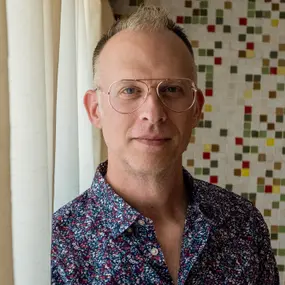
Mastering engineer and audio restoration specialist
Michael Graves is a multi-GRAMMY Award–winning mastering engineer and the founder of Osiris Studio, a mastering, audio restoration, and preservation studio with locations in Los Angeles and Nashville. Widely known for his work on historical recordings, he has restored and mastered projects spanning every genre and era, while also providing traditional mastering for contemporary artists and bands.