


Nels Cline: Tales of a Daunted Guitarist
Fresh from sessions for Trio of Bloom, the Wilco guitarist reflects on working with Craig Taborn and Marcus Gilmore for the first time, reconciling insecurity with ambition, and why comfort might be creativity's biggest enemy.


Most people know Nels Cline as Wilco’s guitarist for the past two decades. But his range goes far beyond indie rock. He’s spent forty-plus years moving between jazz clubs, punk venues, and studios where the rules get bent or thrown out entirely. Rolling Stone put him on their list of the top 100 guitarists of all time, but that tells you nothing about how he actually plays.
His current project is Trio of Bloom, and it pairs him with keyboardist Craig Taborn and drummer Marcus Gilmore on Pyroclastic Records. The three had never played together before producer David Breskin brought them into the studio in November 2024. What came out sounds like a band that’s been working together for years, full of ambient drift and barbed funk the explores the outer edges of dub. We’ll talk about how this project came together and so much more.
(The musical excerpts heard in the interview are from Trio of Bloom’s self-titled album)
Dig Deeper
• Visit Nels Cline at nelscline.com and follow him on Instagram and Facebook
• Visit Craig Taborn at craigtaborn.com and follow him on Instagram
• Visit Marcus Gilmore at drummerslams.com and follow him on Instagram
• Purchase Trio of Bloom from Bandcamp or Qobuz and listen on your streaming platform of choice
• Trio of Bloom on Pyroclastic Records
Collaborators and Producer:
• David Breskin - producer, poet, and creative catalyst
• Kris Davis - founder of Pyroclastic Records
• Pyroclastic Records - independent label supporting creative music
Key Groups and Projects Mentioned:
• Wilco - Nels Cline has been guitarist since 2004
• The Nels Cline Singers - long-running experimental project
• Nels Cline 4 - featuring Julian Lage, Scott Colley, and Tom Rainey
• Consentrik Quartet - with Ingrid Laubrock, Chris Lightcap, and Tom Rainey on Blue Note Records
Cover Songs Referenced:
• Terje Rypdal - What Comes After (ECM, 1974) - source of “Bend It”
• Wayne Shorter & Milton Nascimento - Native Dancer (Columbia, 1975) - source of “Diana”
• Ronald Shannon Jackson & Decoding Society - Eye On You (About Time, 1980) - source of “Nightwhistlers”
Original Compositions Referenced:
• Initiate by Nels Cline Singers (Cryptogramophone, 2010) - source of “Forge” and “King Queen” (which became “Queen King”)
• Marcus Gilmore - “Breath”
• Craig Taborn - “Unreal Light” and “Why Canada”
• Nels Cline - “Eye Shadow Eye,” “Gone Bust”
• Free improvisation - “Bloomers”
Visual Art:
• Sharon Core - painter whose flower series adorns the album
• Irving Penn - photographer whose 1980 ‘Flowers’ series inspired Core’s paintings
• Yancey Richardson Gallery - representing Sharon Core
Historical References:
• Power Tools - Bill Frisell, Melvin Gibbs, Ronald Shannon Jackson trio produced by David Breskin (1987)
• John Zorn’s Cobra - game piece and performance system
• The Knitting Factory (original NYC venue) - seminal downtown jazz and experimental music venue
Musicians and Influences Mentioned:
• Alex Cline - Nels’s twin brother, percussionist
• Yuka Honda - Nels’s wife, member of Cibo Matto
• Jimi Hendrix - “Manic Depression” as defining influence
• John Coltrane - major jazz influence
• Miles Davis - electric period particularly influential
• Derek Bailey - free improvisation pioneer
• Cecil Taylor - avant-garde jazz pianist
• Albert Ayler - free jazz saxophonist
• King Crimson - progressive rock influence
• Mahavishnu Orchestra - jazz fusion influence
• Tim Berne - avant-garde saxophonist and collaborator
• Gregg Bendian - drummer on ‘Interstellar Space Revisited’
• Bill Frisell - guitarist in Power Tools
• Elliott Sharp - experimental guitarist
• Arto Lindsay - guitarist and composer
• Christian Marclay - turntablist and visual artist
• John Zorn - composer, saxophonist, and downtown music catalyst
• Sonny Sharrock - pioneering electric guitarist
NYC Venues Mentioned:
• The Stone - John Zorn’s performance space
• Roulette - experimental music venue in Brooklyn
• Village Vanguard - legendary jazz club
• Littlefield - Brooklyn venue (now closed)
• The Bellhouse - Brooklyn music venue
• iBeam Music Brooklyn - performance space
(This transcript has been lightly edited for clarity.)
LP: I was really intrigued by the comment I read of yours, that you were somewhat daunted. That was the quote, going into the sessions for this record, for Trio of Bloom. I think what I'm curious about as it relates to that comment—you know, that implies a lot of things. It could be butterflies, it could be amped up, it could be all kinds of things.
But what it doesn't seem to be is an uncertainty that causes you to choke, 'cause you show up, right?
Nels Cline: Yeah. Yeah. Well that's actually a very interesting point you're making. I mean, I do a lot of things that I feel I might suck at, but I still do them. You know what I mean? I say yes, and then I hope for the best. Craig and Marcus are absolute wizard level. And I feel like I personally am really more the sort of garage band guy that heard Coltrane and Miles, you know, and of course King Crimson and the Allman Brothers Band and Jimi Hendrix. So it's like, I'm not coming from as deep a well of knowledge and technique as them.
LP: When you're in those contexts, what do the other musicians—what do they look for in playing with Nels?
Nels Cline: I don't know. I mean, I think in Craig's case, he was familiar with a lot of stuff that I've done more so than I actually realized. Craig and I would run into each other periodically when I still lived in Brooklyn. He lived pretty close by right off Flatbush, and we ran into each other a couple of times in airports.
I'd never played with Craig nor Marcus, who I'd never met. So I definitely can't answer. I can't speak to Marcus's impressions or expectations of me. In Craig's case, I think he's aware of a bunch of my stuff and we have so many friends in common, people who've played with Craig on and off for years and years.
So that was actually one of the things I might've been hanging onto to kind of bolster my confidence in this situation. But Craig was probably expecting some funny noises and maybe some attitude, some musical attitude, not attitude from me personally, but, you know, some intensity, some edge of some sort, or the ability to go there.
And I suppose versatility. Certainly Craig and Marcus are extremely versatile. And then we had David Breskin in there as our producer/svengali, who started this whole thing making suggestions and sort of brainstorming here and there with us.
LP: So when you all assembled for the sessions, it seems like it was an incredibly productive few days.
I think I have two questions about the sessions. Going in, how did you prepare when you don't have this—you don't have the same benefit of long-term collaborations and real professional musical relationships like you have in some of your other contexts. Like, what do you need to do to show up, be ready to go?
And then my other question is: Did you all arrive knowing that you needed to leave with a record done?
Nels Cline: Okay. It was pretty luxurious from my standpoint because David gave us three days to record, which is one day longer than probably usual, at least. Certainly for me, I guess I would've assumed that we could finish, get a record done in three days.
I mean, I think we all would have no doubt about that. That's just my point of view about that. As far as preparing and not having played together, we did have some parameters set up by David—assignments, if you will. And that was to bring in two original pieces, and they could be pieces that we had done before that would now be revisited and revamped, and then a cover song, an unoriginal piece by someone else.
That gave us some direction in its own sort of general way. I had no idea what Craig and Marcus were gonna bring in. I was really nervous about whatever they might write because my music reading is really terrible. You know, I'm kind of like typical boomer rocker dude that is mainly self-taught, except for music theory, which I had a great music theory teacher ultimately, but, you know, I started my music studies midway through high school, and this would've been 1972 or so, started discovering this music that was well beyond my grasp and attempts to get decent teachers failed until—and I was a philosophy major in school until I said, I can't kid myself, this is not what I want to be doing.
I wanna play. So I started over with music studies, but only in theoretical studies, not in technical studies. So I'm very much self-taught on the instrument and I was afraid they were gonna write some super intense, really hard to play music. And I was asking to please send it ahead so I could be working on it a couple of months before the session.
And that didn't happen. So I was glad that the music wasn't super brainiac insane, hard to play and hard to read ultimately, but it didn't help my nerves not knowing what they were gonna bring in. In the case of what I brought in, in my prep, I knew that Marcus had not just the ability, but also I think maybe a propensity to play steady, multifaceted groove and just sort of stay the course.
That was something I sort of kept in the back of my mind that we might want to exploit at some point, which usually makes me think ostinato, some sort of worked-out groove. And then I wanted to do this piece of mine that was on the Singers' record Initiate. It was just an intro to the live disc, an excuse to just make a big racket at the end.
So I fleshed it out a little and turned it into kind of what I was conceiving of as a drum concerto of sorts, so it just gets louder and louder. And Craig had complete freedom until this melody, which I didn't have initially on the Initiate, comes in, and then he's sort of free and playing the melody.
But Marcus is just ramping up as far as just as—
LP: Mm-hmm.
Nels Cline: Intensely as he can. And the result was quite satisfying for me. It's really like an avalanche of drums, which makes me really happy. I was so stoked when we finished that take, and then, you know, we did a lot of production, kind of overdubbing a lot of things like that.
A friend of mine was just texting me yesterday. We were going back and forth, many of my friends, about Jack DeJohnette's passing, and then he mentioned how much he's listening to Trio of Bloom and how he wanted to ask me some questions about the overdubbing. Because it feels to him like we're just really playing in a room and there's really quite a lot of, I guess you'd call it production involved with something like "Forge," the piece I'm talking about, where I like to double guitars so they have just extra overtones and then I overdub the melody and Craig overdubbed I think the melody at the end. Yeah. And then he was free the rest of the time, so I also really liked that he had my part in front of him, but he could just—I just let him do whatever he wanted 'cause I know it's gonna be good.
And then that I conceived of as an intro to the Terje Rypdal piece called "Bend It." And just, I've been obsessed with this record since it came out. I guess it came out in '74, '73 maybe. It's one of my favorite records and it's also kind of overlooked. I think a lot of people focus more on Terje's kind of more sweeping, Miles meets Pink Floyd kind of stuff that he ended up doing a little bit later, and that he's become really well known for—kind of more of a rock and, um, almost like a classical music sense of drama and that spaciness, that sort of glacial thing.
And What Comes After is definitely coming more out of the sort of Joe Zawinul Weather Report, John McLaughlin world, and has some of these sort of more classical elements with the oboe, but Barre Phillips is really free on it. And "Bend It" is also an ostinato. So I just looped the bass and we played to that.
So that's another thing that I was doing to prepare, mentally for what I would contribute, so we could have some sort of free—it's very free, but I also dedicated myself to trying to play Terje Rypdal, what I'm assuming is an improvised series of chords at the beginning and try to play them exactly the way he played them, just out of pure obsession and just an homage of sorts. I guess I'm straying from talking about how I prepare for something like this, but I guess I wanted it to be really pretty open, so that we could mess around and find our language. And that's kind of what it sounds like to me. And I find my playing on "Bend It" to be a little disappointingly conservative, but Marcus and Craig do amazing stuff on that take.
So I just have to live with my boring ideas.
LP: Commemorated for all eternity.
Nels Cline: Yeah. For better or worse.
LP: You know, as you were talking about the parameters, the assignment-based approach, I had a very quick and passing thought. Obviously you guys don't need the help, but I thought it was interesting, the assignment-based approach. Because even as you describe it, I was thinking, well, three days is actually a pretty good amount of time and the assignment provides all three of you with kind of a north star to orbit around. And then the three days gives you the license to get the heck out of there.
Nels Cline: Right, right.
LP: And in some ways, that to me seems almost perfect in some ways. I mean, perfect for the fact that you've got a great record and everybody's happy with it. But you know what I mean? Like, did the parameters and the time constriction seem elegant in retrospect?
Nels Cline: Yeah, definitely. And I think also part of why it was so productive is the combination of the three of us together, which was really—I think we all could feel that there was something happening. I did, and I got that vibe from Craig. Marcus is very quiet. But, uh, but extremely articulate and very funny guy, but he's just sort of like a sphinx in a way. Which is great, you know, it's like we're all very different.
But yeah, the chemistry is there. So it wasn't like daunted in a way that... I mean, the final result is sort of beyond something that I could have expected going in just because of the chemistry, right? Even though we had the parameters from David and we were, you know, committed to doing this, and we felt David was on to something when he said, I think you guys would sound great together, which is pretty rare. I mean, for the situations to unfold like that, and it did.
LP: When you look back on the sessions as a whole, and clearly you went in very well considered in terms of what you were going to bring. But when you think back on it, was there a moment in the sessions where you said, I got it now?
Nels Cline: Um, yeah. Gosh, I, I think... well, we did the cover tunes first of all. And then we did these pieces. That, and, and Craig brought in a couple of things. One's this tune called "Unreal Light," the other one's "Why Canada."
And "Why Canada" was, you know, I, I love stuff like Decoding Society, Ronald Shannon Jackson, and the way that Craig came up with this bass line. Because we would just figure it out after he played it for us and then we'd just start playing. And then we go, okay, we're recording. You know, if we have it together, then then let's, let's nail it.
And it, and "Why Canada" is really kind of like just hard-hitting fun, like noise rock, noise, noise, funk, you know. But it's, it's like simple and it's raw, even, I don't know how one would describe it, but it's really raw and nasty and powerful and, and, I loved it.
I felt like, oh man, this is a really fun thing. And I think you can feel that on that track. You can just feel us kind of going for it. And nobody's worrying too much. But then again, Craig and Marcus have this thing where they're completely virtuosic. There's nothing that will trip them up. But they're not showing off. And they're coming from deep musicianship, but they're also loose, and they're really adventurous.
So, so it's sort of like the best of both worlds because you're not getting anxiety about things like, well, we're gonna try this and there's, you know, we may not be able to get it together. They're like, okay, let's do it. You know, and we got it.
LP: So, and I think in listening to the record, even for me as a... I guess I have enough of a frame of reference to hear what's going on, but if it feels effortless to you, yeah, it's a testament to not only...
Nels Cline: Yeah, yeah.
LP: ...the, you know, to what you're talking about, but also to your ability to rise to the occasion.
Nels Cline: Well, it's, but that, yeah, I'm, I'm just glad that I feel like I played okay. You know, I mean, this is the thing about, this insecurity thing and the daunted sort of feeling. It's just like I had to let it go.
I mean, there were a couple of times where I, I sort of interjected—you know, I'll contribute something here and David Breskin was all for it and encouraged it and we'd flesh it out. And I, and I had to go into that mode of letting go and having confidence and trusting the thing. And, but it doesn't come naturally to me at all. I'm one of those creative people who has massive insecurity.
And I've learned to, I've had to reconcile my insecurity with my ambition. And that's another thing entirely. But, you know, I feel like, okay, I shouldn't be too overly critical and analytical. Which is hard. It's harder for me than it is for Craig, Marcus, or David Breskin for that matter.
LP: Well, you're in good company in terms of the insecurity, you know. Ambition and insecurity are not mutually exclusive.
Nels Cline: Yeah. Right. Right. We wouldn't have the high art of psychotherapy without the art world and music world.
LP: Oh yeah. You know, I think, I think what you bring up is really important because, you know, creative people have such a double—I think a double bind around that. And, uh, which is, I think, the nature of looking for your own voice, which is hard for everybody, but there's also an aspect to it of being, you know, overly critical or being a perfectionist that is paralyzing, right?
And I think that's to your, to your point, like you described earlier, like Terje Rypdal. It's like, well, you can't make it better because it's perfect. What we can do is make something different. And I think that's the important distinction.
Nels Cline: I agree. And that's a nice way to look at it, you know. I mean, because I think, uh, you know, and this might be generational, but I think also it's a personality thing.
Yeah. I don't think I'm in a minority in this. But you know, you grow up and you have your musical heroes, right? But you're not trying to replicate them. You, at some point, you realize maybe you want to just play. And it's like you have all these influences, but you're not actually able to do what those artists did.
And at some point you go, oh, I've gotta just be who I am. And, and for me it was pretty tough because I wanted to be in a bunch of different places and, I, so I grew up hearing something like Jimi Hendrix, Derek Bailey, Cecil Taylor, Albert Ayler, but also Black Sabbath. And then you, and you go, you know, where's the middle ground on all of this?
And it took me a while to sort of like reconcile, these things and also realize I don't have to constantly be splitting the difference. That I can just be all those things when I wanna be. It doesn't have to always be like, okay, now we're gonna, you know, marry Coltrane to Mastodon or something like that. You know, that's an easy example, but it, I don't have to force all that.
LP: Well, it's interesting because I go back to—so your original cover song choice, you chose Terje Rypdal. Craig chose Ronald Shannon Jackson, and then, and Marcus chose Wayne Shorter and Milton Nascimento, I think.
Nels Cline: Yes. Yes. "Diana."
LP: And you know, uh, you know, your... I wanna come back to "Diana" a little bit because it's just, you know, it's a showstopper, but, you know, like the, the juxtaposition between each of those choices is like a clinic in what it sounds like when you play together with three people who have really broad scope and experience, but who are also clearly deeply rooted in and attached to their past in ways that are then leveraging the present, right?
Nels Cline: Yeah, yeah.
LP: You can hear all of that. I, you know, I've listened to this record about a half a dozen times already, and you can hear what you just spoke about.
Nels Cline: Oh, thanks. Well, and you mentioned "Diana," which is so interesting because I actually got Breskin to play that for us in the studio from his phone because I wasn't aware of it. And Craig was—he was hip to it. And I felt like, oh man, this thing is like perfect. You know, it's like pure perfection. It's like one of those, Wayne Shorter is—Wayne Shorter, Milton Nascimento's Native Dancer, which was released, I think, on Columbia. It was just like a perfect combination.
And "Diana" is this song in 4/4 and it's so simple, but yet so deep. And Milton's, it's so beautiful and organic. And Wayne's so tasteful and so perfect at the same time. It's spare and yet it's so full. So, and then what do you do with that, you know? You could really fuck that up or, or at the very least make something pointless, you know?
'Cause who's gonna improve upon that? So I think what we arrived at with, uh, with Marcus's, um, uh, you know, encouragement and, vision of it was, let's make it different. Let's not have a 4/4 thing, you know, so Marcus tune the toms for all the chords. And we were improvising on this, and then slowly the form of "Diana" emerged from the improvisation. And then the, the section where we sort of find our more of a composed sort of thing unfolded and it became its own thing. But it really does, like, take you into a meditation on that piece, which I think is super deep.
And I think that was probably maybe the hardest take to get, but yeah, I love that. I'm so glad we did that one. And I think, you know, between the three pieces, my piece was maybe the most kind of blatantly aggressive rock thing, and, and that's the one I brought in. And I was self-conscious about it. You know, I'm like, oh, here's this white dude guitarist coming in with this kind of garage-y thing.
And you know, and we're supposed to be doing Decoding Society and, and Native Dancer. You know what I mean? But, um, but I got over it and, and I'm kind of glad that I brought that in there because I think it added something to the mix.
LP: You know, as I'm listening to it, I, I, you know, to me it really does, they all land. Like, they all land because you all have, I think, the respect to... I mean, the cover tunes are not slavish. They're not copies. And by virtue of the fact that you, Craig, and Marcus are bringing your individual experiences to them, they become different things.
And so they honor the original, they pay homage to them, but they're also like, they take off in new directions, which I think is, to me, what makes this record really exciting. It's, you know, when you say things like, you know, I was worried about this, or I was insecure about that. That's not what I hear. What I hear is three people who have enormous respect for each other, enormous respect for the music, and the confidence to say, we're gonna make something new here.
Nels Cline: Right. Thank you. I appreciate that. And I think that is true. But for me, I'm just, you know, you take someone like Craig Taborn, and you know, I've heard his solo records. I've heard him with Ches Smith. I've heard him with Chris Potter. I've heard him with Tim Berne. You know, he's on a bunch of those weird Braille records. I've heard him all over the place, and he plays beautifully. He plays intensely. He's like, he's one of those—and I think Marcus is one of these people too. It's like they're playing from this place of, maybe the word is flow.
They're so accomplished and so technically gifted that they can just be in the music. And I feel like I'm a bit more, um, you know, coming from a place of more anxiety about the process. Even though maybe it doesn't come through in the music, but it's, I'm just more self-conscious maybe. And, you know, I think that's probably one reason why I've maybe—I feel like I've had a lot of different kinds of success in a bunch of different contexts.
Like with Wilco, you know, it's a very different thing. I'm coming into a band that's established. I'm not the bandleader. I'm contributing. I'm adding something. I'm part of a collective. But I'm not the decider, you know what I mean? And then I have these other situations where I am more of the director of things. And so I guess I'm just, I'm adaptable. And I don't mind not being in charge all the time. I actually really like that.
LP: Well, I think, you know, one of the things that I think is fascinating about—I've had this conversation with other musicians—is, you know, when you find yourself in a context like Wilco, which is, you know, obviously a very successful rock band, very high profile, touring all the time, you know, all the things that go along with that. That's a very different proposition than being in a situation where you are sort of the driving force or the creative director, if you will.
And I think, you know, one of the things that I've always found interesting about musicians who can do both is that they're comfortable in their own skin enough to be able to contribute in whatever way is appropriate for the context. And I think that's actually a really important skill.
Nels Cline: Yeah. I appreciate you saying that. I mean, I think that's true. And I think it's also—it probably means that I'm not the kind of person who needs to have a giant ego about things. You know, I can, I can be part of something bigger. I can contribute. I can be supportive. I can also lead when it's appropriate. But I don't need to always be the center of attention or the guy calling all the shots.
And I think that's, that's served me well. Because I think if I was more rigid about that, I probably wouldn't have been in Wilco for 20 years. You know what I mean? Like, I think part of what's made that work is that I can be flexible and I can be supportive and I can contribute without needing to dominate or control everything.
LP: Well, and I think that's also, you know, it speaks to a level of maturity as an artist and as a person. You know, I think that understanding where you fit in different contexts and being comfortable with that is, is a really important thing. And I think it's something that a lot of people struggle with.
And I, you know, I think part of what makes this record work so well is that all three of you seem to understand that implicitly. Like, you're not trying to dominate. You're not trying to show off. You're not trying to prove anything. You're just making music together. And I think that comes through.
Nels Cline: Yeah. I think that's a really good point. And I think, you know, David Breskin, who produced the record, you know, he's been doing this for a long time. He's worked with a lot of different musicians. And I think part of what he brought to the sessions was, you know, creating an environment where that could happen. Where we felt comfortable taking risks and trying things and not worrying too much about, you know, having to prove anything or show off or whatever.
And I think that was really important. Because I think without that, you know, it could have been a very different kind of record. It could have been more, you know, competitive or more about individual virtuosity rather than collective music-making. And I think that what we ended up with is something that feels very organic and very collaborative.
LP: You know, I want to go back to something you said earlier about, you know, growing up and having all these different influences and trying to figure out where you fit. And I think, you know, one of the things that I find really interesting about your career is that you've managed to navigate all these different worlds. You know, you've got the experimental jazz thing, you've got the rock thing with Wilco, you've got the noise stuff, you've got all these different facets.
And I'm curious, you know, how do you think about that? Do you see those as separate things or do you see them as all part of the same thing?
Nels Cline: That's a great question. I think for me, it's all part of the same thing. You know, I don't really think of myself as having these separate identities or separate musical personalities. I think it's all just me. It's just different aspects of who I am as a musician and as a person.
And I think, you know, when I was younger, I probably was more self-conscious about it. I probably worried more about, you know, am I a jazz guy or am I a rock guy or am I this or that. But at this point in my life and my career, I just don't think about it that way anymore. I just think about, you know, what's the music I want to make? What's the context I'm in? What's appropriate? What's going to serve the music best?
And I think that's allowed me to be more flexible and more open to different kinds of opportunities. Because I'm not trying to protect some sort of identity or some sort of brand or whatever. I'm just trying to make music that feels authentic to me in whatever context I'm in.
LP: I think that's a really healthy way to approach it. And I think, you know, it also probably makes you a better collaborator because you're not coming in with a bunch of preconceived notions about what you're supposed to be or what you're supposed to sound like. You're just responding to what's happening in the moment.
Nels Cline: Yeah. I think that's true. And I think, you know, part of what's helped me with that is just doing a lot of different things over the years. You know, I've been fortunate to work with a lot of different kinds of musicians in a lot of different contexts. And each one of those experiences has taught me something.
And I think, you know, when you're in a situation like this Trio of Bloom thing, where it's three people who've never played together before, you have to be able to listen and respond and adapt. You can't just come in with your thing and try to impose it on everybody else. You have to be open to what's happening and be willing to go with it.
LP: You know, I think that's one of the things that really comes through on the record is that sense of listening. You can hear all three of you really paying attention to what the others are doing. And I think that's, you know, that's what makes it exciting. That's what makes it feel alive and spontaneous, even though there was clearly a lot of thought that went into it beforehand.
Nels Cline: Yeah. And I think, you know, part of what made that possible was the way the sessions were structured. You know, we had these parameters from David, but within those parameters, there was a lot of freedom. And I think that allowed us to be spontaneous and respond to each other without feeling like we had to stick to some rigid plan.
And I think, you know, some of the best moments on the record are the moments where we just went with something that happened in the moment. You know, like that free improvisation, "Bloomers," that's in the middle of the record. That was just us playing and responding to each other in real time. And I think that's one of the most exciting pieces on the record.
LP: Yeah. I mean, I think "Bloomers" is really the heart of the record in a lot of ways. It's, you know, it's this ten-minute exploration that really showcases what all three of you can do when you just let go and play together.
Nels Cline: Yeah. And I think, you know, that was probably the most nerve-wracking thing for me going into the sessions. Because I knew we were gonna do some free improvisation, and I was like, oh man, I hope I don't suck at this. You know, because Craig and Marcus are so good at that. They've done so much of that kind of playing.
And I think, you know, I've done a fair amount of it too, but I still always feel a little bit out of my depth when I'm doing that kind of thing. But once we got into it, it was like, oh, this is actually really fun. You know, we're just making sound and responding to each other, and it doesn't have to be complicated. It just has to be honest and in the moment.
LP: You know, I think that's a really important distinction. Because I think a lot of times when people think about free improvisation, they think it's about being as crazy and out there as possible. But really, it's about listening and responding and being present.
Nels Cline: Absolutely. And I think, you know, the best free improvisation is the stuff where you can hear people really listening to each other and building something together, rather than just everybody going off in their own direction and making noise.
And I think, you know, with Craig and Marcus, that's something they're really good at. They're really good at listening and responding. And I think that's what made "Bloomers" work. We were all paying attention to what the others were doing and building on it.
LP: So, you know, thinking about the sessions as a whole and the record that came out of it, what are you most proud of? What do you think worked best?
Nels Cline: Oh, that's a tough question. I think, you know, I'm really proud of the fact that we made something that feels cohesive, even though it has all these different elements and different influences. You know, it's not like we're just bouncing around from one thing to another with no connection.
I think there's a through-line to the record. There's a sense of continuity and flow, even though the pieces are very different from each other. And I think that's a testament to the chemistry between the three of us and also to David Breskin's production and his vision for what the record could be.
And I think, you know, I'm also really proud of the fact that we took some risks. We did things that could have not worked. And I think they did work. And I think that's, you know, that's what makes the record exciting to me. It's not just us playing it safe and doing what we know how to do. We were really pushing ourselves and trying new things.
LP: You know, I think that comes through. And I think, you know, one of the things that makes the record compelling is that sense of adventure and that sense of risk-taking. You can hear that you guys were challenging yourselves and each other.
Nels Cline: Yeah. And I think, you know, that's something that I always try to do in any musical situation I'm in. I try to push myself and not just rest on my laurels or do what I know I can do. I want to try to do things that are maybe a little bit beyond my reach and see what happens.
And I think, you know, sometimes that means failing or making mistakes or not being perfect. But I think that's okay. I think that's part of the process. And I think, you know, if you're not taking risks and pushing yourself, you're probably not growing as an artist.
LP: Absolutely. You know, I think that's one of the things that separates good musicians from great musicians is that willingness to take risks and be vulnerable and put yourself out there, even when you're not sure it's gonna work.
Nels Cline: Yeah. I think that's true. And I think, you know, it's something that I've had to work on over the years. Because I think, you know, when you're younger, you're maybe more willing to take risks because you don't have as much to lose. But as you get older and you establish a career and a reputation, there can be this tendency to play it safe and not want to mess things up.
And I think, you know, I've tried to resist that. I've tried to stay open to new experiences and new challenges and not get too comfortable. Because I think comfort is the enemy of creativity in a lot of ways.
LP: Well, and I think, you know, you've certainly demonstrated that over the course of your career. I mean, you know, you could have easily just stayed in one lane and done the same thing over and over again. But instead, you've constantly been seeking out new challenges and new collaborations and new contexts to work in.
Nels Cline: Yeah. I mean, I think that's just who I am as a person and as a musician. I get bored easily. I don't want to do the same thing over and over again. I want to keep learning and growing and exploring. And I think, you know, that's what makes music exciting for me. It's not about mastering something and then just repeating it. It's about constant discovery and constant exploration.
LP: You know, I want to talk a little bit about the visual aspect of the record. The artwork is by Sharon Core, and it's based on Irving Penn photographs. Can you talk a little bit about that and how that came about?
Nels Cline: Yeah. So David Breskin, who produced the record, he has these connections in the art world. And he's done a bunch of records where he's worked with visual artists to create the artwork. And I think he felt that this record deserved something special visually.
And so he reached out to Sharon Core, who is this incredible painter. And she had done this series of paintings that were based on Irving Penn's flower photographs. Penn did this famous series of flower photographs in 1980, and Sharon Core painted versions of those photographs. So they're paintings of photographs, which is this interesting meta thing.
And I think David felt that that resonated with what we were doing on the record. You know, we were taking these existing pieces of music and reimagining them and creating new versions of them. And I think there's this parallel there with what Sharon Core was doing, taking these photographs and reinterpreting them as paintings.
And I think the imagery itself is also really beautiful and evocative. The flowers have this quality of being both natural and artificial at the same time. They're beautiful, but they're also a little bit strange and unsettling. And I think that mirrors something about the music on the record. It's beautiful, but it's also got this edge to it. It's not just pretty music. There's something more complex going on.
LP: Yeah. I think that's a really apt description. And I think, you know, the name Trio of Bloom obviously connects to that floral imagery. But there's also this sense of, you know, blooming as in growing and developing and unfolding. And I think that's very much what the music does.
Nels Cline: Absolutely. Yeah. I think the title works on multiple levels. There's the obvious floral connection, but there's also this idea of something coming into being, something developing and growing. And I think that's very much what happened in the sessions. We came together and something bloomed out of that meeting.
And I think, you know, the artwork really captures that. It's got this quality of something that's alive and growing, but also something that's been carefully constructed and thought about. And I think that's what we did with the music too.
LP: So, you know, now that the record's out and people are hearing it, what are you hoping people take away from it? What do you want listeners to experience when they hear Trio of Bloom?
Nels Cline: You know, I think I just want people to hear three musicians who are really excited to be playing together and making music together. I want them to hear the joy and the energy and the spontaneity that was in the sessions. And I want them to hear something that's different from what they might expect from any of us individually.
I think, you know, when you put three musicians together who come from different backgrounds and have different strengths, you get something that's greater than the sum of its parts. And I hope that's what people hear. I hope they hear something that's surprising and exciting and that makes them want to listen again and discover new things each time.
LP: You mentioned earlier that you're not sure if this band will ever play live. Is that something you'd like to do? Would you like to take this music on the road?
Nels Cline: Oh, I would love to. I think it would be really exciting to play this music live. But the logistics of it are really challenging. You know, Craig is based in New York. I'm in Los Angeles. Marcus is in New York. We all have really busy schedules with other projects.
And then there's the challenge of how do you perform this music live when there's so much overdubbing and production on the record. You know, we'd have to figure out how to recreate that or how to reimagine it for a live setting. And I think that would be really interesting, but it would take some work.
So I don't know if it'll happen. I hope it does. But we'll see. I think if the opportunity presented itself and the timing worked out, we would definitely be interested in doing it.
LP: Well, I hope it happens because I think it would be a really exciting thing to see live.
Nels Cline: Yeah. Me too. And I think, you know, it would be a different experience from the record. It would be more raw and more spontaneous. And I think that could be really exciting.
LP: So, you know, looking ahead, what's next for you? What are you working on? What's coming up?
Nels Cline: Well, I've got a bunch of things going on. I'm still touring with Wilco. We've got some dates coming up. And then I've got the Consentrik Quartet, which is this group with Ingrid Laubrock, Chris Lightcap, and Tom Rainey. We just put out a record on Blue Note, and we're doing some shows.
And then I've always got various other projects going on. You know, I'm always looking for new things to do and new people to play with. I'm never short of ideas or opportunities, which is a blessing. It keeps me busy and keeps me engaged and keeps me from getting bored.
LP: Well, it sounds like you've got a lot going on. And I'm excited to hear whatever comes next.
Nels Cline: Yeah. Thanks. Me too.
LP: You know, I want to ask you about something that's been on my mind. You've been with Wilco now for, what, 20 years?
Nels Cline: Yeah. 20 years. It's crazy. I joined in 2004, so yeah, 20 years.
LP: That's a significant chunk of time. And I'm curious, you know, how has that experience shaped you as a musician? How has being in Wilco influenced the other work you do?
Nels Cline: Oh, that's a great question. I think it's influenced me in a lot of ways. I mean, first of all, just the experience of being in a band that tours as much as Wilco does and plays for big audiences, that's been really valuable. It's taught me a lot about stamina and consistency and how to pace yourself and how to bring your best to the stage night after night.
And I think it's also influenced my playing in more subtle ways. You know, being in Wilco has taught me about restraint and about serving the song and not always needing to play a lot or show off. Jeff Tweedy is a great songwriter, and the songs are really strong. And my job is to enhance those songs, not to dominate them or take them over.
And I think that's been a really valuable lesson for me. Because I think early in my career, I was maybe more focused on showcasing my own playing and my own ideas. And being in Wilco has taught me about being part of something bigger and about how to contribute without dominating.
And I think that's carried over into my other work. I think I'm a better listener now. I'm better at responding to what other people are doing and finding my place in an ensemble. And I think that's made me a better collaborator overall.
LP: That's a really thoughtful answer. And I think, you know, it speaks to what we were talking about earlier about being comfortable in different roles and different contexts.
Nels Cline: Yeah. I think so. And I think, you know, being in Wilco has also given me a certain amount of security and stability that's allowed me to take more risks with my other projects. You know, I don't have to worry as much about whether a project is going to be commercially successful or whether it's going to make money. I can just focus on making music that I find interesting and challenging.
And I think that freedom has been really important for my development as an artist. It's allowed me to explore things that I might not have been able to explore otherwise.
LP: That makes a lot of sense. And I think, you know, it's interesting that you've been able to maintain both aspects of your career, the more commercial successful thing with Wilco and then all these more experimental projects.
Nels Cline: Yeah. I feel really fortunate that I've been able to do that. Because I think a lot of musicians end up having to choose one or the other. You either go the commercial route or you go the experimental route. And I've been lucky enough to be able to do both.
And I think they feed each other in interesting ways. The discipline and the craft that I've developed with Wilco makes me better at the experimental stuff. And the freedom and the risk-taking of the experimental stuff keeps me fresh and engaged for the Wilco gigs. So they're complementary in a lot of ways.
LP: You know, I want to shift gears a little bit and talk about New York. You lived in Brooklyn for a while, and you mentioned that you and Craig would run into each other. What was that period like for you living in New York?
Nels Cline: Oh, that was a great period. I mean, New York is just such an incredible place for music. The scene there is so vibrant and so diverse. And I think, you know, being there and being able to go out and hear music all the time and meet other musicians, that was really inspiring.
I mean, I grew up in Los Angeles, and LA has a great scene too, but it's very spread out and it's harder to have that sense of community. In New York, everything's more concentrated. You can go to three or four shows in a night if you want to. And you're constantly running into people and making connections.
And I think that was really valuable for me. I met a lot of great musicians during that time. I got to play with a lot of different people. And I think it really expanded my horizons and pushed me in new directions.
LP: Are you still connected to the New York scene? Do you still try to get out there and play when you can?
Nels Cline: Yeah. I mean, I don't live there anymore, but I still get out there pretty regularly. And I try to play when I can. I've got some regular collaborators there, like Tom Rainey, who's an incredible drummer. And when I'm in town, I try to catch up with people and maybe do some impromptu gigs or sessions.
And that's some of the best music I've heard in the last 30 years. When I'm in New York City and he's playing, I go. I played with him once with Elias Stemeseder and Tom Rainey. It was really fun. But when I go and hear Gregg Belisle-Chi and Tom and maybe Chris Potter's playing, or John Hébert—it's some of the best music you'll hear anywhere in my opinion.
So I'm happy to go there. Consentrik Quartet just played Littlefield, and all around the same area. You know, it was the Bellhouse and all that. The iBeam was a really good place for us to play, I think. An open floor. It's a rock show. That's right. Yeah.
LP: Yeah.
When you mentioned the original Knitting Factory, I have one fond memory in particular I love to share when I talk with artists about—one night, it was a year or two before he passed, Sonny Sharrock did two sets there one night. Here it is, you know, 30-some-odd years later, and I still—it's vivid. And that was such an incredible room, and he was such an incredible musician and human. But I'm curious—when did you first encounter Zorn?
Nels Cline: Oh, well that would've been 1978 maybe. Yeah. Because a good friend of mine and my brother's that we played music with in high school, named Lee Kaplan, became really invested in improvised music. I guess it was kind of an influence in some way. And he and I were working at Rhino Records in West Los Angeles together and along with this guy named Ivan Spiegel and owner of Rhino Records, Richard Foos, kind of got a concert series going that Lee booked for local improvisers, but also improvisers that, he wondered about, because they weren't playing Los Angeles. They would go and play the Keystone or Mabuhay or whatever in the Bay Area and they wouldn't come down to Los Angeles.
It was kind of—people were avoiding it like the plague. So among the concerts that he presented, one of them was a two-night event, which was very unusual. It was always on Sundays, but he did a Sunday-Monday with Eugene Chadbourne and John Zorn duo. John, I think, was just fresh out of college at that point.
And they were doing a tour on Greyhound buses, with Eugene Chadbourne wearing all white, like he was dressed like a milkman, with no change of clothes as far as I know. It's just crazy and bold. And I don't think I had a conversation with John Zorn at that point, but that was my first encounter with his playing, with his thing.
I think the next time, the only time I saw him in the eighties in New York, 'cause he was doing all that stuff at the Pyramid Club—all these things that I missed—but my brother Alex and I did go hear Cobra at Roulette, and I think it was the first Cobra. Yeah. And that was in '84. And it was really, really mind-blowing.
That was—we had just been in Europe, actually, my brother and me with Julius Hemphill and the Jaw Band, and played in Willisau, our first gig in Europe, my first gig in Europe ever, in Switzerland. And we opened for John, and John was at that time playing in a—he had put a group together with David Moss, Christian Marclay, and Arto Lindsay. And then George Lewis sat in actually with them. And so there I was, ran into Arto and John at a gas station somewhere on that tour. I remember Arto looking at my regular Fender hard-shell case for my Strat, my horrible Strat that I used to play, and just basically shaking his head like, are you crazy? You know that—and he was right. The case got destroyed by the airlines, but it's a Fender, you know, he's like, try to break it. It was pretty sturdy. But anyway, so then days later I was standing at the corner of Fourth and Broadway to go into Tower Records and there was Christian Marclay.
I didn't realize that he lived in New York City, because he's Swiss and we were playing in Willisau and he was doing all this wild stuff with turntables. I thought he lived in Switzerland, but then we just said hello, and the next thing I knew, he was on this Cobra gig. So Christian became sort of on my radar very heavily in one week.
Amazing. It was really wild. The band, the Cobra band at that time—the three guitarists I always like to tell people were Arto Lindsay, Bill Frisell, and Elliott Sharp.
LP: Murderer's row.
Nels Cline: Yeah. So it was a lot of stuff going on there, John doing the, you know, holding up the cards and doing the bird calls.
LP: Yeah. That's really something. You know, I was fortunate enough to see some of the run of shows when he turned 40, when he turned 50, and then that marathon show when he turned 60. A couple years ago, my son started college in San Francisco and he called me one day and he said, Dad, I'm going to see Electric Masada for Zorn's 70th.
And I said, I did okay as a dad.
Nels Cline: Oh yeah, man. Well, John's been super kind to me, and I've done a few of the—when The Stone was still happening, I did a couple of those improv nights. That's the only time that he and I played together. But that's super fun. He's always been really very kind and generous to me and some of my pals.
LP: Yeah. Beautiful stuff. Nels, thank you so much, not least of which for all the music.
Nels Cline: Well, thank you, Lawrence.
LP: Yeah. It's wonderful to connect with you.
Nels Cline: Thanks for listening.
LP: Yeah. Yeah. And I will continue to. Next time you have something to talk about, I hope you come back.
Nels Cline: Oh yeah, absolutely. Yep. Thank you for listening to Trio of Bloom.
I don't know if this band's ever gonna play anywhere. It's like the attempts to schedule Trio of Bloom have been failing consistently so far. But I also, you know, I wonder what we'll do, 'cause like I said, there's a lot of overdubbing and stuff on this record. It should be interesting. I love the jam on the—you know, that David Breskin called "Bloomers."
LP: Oh, that's sort of the emotional centerpiece of the record.
Nels Cline: Yeah. I think it must be why he put it in the center of the record, but yeah. I could just do a whole night of that.
LP: Yeah. That piece is something else. I might go listen to that right now.
Nels Cline: Okay. Crank it up!
LP: I shall.
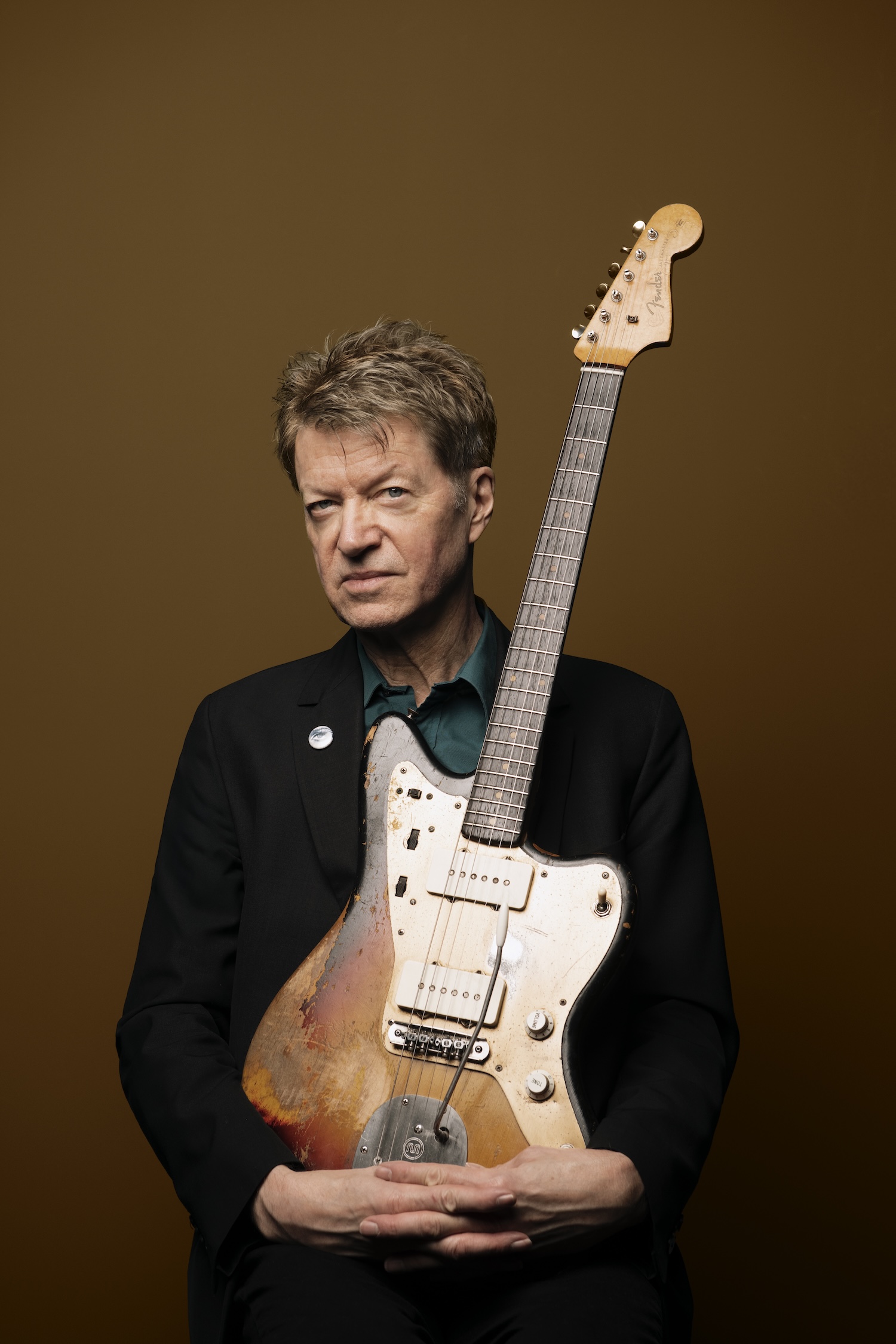
Nels Cline is a genre-defying guitarist widely celebrated as a longtime member of
seminal rock band Wilco, and for his expansive solo career spanning jazz, rock, and
experimental music. As a band leader he’s released three critically acclaimed albums
on Blue Note Records, from the lush orchestration of Lovers to the electrified
improvisations of Share the Wealth. His latest project Consentrik Quartet showcases his
deep roots in the avant-garde improvised-music scene, further cementing his reputation
as one of today’s most adventurous and versatile guitarists.