

 Apple Podcasts

 Spotify

 YouTube

 Amazon Music

 Castbox

 RSS Feed

 Overcast

 PocketCasts
Stephan Crump: Jazz Bass From an Open Hand

Stephan Crump, a bassist with two decades in Vijay Iyer’s trio, brings library research, rehearsal rigor, and a search for spiritual communion to ‘Passerine,’ his new quartet with Ches Smith, Kenny Warren, and David Leon.
This week we’re putting The Tonearm’s needle on bassist and composer Stephan Crump.
Stephan played in Vijay Iyer’s trio for twenty years and leads Rosetta Trio and Slow Water. His new album, Passerine, is out now. He wrote it after his older son left for college, inspired by how birds build their nests.
We talk about why he lets his band make some musical decisions, what Ches Smith plays instead of a drum kit, and why Crump is being compared to Dave Holland.
(The musical excerpts heard in the interview are “Glide,” “Scrapes,” and “Weavers” from Passerine)
Dig Deeper
• Visit Stephan Crump at stephancrump.com and follow on Instagram and Facebook
• Purchase Passerine from the Stephan Crump store, Bandcamp, or Qobuz and listen on your streaming platform of choice.
The Passerine Quartet:
• Ches Smith
• Kenny Warren
• David Leon
Slow Water:
• Stephan Crump, Slow Water
• Erica Gies, Water Always Wins
Coverage and Comparisons:
• Will Layman, review of Passerine, PopMatters
• Dave Holland Quartet, Conference of the Birds
From The Tonearm:
• Ches Smith & Shara Lunon: dismantling musical conventions
• Wadada Leo Smith’s Long Study of Light
(This transcript has been lightly edited for clarity.)
Lawrence Peryer: My understanding is that you were playing some of the music on the new record live before you recorded it. I'm a little curious about how the music changed throughout this lifespan of composition, performance, and recording. Could you tell me about that?
Stephan Crump: Thank you. You're talking about Passerine, the new album?
Lawrence Peryer: Yes.
Stephan Crump: So one of the most important things for me in composing for creative ensembles is to approach this in different ways with each composition, but at once create a distinctive enough environment that has a very strong DNA, that makes certain statements that I want to make through the piece, and at the same time, elicit creativity and flights of improvisation from the players.
But doing so in a manner that gives my collaborators maximum agency over the composition in different ways, not just telling people, "Okay, here's the head, then you blow here for eight bars, and then you do this." It's finding ways to give various players at different points responsibility for making choices that really impact the architecture of the piece.
It just makes the creative process more connected for everyone. It brings all of us deeper into the process of making the music. It makes people open themselves more deeply to the process. And so you have more of a potential for a spiritual communion, as opposed to just getting people's professionalism and technical expertise, which I think is pervasive in what is purported to be creative music. And so I'm trying to find ways to relinquish control as much as possible.
I've been on this path for quite a few years, coming from a controlling family and having issues of control personally. This has been my path as a human.
But also, in playing in other ensembles with leaders who can be dominating and overly controlling, and feeling what that does to me as a player, it's basically what I was just saying. It's like, "Okay, I can give you my professionalism. I can do the thing. I can take care of business, but I can see we're not going to get much deeper than that, and I'm not going to be lasting in this context very long, because it's not really making music."
So to get back to your question, the thing about pursuing that kind of openness, giving control to everyone as much as possible, is it does require some work. It does require practicing and having people learn the music and experiment live.
I might let Kenny Warren, the trumpet player, decide when he brings in the melody on a piece, or David Leon on alto flute and alto saxophone, same thing. There might be sections that are completely open, and people can decide what the tempo is going to be, what the harmonic motion is going to be, and then we find each other back in the tune. I often will have it notated, like, "The flute brings in the melody." That's just one small example.
But giving people choices requires practice. And for me as the leader, I also need to grow into that with the pieces. For me to relinquish the control, I need to get to the place where I know that everyone understands the piece. So it's not just whatever. I need to feel like we're all in it, and then I can really let go.
It's also a challenging thing as a bassist to lead a band, because you do have to relinquish control to a certain degree. There's only so much you can do once the piece is underway, as opposed to a pianist, who, just because of the function of the instrument, can dictate things if they need to. From the bass, there are some things that you can do in certain circumstances. But it's important to feel like everybody's really in the piece.
Lawrence Peryer: What's the most obvious thing you could do as the bass player? Is it tempo?
Stephan Crump: I was just thinking that. I was wondering that myself as I said it. Certainly tempo; you can adjust the tempo. You can change the root. You're establishing the foundation of the harmony, the feel. That kind of stuff. But unless you have the melody, which happens sometimes, you're not going to be able to bring in the melody. So if somebody's lost and they're not bringing it in, there's only so much you can do other than shout.
Lawrence Peryer: Right. One of the elements I wanted to ask you about was the experience of the other players. A lot of what you said there is about your aspiration for what the music could be and what your experience of it could be. There's even, obviously, a lot of personal development in what you're talking about. This all assumes that the other players want that experience as well, that they don't want to just show up as professionals and do the thing. Is it challenging finding the players that want that? Or in creative music, is that closer to a given?
Stephan Crump: Oh, it's not a given at all. It's paramount to choose the right people. You have to choose people who are willing to relinquish their defenses and really open themselves to one another. That's the kind of collaborator that I'm always looking for: real artists who are willing to make themselves vulnerable and be real.
Lawrence Peryer: How do you screen for that?
Stephan Crump: That's a good question. For one thing, it's a radar that I have, a sensitivity. I go hear people play, and I try to feel the nature of their presence in the music that's being made. So it's really about feeling people's presence. Am I hearing their humanity rather than their ego?
And if I'm feeling something that is going deep and being real, then I will, of course, interact with that person and get a sense of them as a person. And then if it's feeling right, go to the next step of getting together to play and seeing how things go.
Lawrence Peryer: It implies a lot of intention.
Stephan Crump: Yes. I've come to realize I feel very strongly about this stuff. I've been doing this for decades. I'm 54. I've played a lot of different music in different contexts, and I can do the professional thing when it's called for. But in the music that I'm wanting to make, certainly in my own groups but increasingly with other people, I'm looking for something that's more about ego dissolution and spiritual communion, something really deeper.
I feel strongly that a big part of what I have to offer the world in what I do is modeling that type of presence, that type of connection, that type of humanity and vulnerability and honesty. I take it seriously. It means a lot to me.
Lawrence Peryer: A lot of people don't encounter the notion that displaying and expressing vulnerability brings out a lot in other people. It gives them permission to show up that way. When you talk about the spiritual nature of this, when did that become part of your musical practice? Or did you grow up with a spiritual practice? To the extent you're comfortable talking about it, I'd love to hear you talk about that.
Stephan Crump: I grew up in Memphis, Tennessee, in the '70s and '80s, and there was a lot of live music still happening at that time. There was always great music spinning in my home. My dad was a jazz fanatic and had great records spinning all the time. And just feeling him, feeling what the music did for him and how he would need to move his body to the music. Whenever we would go out and hear live music, it was like magic to me. It connected me with something that was greater than just the day-to-day.
There was something transcendent about it right from the start, and I think it's always been there. I should add that, as great as that was in my household, there were a lot of problematic aspects of the home that I grew up in: a lot of violence, a lot of abuse.
Music came to be a haven for me. I feel like music saved me. When I left for college, I came up to the Northeast. I went to Amherst College and then moved to New York from there. In many ways, as much as there's a lot of love and so much that I appreciate about where I grew up and the environment, there's also a lot that I feel like I am a refugee from, in my own way.
So music, in that sense, has always been the safe space for me. The safe space is deeper and deeper within the music. And over the years, as I've come to grow as a player and composer and bandleader and collaborator, I've tried to expand that space for the people I'm collaborating with.
I try to make a special space that is unique to the spirits involved in it. And again, to be able to create that kind of rich environment and then model that sort of communion to audiences and share the experience with them, not just the surface level, the information level of the music, which is very important to me. All the levels and details of it are fascinating and very important. But to be able to share that deeper experience and reveal and remind people of our oneness, not just with one another, but with nature and with everything.
Lawrence Peryer: I appreciate that. There's a lot in there that I relate to as well. There was a certain volatility in my early life, but music was the constant and the refuge, all those words. Music was it.
You talk in the liner notes about your older son leaving for college. My oldest son is just about halfway through his senior year of college, and I'm constantly reflecting on dropping him off. It's shocking. Never mind the fact that it was just yesterday when he was running around Carroll Park in Brooklyn. The cliché that the days are long and the years are short is never more apt than when you're thinking about your children.
But what I'm curious about is that you talk about how people would ask you about your experience. You'd say, "I'm fine," and that you largely were fine, but that there was a deeper resonance or a deeper experience going on for you. What's in the language of music that you can express that "I'm fine" either glosses over or isn't enough of an articulation for?
Stephan Crump: So our older son, Maceo... We have two boys who are now 21 and 17. He's doing great, and he's a brilliant and amazing guy who has struggles with mental health issues, severe depression and anxiety. Starting in 2017, 2018, when he was in middle school, things really started to go off the rails and get dangerous, and then in 2019 it got so dangerous that we couldn't keep him safe at home.
It's one of those things where you're learning as you go. You're finding help in this direction, trying to place him here, place him there, get the help he needs, whatever it takes. We went through that for quite some time. So part of the point is that here he was heading off to college, and we had already faced his having to leave home before and gotten through that. We had all come a long way, although this is one of those things where everybody is always going to need to be on the lookout for each other.
But we were happy. The thing of "I'm okay" or "We're all good" is that he's doing great compared to where he's been. So we're happy that he's leaving. And I also recognize these life cycles are natural; it's the way things often should be, and it's all good. So my flip response to people was, "Yeah, we're all good," when they would ask me if we were having empty nest or half-empty nest syndrome.
But obviously there is a lot more emotion involved. We already did lose time with him at home when he had to be gone, and it's a big transition to go through, so there's a lot of emotion. But what I've learned is that when it comes time to express something through the music, instead of always just taking the emotion and going with it straight into the composition process, which can be risky... Sometimes that can work, but sometimes you wind up with something that's cloying.
I've learned that the emotion will find its own way, because I'm always connected with it. Also, because I'm interested in growing and challenging myself as an artist, I'm looking for ways to change up my process.
I learned a lot from my project before this, called Slow Water, where I was investigating wetlands and various bodies of water, including Puget Sound, actually. The first piece on there is called "Sound (Brackish)," and it's for Puget Sound. I was trying to honor a number of waterways that have been really impactful in my life and seeing how they're faring in this age of climate madness and pollution.
Along the way, I found all of this fascinating information, principally from a book by Erica Gies, a science journalist, called Water Always Wins. I went deep into this research, and I allowed the research to guide as many decisions as possible around how I put the music together, even what the instrumentation needed to be, and also how I guided the band through the music.
With Passerine, I did a similar thing conceptually. People were asking me about empty nest syndrome, and I thought, "Oh, nests." I love all kinds of critters, but certainly birds. And I thought, "I've never really investigated the different ways in which birds make their nests." So I went to the library and checked out a bunch of books and started researching this, and of course it's fascinating and quite varied.
I allowed that research to inform, again, as many decisions as possible around how I constructed and organized the music, trusting that going deep into something that was fascinating and real to me would guide me through the process in new ways. I would challenge myself and grow and find new musical constructions and textures, just knowing that the emotion would find its way on its own. And that's what happens.
Lawrence Peryer: Can you tell me about the difference between subtractive nests and additive nests, and how those notions may or may not manifest in the resulting music?
Stephan Crump: Those are two big categories of different approaches to nests. One of the short pieces on the album is called "Scrapes." Some shorebirds make scrape nests, which are basically indentations in the pebbles on the beach. And often their eggs are also camouflaged to look like the pebbles on the beaches where they nest. That's an example of a subtractive approach, or I think of it as sculptural. You think of your process as removing elements in order to reveal the piece.
Versus most nests that we think of, like an eagle's nest, which uses the technique of piling up. They take these huge branches and make nests that can be 12 feet across and weigh up to two tons. So that's additive.
Or there's a song called "Weavers" on the record that is inspired by the weaver birds. On the end of a long branch of a tree with spines on it, they take these long grasses and weave a pendulous nest at the end of the branch, and that keeps snakes and predators from getting to it. It's just incredible that they're doing this with a beak and two feet.
Lawrence Peryer: No thumbs.
Stephan Crump: Right? So that's another example of an additive approach, but with weaving. In that piece, I challenged myself. I got to some places that I'd never been, because I was really focused on trying to get this texture of weaving to happen in the piece among all four elements in the quartet. I love where we got with that.
Whereas the piece "Scrapes" is more conceptual. It starts with certain pitch sets that each of us has. Each person starts by making his own motif out of those pitch sets, and then little by little removes notes from it until the unified pitch set of the group together is revealed. So each member starts with their own group, but by the end, it whittles away into a pitch set that is each of us contributing one gesture to the whole.
Lawrence Peryer: I had Ches Smith on a couple of years ago. It sounds like you had him do some subtractiveness, in terms of no bass drum, no hi-hat. Am I drawing the right connection there? Was this a similar direction you gave him?
Stephan Crump: Totally. The concept with the drum kit came from the very start of this. I didn't want the group to feel super grounded. It's a couple of things. One, I wanted it to be a little bit off the ground and above, just generally speaking. Also, I'm really interested in a magnification of all the sounds within a group and the interaction of textures.
In particular, Kenny Warren's trumpet sound, which I just cannot get enough of. It's kaleidoscopically colorful and warm and textured, almost flute-like at times. And to have that paired with David Leon's alto flute sound, which is one step bigger than the regular flute that we're used to, and it's warmer, but it's also more vulnerable. So in order for those textures to really be present in the way that I wanted them, I needed to protect the space.
That's part of the concept with the drum kit. It's more of a percussion concept than a traditional drum kit. There's no hi-hat, no bass drum. There are two ride cymbals and a gong, but the drums, the snare and the toms, are all partly muted with little towels, and then Ches added metal implements, little bells and gongs, on each one. So we had these metallic ringing things that happen, sort of raspy. And if he needed to access the head, he could just move the towel over a little bit, so he had options.
And then with the snare, I wanted this to have its own sonic space, a unique sound to the band. So instead of having a regular snare sound, the snares were off on the snare drum, and instead Ches had this raspy metal thing leaning against the rim. It creates a snare effect, but it's a different sound, of a different character.
So it's about having a signature sound for this group that allows for a magnification of the interaction of the textures and colors of the very strong characters in the band. Fortunately, Ches is an incredible artist and super cool, a ready-to-try-things kind of guy. We met a couple of times ahead of our first rehearsals, and I talked to him about the concept, and he was totally down.
I went to his place, and we tried different things until we basically put this kit together. And then he made some adjustments. After the first couple of gigs, I checked in with him. I was like, "So how are you doing?" Because, you know, that's the other thing. It's another example of not overly controlling people. I come with the concept, but I trust him to implement it in the specific ways that make sense to him.
And then I checked in with him after the first couple of gigs to see, "How's it going? Are you feeling like this is working?" And I remember he said, "Yeah, it's working. I just need one other thing with my foot, just for phrasing." So he uses a bass drum pedal to hit another metal raspy thing that's mounted on a little stand. He just needed that to take certain grooves and phrasing to the next level.
Lawrence Peryer: That's great.
Stephan Crump: Just trusting people to make their own decisions: give the concept, give the guidance of where we need to be, but give people agency to help bring us there in a way that feels right and honest to them.
Lawrence Peryer: You sort of answered my next question, which was about the placement of the alto flute. When I was listening to you speak on it, something that occurred to me is that it's an interesting mixture. There's a compositional and arrangement choice, but there's also, for lack of a better way to say it, an engineering and mixing choice. It's the complete engineering of the sonic universe.
Stephan Crump: Let me tell you, I could never be a filmmaker, because there are all of these stages where it just seems like too many stages where things could go off the rails. There are already enough of them in making an album. You go from the concept, and you find the right people, and you make the space, as I was just explaining, for the right spiritual and sonic and textural presence.
And then you develop the chemistry in the band, and then you go to record it, and you've got to capture it right. And then it's like, "Holy, we captured all this amazing spirit, and the sounds are great." But then you still have to go through the mixing process and the mastering process and protect things. But you don't want to be playing defense the whole time, because things need to keep moving forward.
You want to magnify and amplify what you have, but without doing it too much, to where it's artificial. So you have to keep your eyes on the prize of maintaining that magnification of the textures and colors that you set out to present.
But when you get into a mixing process and you're collaborating with another person, like an engineer, and then the same with the mastering, you also want to let them do their thing to a certain degree so that it's a real collaboration. It's very important to me. I love collaborating. At every step of the way, I want to allow people to bring themselves to the thing. And yet there are times where it's like, "Okay, are we losing focus of what is so special and important about this group?"
It's a long path to go through. There were some definite moments of struggle and doubt in bringing it all the way home, but I'm super happy with what we captured and what was maintained in how we're presenting the music in the recording.
Lawrence Peryer: I think I grasp a bit about the role the research plays in the compositional approach, and even in the direction with the collaborators. I think I understand a bit about how you want to show up with your collaborators and the type of human you want to be when you're in these artistic contexts. But what does that actually mean? You're in a rehearsal room, or you're getting a mix back, or you're hearing the mastering, but ultimately somebody has to make a decision. You could be standing in a room of people, and they turn to you and look for direction. All that intention aside, how do you show up as the leader then?
Stephan Crump: Okay. Let me be clear that this is not about being mushy. It's the opposite. In order for me to feel able to relinquish the control that I think is required to allow people to bring more of themselves into the music, I need to feel confident that I have given them everything I can to be clear about what the concept is behind the project, and with each piece, what we're going after, and how I want the ensemble to function.
There are certain areas where this needs to happen. There are a lot of rigorous aspects to various scores, a lot of precision involved. And then there are also a lot of areas built in where people can do what they feel is right in that context. But I need to make sure that the context is clear. So there is a ton of rehearsal, a ton of shaping rhythms and phrases together.
If you listen to "Weavers," for example, all that weaving that I'm talking about is very precisely notated. It took a lot of work to get. But in the end, it just feels like a total flow. It feels totally natural. But it's very challenging to play every time, and it's taken a lot of work to get there. So there's nothing mushy about this process, and it's not anywhere close to whatever. It's very rigorous and specific.
Once you get the structures in place that are necessary for the piece to clarify, then you can feel confident in people's freedom and ability to contribute naturally, because the parameters are very clear.
Lawrence Peryer: There was a reviewer named Will Layman. He posited that it might be time to think of you as your era's Dave Holland.
Stephan Crump: That's very kind.
Lawrence Peryer: And Conference of the Birds was front of mind for him as he was listening to this record. That's heady. I'm curious how that lands for you.
Stephan Crump: My "we're okay" response to it is, "Well, I may be that, but where are the gigs?" Dave's got all the gigs, and well deservedly so. But more seriously, on the one hand, it's an honor, and I have a ton of respect for Will's perception of music and his ability to communicate it in writing. He also does videos where he talks about the music. He's a guy who really gets it, so I have a lot of respect.
At the same time, I understand that people's responses to the music are based on their own listening, their own history, their own experience, and it doesn't have a lot to do with me. I'm super grateful if people care to spend time with the music and develop these opinions, but that's not about me necessarily. So I have some clarity on the remove that's involved in that, and I'm not going to spin out on, "Oh, I'm the next Dave Holland."
In fact, it is interesting, in the sense that Dave is one of my greatest heroes. I have many heroes and many influences, both musical and beyond music, that come into the work that I do. But Dave was such a strong influence on me that by my early 20s, I came to this place where he epitomized everything that I felt a contemporary bassist needed to bring to the music. I actually deliberately stopped listening to him for many, many years, because I was like, "Okay, that seems like a dead end, and I need to take a break and find some other things to get inspired by, and also just keep working on developing my own voice more."
All that to say that he has been a great influence on me. It's an honor to have that reflection from Will. And I guess it's cool that he does see some relation. I don't think that we sound like each other, but Will is finding relation there, and I think that makes sense.
Lawrence Peryer: It's not exactly an insult.
Stephan Crump: No, it's not at all.
Lawrence Peryer: When you were speaking about influences in addition to music on you and your work: oftentimes when I speak to creative music artists, they use the word "research." Sometimes it's literal, like your research. Other times it's a bit more... I don't want to say mystical, because I don't know if it is to them, but they refer to themselves as researchers. After having a few hundred conversations here, I've come to accept that the word means different things.
I talked to Wadada Leo Smith a few weeks ago. He was telling me about the research and the study he has his collaborators do for this project specifically, or maybe more broadly, around light and color. And you talked earlier about going to the library and learning about birds and nesting in particular. I'm really curious about this notion of research. Is it primarily a way to access creativity? Is it a prompt? Can you unpack it a little bit for me, or help me understand the role of the research? What if you didn't do research? Would the well be dry?
Stephan Crump: As you said, research can mean different things to different people. I think it can mean different things at different times and for different projects. For me, the specific kind of research that I did for Passerine, and that I did for Slow Water before it, is actually being in books, taking notes, filling a notebook, and then going through that notebook. School.
Lawrence Peryer: Like traditional research.
Stephan Crump: Yes, right. And that's one thing. But part of the interest for me is that it's an ethos. It's a way of being in the world: trying to always be learning, always be growing, trying to become a better, more loving, more expansive human every day, and then bringing that into the way I interact with other people, and certainly the way I make music and interact with my bandmates and collaborators.
So the other type of research in that zone is the practice of being that person, of growing into that person each day. Obviously I don't always get it right, and I try to be reflective and learn from my mistakes. But then a lot of the extramusical influences for me are... I don't even need to use the word research, but I think it's equally important to be open and sensitized and feel things as I move through the world. Nature is extremely important to me, one of the most powerful influences in my life and my work.
But I also love to read. I read a lot of fiction, and poetry is important to me as well. Film has always been really inspiring to me. Another problem that I have with a lot of music that's being made is that there's a lot of music that's just about itself. It's about the surface level, the information level of the music: the notes and the chords and the rhythms and all the stuff that's the materials of the music. But it's not really getting at anything beyond itself. It's like, "Look how cool this is," or, "Look how fascinating this is," or, "Look how exciting or impressive this is."
That's a thing, and I think it's pervasive, but I'm looking for something beyond all of those materials and that surface-level stuff. Those are the materials that we're working with in order to get to something transcendent. It's important to allow everything that is meaningful to me, everything that I love, to inform the work at any given time. It's not just about the music. It's about everything else that's meaningful to me and real. And all of that, depending on the piece or the project, can come into play. So that's my answer.
Lawrence Peryer: I actually think that gently deposits us at where I wanted to end with you. In the liner notes, you talk about a kinship with listeners, and the line that I had written here was "creative people of good intent willing to open themselves to one another through music." I think that is the theme of what we've just spent the last hour talking about, and I'm curious what you hope listeners will open themselves up to when they listen to this.
Stephan Crump: I think so much of what we can create, and what art is actually about, is the nature of presence of the artist in the moment of creating. And at the same time, it's the nature of presence of the listener, whether it's a recorded work or a concert setting. There's a communion that's happening there, just as there needs to be this communion that I'm looking for within the ensemble, which also extends to the audience when we're playing live. As I wrote in those notes, it also extends to the listener at home. So I am hoping that the listener will allow for an immersive, open, vulnerable state of presence to really take in what we have offered.
Lawrence Peryer: Beautiful. Thank you so much.
Stephan Crump: Thank you, Lawrence. Thanks very much.
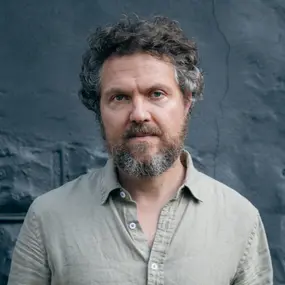
bassist / composer / educator / producer / dad
On a recent wintry afternoon in Manhattan, Stephan Crump was doing what he has done countless times in the city—toting his upright bass, clad in a heavy black bag, along the sidewalk, as if he had a baby that was also a bear.
Finding his car, Crump shimmied the instrument through the minivan’s side, climbed into the front seat, exhaled, and then grinned. In less than 24 hours, he would fly to Portland to teach “On Magnetism,” a long-accreting class on connecting more deeply with yourself and others through your instrument, and to play solo at the city’s jazz festival. But he knew he first needed to make the 40-minute trek from Brooklyn to Finlay + Gage, the legendary bass shop in Tribeca, to have his bass adjusted, so that he could make that connection himself. The sound post—that stout wooden dowel inside the bass that keeps it from collapsing on itself, and that the French call l’âme, or the soul—wasn’t sitting quite right.
“It’s so personal, elusive, and mysterious. Yes, it’s a mechanical thing, but it has so much mojo to it. That’s why it’s called ‘the soul,’” Crump explained several days later from Portland, noting that the hassle of the errand had been worth it. The bass felt good in his hands again. “It’s this combination of sound and feel.”
For a quarter-century now, pairing sound and feel have become Crump’s ambit and expertise. A Grammy-nominated bassist and composer, collaborator and bandleader, Crump has become one of New York’s most steadfast and experienced instrumentalists. He was the anchor of Vijay Iyer’s foundational trio for 2… Read More