

 Apple Podcasts
 Spotify
 YouTube
 Amazon Music
 Castbox
 RSS Feed
 Overcast
 PocketCasts
 Stephen Emmer: Composing at the Edge of Silence
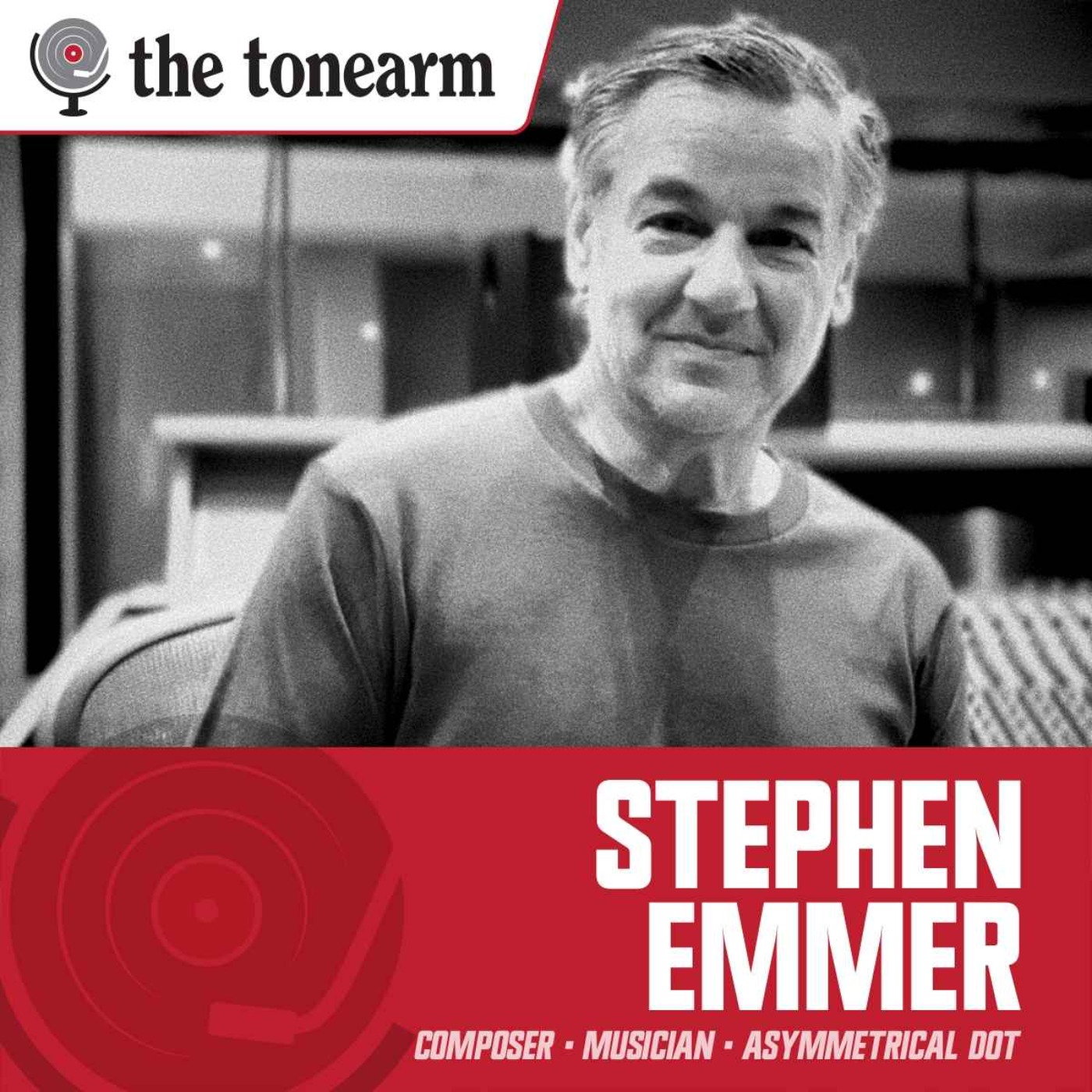
The Dutch composer joins Lawrence Peryer to discuss 'Asymmetrical Dot,' the album shaped by his mother's death, a grandson's birth, and four decades of learning which clichés to reject.
Today, The Tonearm’s needle lands on Dutch composer and musician Stephen Emmer.
Stephen Emmer came up in the late ’70s post-punk underground in Amsterdam. His band Minny Pops was the first international act signed to Factory Records. Since then he’s been a curious genre-explorer, working with Lou Reed, Chaka Khan, Tony Visconti, Trevor Horn, Flood, and many others.
His latest album, Asymmetrical Dot, is a chamber work rooted in his Dutch-Indonesian heritage, built around sustained tones, wordless vocals, vibraphone, and strings. The record came out of a year when his mother died and his first grandson was born—and the contracting themes of grief and arrival appear throughout the work.
We cover the album, his hearing loss, and why he walked away from commercial work to make the most personal music of his career.
(The musical excerpts heard in the interview are from Stephen Emmer’s Asymmetrical Dot)
Dig Deeper
• Visit Stephen Emmer at stephenemmer.com and follow him on Bluesky, Instagram, and YouTube
• Purchase Asymmetrical Dot on Bandcamp or Qobuz, or listen on your streaming platform of choice
• The two previous installments in the “introspective trilogy”: Maison Melody (2020) and Mt. Mundane (2024)
Key Collaborators:
• Tony Visconti — producer of Recitement; longtime producer of David Bowie
• Beth Hirsch — vocalist and co-writer on Asymmetrical Dot, Track 5; best known for her work on AIR’s Moon Safari
• Fernando Aponte — Grammy-winning mixing engineer, Houston
• Everton Nelson — concertmaster and violinist; has performed with the LSO, BBC Concert Orchestra, and on recordings for Radiohead, U2, and Paul McCartney
• Patricia Sullivan — mastering engineer at Bernie Grundman Mastering, Los Angeles
Recitement and Its Voices:
• Recitement — Emmer’s 2007 spoken-word album, produced by Tony Visconti
• Ken Nordine — voice-over artist and “Word Jazz” pioneer; voiced “Absolutely Grey” on Recitement
• Colors — Ken Nordine’s 1966 album, originally commissioned as radio spots for the Fuller Paint Company
• Lou Reed — rock musician and poet; voiced “Passengers” on Recitement
• Allen Ginsberg — Beat poet; voiced “Disconnected” on Recitement
• Richard Burton — Welsh actor; voiced “The Leaden Echo” and “Boy with a Cart” on Recitement
Musical Influences and References:
• Gamelan — traditional Indonesian percussion ensemble; central to the sonic concept of Asymmetrical Dot
• Dave Brubeck — American jazz pianist; one of the first musicians Emmer heard as a child, via his mother’s ballet teaching
• Heitor Villa-Lobos — Brazilian composer; among the diverse influences Emmer’s mother brought to her ballet classes
• Claude Debussy and Gamelan — referenced by Emmer as a historical predecessor in integrating gamelan into Western composition
Contextual References:
• Holiday on Ice — international touring ice show for which Emmer served as music director
• Motörhead — British heavy metal band; Emmer’s hearing damage traces to a backstage encounter with their sound system
• Charles Ives — American modernist composer who ran a successful insurance business alongside his musical career; referenced in the episode’s discussion of portfolio careers
• Ambon, Indonesia — island in the Maluku province of Indonesia, historically known as Amboina; birthplace of Emmer’s mother and inspiration for the album track “Amboina (for Roekie Aronds)”
(This transcript has been lightly edited for clarity.)
Lawrence Peryer: Talk to me a little bit about the relationship between purely commercial production work and your autonomous artistic side. I would imagine it's not quite as stark or binary as I'm presenting it—one is workmanlike—but I'm curious: do you pick up methods and ways of working that benefit you as an artist? And are there things about your more purely artistic life that help you on your commercial side? What's the dynamic between the two? Or are you completely different people?
Stephen Emmer: No, not at all. In fact, when I started doing the production work—this is in the eighties—there was total freedom with the broadcasters. They said, "You are the guy who is supposed to have knowledge of music, so do your stuff."
As the years went by, suddenly you didn't have to deal with the creative producers of the broadcasts anymore, but you had to deal with the marketers and the managers. They said, "We have a preference for the Rolling Stones, Stephen—how about doing a new theme tune, like 'Start Me Up'?"
And that's where I started to think: it's not as adventurous anymore as it used to be. To answer your first question—I see the Bowie poster there. I had the privilege of working with his producer, Tony Visconti.
Lawrence: Oh, that's right.
Stephen: And allow me to quote him in answering your first question. He said something I never thought of myself: "Stephen knows how to avoid the clichés best because he's learned all of them." And that's what I did. Production music is often laden with clichés. The news theme—horns, or in today's version, the Morse-code synth sound, like the BBC News—all kinds of clichés. And as soon as something is successful, I suppose like in the hit rate of mainstream pop, that's where the decision makers say, "We want more of the same."
I got rebellious against that and said: no more of the same—the arch enemy of artistry. So that's where I started to become independent.
Lawrence: It's funny that you use that example, because in another part of my life recently I had an interaction with a pretty established visual designer. When you're the client, you feel like you should have some opinion that's valued. But when you work with a creative person who is successful and confident about their aesthetic and point of view—I can laugh about it, because it doesn't really bother me. I love creative people—but to be told, as the person cutting the check, that your ideas are stupid. (laughter)
It's always quite the dynamic.
Stephen: It is. And, looking back on it as I've just explained, I can think: it's not only that discomfort—especially in the last couple of years being involved in production music—but there also comes a huge gratitude, because in the early days it was like a laboratory of musical adventures.
Nowadays it's not like that. In a way, there's an equivalent with mainstream pop. When you hear current pop music, it's quite different from Sgt. Pepper's Lonely Hearts Club Band and all that. It's a bit of an old man's point of view, but the music was a bit more adventurous at the time, here and there.
The same applied to making music for clients. Clients move with the times, and the sign of the times now is to be a bit more cautious, a bit more bland—playing it safe. There's a lot at stake. But what I did was learn an awful lot, which I would never have learned as an autonomous artist from day one.
Certainly not musically. For four years, I was music director for Holiday on Ice International, and I have to say: the skating has to take place in the right four-four beat, in the 115 BPM area, with a certain intro, a certain outro, and a certain break. All of that involves musical clichés, so to speak—very conventional music-making—and you have to learn it to lose it.
Later on. I recently saw a painting by Matisse—the painter from France, known to us all as more or less Impressionist, abstract—but I saw some anatomical studies of humans he made in his early days, which told me the man knew exactly what to do to create, and then tried to get rid of it to find new ways on his own terms.
And that's exactly what I've been experiencing, I guess.
Lawrence: That's very resonant when you think about whether it's improvising musicians who have to be so proficient in technique and then set it aside and transcend it, or filmmakers who go to film school to learn about lenses and color and then go do avant-garde angles and cutting and editing. It's basically: learn your tools and learn the fundamentals before you go try to be some kind of provocateur or avant-gardist.
Stephen: Rejection comes after insight.
Lawrence: One other thing before I move on from this, because it's so fascinating. I speak with so many artists who have what I would call a portfolio career—especially in this day and age, as the industry has changed—and there are just so many different aspects and ways to keep the lights on.
When you gave your Holiday on Ice example, something about that strikes me: if you were inclined to, you could go to one of those performances and see your work moving an arena full of people. That's not trivial.
Stephen: No, it's not. Especially when it's international touring.
So I had one opportunity where the show would also be performed in South Africa. The perception of music there is quite different from the one in Europe. I felt a bit intimidated by the prospect of whether I would be able to bridge the gap. When it seemed like I did—by resonating with that different type of audience over there—I was immensely gratified.
And obviously I see myself more as a laboratory-type composer, in my own environment—no audiences, nothing. So for me that was quite the opposite experience. I think it also taught me something more about creating music, because the timeline of a given piece, a composition—people who do a lot of live work seem to know more than theoretical types like myself about when an arc is broken or lasting too long for a live audience. Very experienced live players know more about that kind of psychological technique of composing and arranging.
Lawrence: It strikes me as almost the difference between the architect and the engineer, or the architect and the carpenter.
Stephen: It's very similar to that.
Lawrence: As you said earlier, we're here to talk a bit about Asymmetrical Dot. You've put out there what the arc is—the narrative around the inspiration for the album. I lost my mother over the last couple of years as well, and I'm at the age where people around me are losing their parents, if they haven't already—and it is a natural point for reflection. How did the development of that arc come about? Did you say, "I'm going to sit down and create a tribute to this person—someone who at the beginning of my life exposed me to so much diversity and is now no longer with us"? Could you unpack the journey to this record?
Stephen: Of course. It wasn't only her passing away—it was an accumulation. Her passing away, and a couple of months later a new birth in our family: namely, my grandson.
My mother already wasn't well at the time, with Alzheimer's. My biggest wish, instinctively, was for the two of them to meet while it was still possible. And so it happened—only once, and for only one hour. I was obviously part of the scene, but at the same time I felt like this artistic observer—the observer type of person—where I witnessed the scene and thought: this is the zenith of the human existential chain of movement. That might be translatable to art. I know music.
That was my starting point for the whole venture.
I thought it was a good theme. Trying to avoid overt sentimentality—from one came the other—while not wanting it to evolve in that direction, I suddenly decided it should also not be the type of tribute you create in an emotional mood, with the certain musical types known for representing that mood.
Lawrence: D minor? (laughter)
Stephen: Minor, but also a little soppy—with sweet-tooth strings at full blast in that direction. So I thought what I should do is bring in the eclecticism I learned from her, because she was a ballet teacher in her lifetime. As a boy, she exposed me to all kinds of music. At an early age, I heard Dave Brubeck, whereas my peers at the time were probably doing children's songs. I heard Jimi Hendrix when no one on national radio was playing it, and she used it for her dance teaching. Coltrane, Stravinsky, Villa-Lobos, Santana, Haitian Vodou percussion. She used Indonesian music—she's originally from there—and so she was the real eclectic, not me. I only carried it into my creative efforts.
(Note: Approximately 3.5 minutes of content is absent.)
Lawrence: You attribute her eclectic musical taste to—I mean, I think of Indonesia as being such a crossroads because of trade and the peoples who have come through, and there's a Yemeni influence, and it's an interesting place—but I don't know how that translates to the specifics of the individual. I'm wondering if you have a theory about that, or if she spoke about it.
Stephen: Not really, but for me it made sense with the knowledge I have developed about musical history. I thought the typical Indonesian cultural folk music is usually done with a couple of instruments known as the gamelan. Now, I am certainly not the first—or probably not the last—to try to integrate that. Debussy did so when he was exposed to it a century and a half ago. Hearing how he did that, I thought: yes, but I can try to see if I feel it more fully—not adapt it as a stranger in the field, but actually learn its system of composition through the dance routines my mother taught.
This is what I talked with her about, because—I learned—dance rhythm is not the same as music rhythm. I never understood why she would thump on the floor with a stick or cane in what I thought was not the beat. And she said, "Young boy, why are you tapping so arrhythmically?" And then she explained: "No—it's a different interpretation of rhythm." And I asked, "But how come you do that and some of the other ballet teachers don't?" She said, "That is because I think in the different rhythm of Indonesia, for example, and try to integrate it in jazz ballet."
So all of that together was a sort of jumble where, in my memory reservoir, I found an entrance to uncover it for this project.
Lawrence: It strikes me as—because you're Dutch, I feel comfortable being direct—it strikes me as incredible that you could not have wound up in any other field. (laughter)
Did you ever consider any other field?
Stephen: No, not really. But music has been with me since I was, I think, eleven or twelve. I wasn't aware of any musicality within myself at an early age. It was again her—saying, "What are you playing on the piano?" During a ballet teaching break, she had a grand piano in the classroom. During that break, I just started tickling the ivories, improvising. Then she came back from her coffee and said, "Do you know what you're playing?" And I said, "No idea. I'm just noodling." And she said, "No, you're not. That is Bach." I said, "What? Who's that?" "A classical composer from Germany."
That's where it all started, actually—that I started considering music. Well, if she says so, maybe I could do something with it. And then I got addicted to the muse myself, full blast, ever since. No, I couldn't have become a lawyer or anything else. I guess you're right.
Lawrence: It's fascinating that it was Bach you were playing, because I wonder—there are a few things going on there for me. One is: did you hear the melody somewhere, and it was in your brain? The sort of metaphysical piece for that composer, in terms of it being ingrained in Western musical DNA—it's almost the first of the species of Western composers.
I mean, clearly there were composers before, but you can talk to people in so many different musical realms and spheres who will say, "Oh, the greatest is Bach." That's fascinating.
Stephen: That still holds. I think the first option is the most likely one, because she used that type of music for her teachings as well—and I think I absorbed it subliminally. What was new, though, was that I apparently could reproduce it without any technique.
Weird in retrospect. That's where I got my musical awareness from—and it's never stopped since. When I look around me now, most of my contemporaries are either disillusioned with the music industry or tired and wanting to play golf or tennis. Whereas I am still right in it, working on two or three albums simultaneously at the moment.
Lawrence: And what do you attribute that to? What's the difference between you and them?
Stephen: I see it with my children as well. It took them a long while to make up their minds about what they wanted to do in life—up until their mid-twenties. I always knew. So for me, it's hard to imagine not having the focus laid out quite organically, which I'm grateful for. But I do realize others might not even have that at my current age, and I see some people who did try but gave up halfway.
Not that I consider myself a trooper, but I felt—as I said—it's the horse I know. I really would be a bad architect or surgeon. It's too late to switch. I might as well specialize in what I already know and try to become better at it.
My inner motive is probably more abstract than that. You don't stand up one morning and say to yourself, "I am in possession of the holy fire"—you don't say that in the bathroom mirror—but I now have to say it must be that.
Lawrence: There is a person—when I was much younger, when I was a kid—who was one of those musicians that could pick up anything and get a workable sound out of it. He could play guitar and piano, but you could hand him a saxophone or whatever and he could figure it out. Often I'd heard descriptions of Brian Jones of the Rolling Stones like that—that you could hand him anything and he could make a serviceable sound.
After college, this guy went into production music—and actually into commercials and jingles. And I remember saying to him, after not seeing him for a few years, "What is this about? It seems such a strange way to be applying what you can do." And he said, "There are only so many people who get to be pop stars or first-call session musicians—but what, am I going to not work in music? I'm not going to go sell insurance. So: I work in music. My life is music, and this is just a different way to do it."
And that conversation—some thirty-odd years ago—was very illuminating for me.
Stephen: Where is that person now?
Lawrence: He's still doing the same thing.
Stephen: Right?
Lawrence: Very workmanlike. He doesn't even, as far as I know, play in bands or record music. He has a very workmanlike relationship with music. It's fascinating.
Stephen: There is one person in American classical music—it's not Harry Partch, but it's the one who had two lives. One as a—what was it?
Lawrence: Ives?
Stephen: Yes. Charles Ives. Insurance. He was a top insurance agent, apparently. It's hysterical.
Well, I do have colleagues who prefer that. My closest assistant for twenty years—named Lawrence—was somebody who said, "I love music, I adore it, but I hate the music industry, so I'm going to quit." And I said, "But what are you going to do next?" He said, "I'd rather become a truck driver." He was a professor of music, actually.
And a sonologist. He is much happier now driving a truck, and in the evening hours making his weird experimental music. He says the pressure is off—no more trying to make it with his experiments. He's just making them. Full stop.
Lawrence: I can relate to that. When I was a kid, I played in bands and all that, and I was always very into "Let's go get gigs, let's go record." And then, as my twenties started to unfold, I realized I'm not very good and I don't have the real, single-minded commitment to this.
I always worked in music. The last group of people I played with—we played very self-indulgent, improvisational music—and it was the most fun I had because there were no stakes. We weren't trying to achieve anything; we just played.
Stephen: I wish I were like that. (laughter)
Lawrence: You've done all right.
When you take a record like Asymmetrical Dot and put it out into the world, you can have all of the intention and all of the narrative arc that you bring to it, but you can't really control how the listener receives it. Is it important to you that they understand the backstory or the context? It has to stand alone as music, obviously, as a listening experience. What's your relationship with that divorce between your entire concept and what you don't control about the listener's receipt of it?
Stephen: I feel a rigid concept is simply not communicable to the listener, so you have to allow freedom. I demand that for myself as a maker. So what I say today is: if they can mirror themselves in, or identify with, the gist of the matter, that's good enough for me. And the gist might be that they give it their own interpretation in their own lives. If they find a little angle or a little hook hidden in that musical proposal, then I think I've done well.
(Note: Approximately 2.5 minutes of content is absent.)
Lawrence: When you are scoring for film or television—doing production work—I would think that, to some extent, obviously there's the collaboration with other creatives, but there's something that functions as a brief, a prompt, or a direction. You mentioned earlier something like "We need something that sounds like this" or "that conveys this." I'm sure you've spent hours in those discussions.
Stephen: Hours and hours.
Lawrence: What replaces that? When you are working on your autonomous music, you are the director, the executor, and the implementer. I kind of go back to my initial question: is there anything from that commercial side of your life that was valuable in your more personal work—something that says, "I need a prompt, I need a direction"? Where does it come from when it's just you?
Stephen: With the first record I made—a spoken word set to music on an album called Recitement, with, among others, Lou Reed and Tony Visconti, who produced it in New York at the time—this was about eight or nine years ago. That was the fruit of my first effort to create autonomous music again, though at the time I was still doing production music. My one fear was that, by that point having made an awful lot of production music, I would have become merely a craftsman and would no longer have the inner inclination to express myself.
So it was a terrifying moment for me to sit at my piano with no assignment to give me a head start.
Indeed, the worst happened. Nothing came out of me, because when there's no assignment, no briefing, no prompt, you can do everything. You could make improvised music, symphonic music, sound design, or bluegrass—too many possibilities. So that's where I decided I would become my own prompter.
I didn't know what to do, and I thought: all your inner artistry is because of that craftsmanship within production music—what a terrible thing. And then suddenly I saw an old MC cassette on my studio desk with Richard Burton on it, reciting English poetry by Yeats.
And I thought, "I'll just play along and follow his voice—see what happens." That was my own personal assignment to myself.
And I started doing that, and suddenly heard—I mean, he is the Rolls-Royce of voices, I have to say. He starts, he stops, like Charlie Parker. His phrasing is like Sinatra: start, stop, delay, anticipate—on the rhythm. And instead of dominating him with a staccato rhythm, I, as the instrumentalist, started following him—hovering over all the musical subtleties hidden in his voice. And that's where I learned: this is my new personal assignment—to soundtrack human voices and emphasize how musical they truly are.
And that's how the whole first autonomous album came about—by simply finding my own mission instead of improvising from total blankness.
Lawrence: So another powerful thing you refer to there—that comes up a lot in my conversations—is the idea of artists needing constraint. When you have too many options, it's very hard to get started or to execute. If you eliminate possibility, that's not a diminishment—it's a focusing function.
Stephen: Indeed, well put. And if I may add to that—the routine of creation is also something I learned the hard way. The poet waits for moonlight to inspire him, but the video editor pushes the start button. I decided to become a hybrid of those two.
You just start. Don't wait for the moonlight. It's like you exercise the inspiration muscle—it will follow, it will obey, when you just start rather than wait for the moonlight. It's the difference between the two lights.
Lawrence: That's a fascinating concept. When you're composing for Recitement in particular—which has, for lack of a better way to say it, these iconic voices—you weren't just picking people off the street. You mentioned Burton and Lou Reed. Ginsberg, right?
Stephen: Ginsberg is on there.
Lawrence: Characters.
Stephen: Characters. Character voices. I learned—I mean, I asked my girlfriend to do one, and that was very sweet, but she's not a vocal artist. I thought there was less musicality in it—it was more straightforward reading. Like with method actors: they make you feel their character. And I think a good folk artist makes you hear a real character. That's why I started selecting only character voices.
Lawrence: It's funny—I don't know if this is relevant in any way whatsoever—but as you were saying that, I was thinking about times I've seen iconic voice actors, like Mel Blanc, people who do famous cartoon characters, and you see them in person voicing those characters' voices. It creates a very strange, almost somatic experience of hearing the voice coming out of a human as opposed to, you know, Bugs Bunny. (laughter)
Stephen: Of course. You're right. And one of the most wonderful voices on that Recitement album was the late Ken Nordine.
Lawrence: Ken Nordine has a great voice.
Stephen: A great voice. He was also in that situation where he had to do vocal work for money—creating commercials about paint colors for a paint company in the fifties—and that's where he made his Colors album, sponsored by that paint company.
One of those tracks I borrowed is an a cappella version of the color gray. I had the chance to talk to him about this, and he said, "Beware—if you use the same title, there will be confusion, Stephen." I said, "So you want me to give it a different title? 'The Gray Performance'?" He said, "Why not 'Absolutely Gray'?" And that's how the title came about.
Lawrence: Beautiful. Are there voices you would have liked to have included? I would love to see what you could do with William Burroughs—I find his voice so rhythmic. But are there voices you would love to set to music?
Stephen: Orson Welles.
Lawrence: That's a great one. The entire personality of Orson Welles comes through his voice.
Stephen: Indeed, that would have been great. I tried to do one other favorite of mine—the great Ernest Hemingway himself.
Lawrence: Oh wow.
Stephen: It was supposed to come on the album, except that the Hemingway estate—his daughter, the one remaining, is involved—gave the family's blessing; however, the publisher said no, so we couldn't do it.
Lawrence: Oh, that's fascinating—he was reading one of his own works?
Stephen: Yes. Fantastic. That was really good. But how about Laurence Olivier—the British actor? Not too many of that caliber are around, I have to say. I think I was very lucky with the selection that went through.
(Note: Approximately 2.5 minutes of content is absent.)
Lawrence: With a record like Asymmetrical Dot, given how personal the subject matter—or the inspiring subject matter—is, do you feel a vulnerability around that? What's your emotional girding around it?
Stephen: Yes, it is vulnerable. For example, regarding the grandson I also pay tribute to musically—his family being my daughter and her husband—they are a bit cautious about me using pictures to show him off on social media. So I respect that and won't do that. But talking about him in the podcast—I think I'm permitted to do that. It sounds a bit blasé, but I am rather used to it.
It's not pleasant that some of the reactions are not particularly kind.
There are always haters, especially in modern times online. "Why are you talking about your mother? She was a bad woman." All of that. That's a modernity I wish didn't exist.
It's without reason, logic, empathy—you name it. That's the only backdrop to all this, but I can manage it because it's very rare.
Lawrence: The thing that worries me about that—not for our own sake, because as individuals some of us can handle it and some of us can't; that's a personal resilience issue—but what troubles me is the artist who can't handle it and stops creating. That to me is the disaster.
Stephen: And I believe the truck driver I mentioned earlier also felt this—not only about his angry clients, or mine, or ours, but that some people simply don't feel comfortable exposing themselves publicly. They'd rather stay backstage, where they find fertile ground for their type of artistry.
I'm not like that. I'm no extrovert either—on stage I think I'm just one of the boring kind, head down, looking at my instrument. Nothing going on but the rent.
Very boring. However, because of the current album, Asymmetrical Dot, I was invited to do live performances of it as well—something I haven't done for twenty years. I'm currently considering it and have been talking with a few musicians, because I want it to be a very special type of performance—of the work, but also rearranged and transcribed versions of the previous album, Mt. Mundane, and the one before that, Maison Melody. I consider those three to be my introspective trilogy. Pretentious—but with these three, I think I can make a very nice selection of intimate music.
Lawrence: Beautiful.
Stephen: Sure.
Lawrence: When you told me earlier about that hour you spent with your mother and your grandson—and how you quickly came to see it through the lens of an artist—did you still feel you were able to be present as a son and a grandfather?
Stephen: Yes. This is where we all ought to follow mindfulness courses—about being in the moment. When you have the tendency to also take the helicopter view, the bird's-eye view, at the same time, it obviously lessens the focus in one department or the other, depending on where you focus. I do think I would rather have been there as a son and not as a composer.
Lawrence: I've had similar experiences where I've struggled to have both experiences, both points of view—and not wanting to give up one of them. In the moment, it felt important to have both.
Stephen: Unfortunately, I also had to obey the inspiration.
Lawrence: How, if at all, has hearing loss changed your relationship with sound, or how you think about sound?
Stephen: Quite drastically. The whole thing started with me being in a support act during a live performance of a heavy metal group, at the time called Motörhead. Being a support act for Motörhead—their crew found joy in our melodic, what we called "soft," music. The crew of Motörhead, at that time labeled the loudest band in the world, thought to play a little joke on me. I was playing keyboard in a soft, melodic ensemble. They said, "Give it a try," and there was no sound coming from the electronic piano—nod, nod, wink, wink. "Try once more," which I did. And then—bang—I had a huge blast in my left ear.
That same night I could still perform—didn't feel anything apart from feeling somewhat blasted—but no pain, no hearing loss, no tinnitus. But it crept up on me, and this is where I want to warn people: it doesn't always present itself overnight. People think, "Oh, I have to be careful—but I'm okay, so I'll head out to another performance next weekend." With me, it crept for almost twenty years, and then suddenly it got triggered by something minimal. That's where my problems started.
They got worse—after the tinnitus, it became hearing loss in my left ear. Ultimately, not so long ago, I suffered dizzy spells and vertigo. It is all connected: the balancing organ is very close to the inner ear. With all of that, I felt quite incapacitated to do basically anything—certainly not music-making—so I stopped for a couple of years, except that I found out I could do it at a lower volume and using different instruments.
I had to kick out everything with a noise-making character—electric guitar, drums, piercing synthesizers, loud brass, you name it. I thought, that's going to be a bit boring. But the wonderful thing was, Lawrence, that it brought me to a new way of creating. Out of the limitation of not being able to use anything I had in mind—no more Wagner, no more loud bebop saxophone snarls—all of that was out.
Out of that necessity, out of that limitation, grew my interest in milder instruments: woodwinds, soft strings, felt piano—the hushed piano—cup mutes on trumpets, to get a more velvety sound. That had not been a particularly well-developed part of my musical expertise, but through the sheer limitation of things, the acoustical shortcomings, I learned a whole new way of composing, arranging, and producing. And therefore the trilogy I mentioned—my last three albums—is without pulse: no beat-bashing, no harsh instruments. It's only mild, slow-tempo, atmospheric. That is just about all I can take, actually, as a listener.
Lawrence: So it's back to constraints. Rather than letting the constraint be the constraint—the constraint is the possibility.
Stephen: That's trying to create beauty out of misery.
Lawrence: Stephen, thank you.
Stephen: Wonderful conversation. Thank you very much.
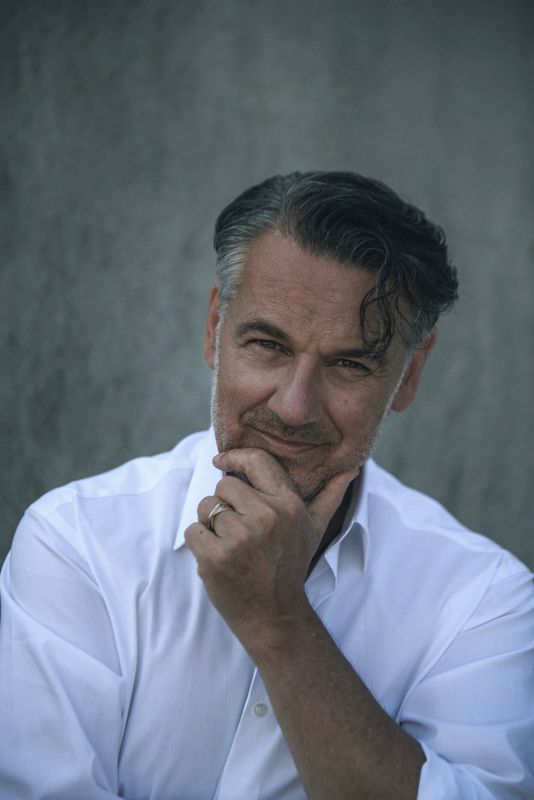
About Stephen Emmer
Stephen Emmer is an independent Dutch composer, arranger and artist hailing from Amsterdam in the Netherlands. He’s the son of former news anchorman Fred Emmer and ballet dancer and actress Roekie Aronds.
He has recorded for and written, performed and collaborated with a variety of great artists such as Lou Reed, Chaka Khan, Patti Austin, Leon Ware, Midge Ure, Julian Lennon, Glenn Gregory, Billy MacKenzie, Mary Griffin, Peter Coyle, Claudia Brucken and Martha Ladley to name but a few. On top of that he has worked with legendary producers like Tony Visconti, Flood, Trevor Horn, Steve Power, Martin Hannett, Nigel Gray and Bob Power.
In the 70’s he started writing avant-garde type music whilst playing in various bands, like Minny Pops, The Associates and The Lotus Eaters. He’s also known as a composer for media projects and became Holland’s first in-house composer for the Dutch public broadcasting organization NOS, next to creating musical work for art exhibitions, experimental film projects, show events, radio shows, documentaries and short feature films.
Next to being responsible for the ‘custom made award for best tv music’ for Promax BDA he was the judge-president for the official Dutch Music and Sounddesign Award and the main founder of the Buma Music In Motion conference.