


Stephen Vitiello: The Punk Attitude of Collaborative Sound Art
From teenage punk guitarist to internationally exhibited sound artist, Vitiello reflects on his World Trade Center residency, the influence of Nam June Paik and Fred Frith, and treating every element—from architecture to collaborators—with equal respect.


Today, we’re putting The Tonearm’s needle on Stephen Vitiello.
Stephen is an electronic musician and media artist. His sound installations are in the permanent collections of MoMA, the Whitney, and the Museum of Contemporary Art in Lyon. He’s worked with Pauline Oliveros, Ryuichi Sakamoto, and Joan Jonas. By day, he teaches Kinetic Imaging at Virginia Commonwealth University.
Stephen’s latest project is Trinity, a collaborative album with Lawrence English, who you heard on last week’s show. Each of Trinity’s five tracks brings in a different third musician: Brendan Canty from Fugazi, Chris Abrahams from The Necks, Marina Rosenfeld, Aki Onda, and the late Steve Roden. The album came out last November.
Stephen shares how this project came together, what it’s like to work with each of these artists, and how he’s built a career turning everyday sounds into sonic experiences.
(The musical excerpts heard in the interview are from Lawrence English & Stephen Vitiello’s album Trinity)
Dig Deeper
• Visit Stephen Vitiello at stephenvitiello.com and follow him on Soundcloud, Instagram, and Bandcamp
• Purchase Lawrence English & Stephen Vitiello’s Trinity from American Dreams, Bandcamp, or Qobuz and listen on your streaming platform of choice
• Previous collaborations: Acute Inbetweens (2011) and Fable (2014) with Lawrence English
• Stephen Vitiello & Brendan Canty: Second (with Hahn Rowe)
Trinity Collaborators:
• Lawrence English and Room40 Records
• Brendan Canty – drummer (Fugazi, The Messthetics)
• Chris Abrahams – pianist (The Necks)
• Marina Rosenfeld – turntablist and composer
• Aki Onda – electronic musician and sound artist
• Steve Roden – late sound artist and visual artist
World Trade Center Project:
• World Trade Center Artist Residency – Lower Manhattan Cultural Council
• World Trade Center Recordings: Winds After Hurricane Floyd (1999)
• Bright and Dusty Things – album featuring WTC recordings
• Stephen Vitiello: Listening With Intent – documentary by ABC-TV Australia
Educational Institution:
• VCU Kinetic Imaging – Virginia Commonwealth University
• Kinetic Imaging Graduate Program at VCU
Influences and Collaborators Mentioned:
• Nam June Paik – video art pioneer
• Pauline Oliveros – composer and accordionist
• Ryuichi Sakamoto – composer and musician
• Fred Frith – guitarist and composer
• Ikue Mori – drummer and electronic musician (DNA)
• Maryanne Amacher – sound artist and composer
• R. Murray Schafer – composer and writer on acoustic ecology
• Robin Rimbaud (Scanner) – electronic musician
• Colin Newman – Wire guitarist and vocalist
• Taylor Deupree – 12k Records founder
Key Venues and Institutions:
• The Kitchen – New York performance space
• Electronic Arts Intermix – video art distributor
• Anthology Film Archives – New York cinema
• MASS MoCA – Massachusetts Museum of Contemporary Art
• The High Line – New York elevated park
• Whitney Museum of American Art – 2002 Biennial
• Museum of Modern Art – Soundings exhibition (2013)
Punk and No Wave References:
• Fugazi – influential post-hardcore band
• DNA – no wave band
• The Clash
• No Wave movement – late 1970s NYC
Music Theory and Practice:
• Fluxus movement – experimental art movement
• John Cage and prepared piano
• Ambisonic audio – spatial sound format
• Dolby Atmos – immersive audio format
Articles and Interviews:
• Steve Roden and Stephen Vitiello conversation in Bomb magazine
• The Collaborative Recent History of Stephen Vitiello – Fluid Radio interview
(This transcript has been lightly edited for clarity.)
The Tonearm 292: Stephen Vitiello
Lawrence Peryer: I have a lot I wanted to speak with you about, but I would love to begin by asking you a few questions about Trinity, the latest project with Lawrence English.
Stephen Vitiello: Sure.
Lawrence: I wonder if you could tell me a little bit about the decision this time around to add a third collaborator to each of the tracks in that construct and how it came to be.
Stephen: I believe the credit goes to Lawrence on that one, but there's always that kind of trading back and forth of ideas and the buildup. We've done two albums in the past, usually spread out five years or so at a time. We had discussion to do something again, and how to do it differently, how to keep it fresh. Lawrence and I are both very active sound artists, composers, and very much constantly collaborating with people. In some ways for me, I grew up in New York, but moved to Virginia—now it's crazy—but twenty-one years ago. A lot of the way I stay engaged with the scene is through collaboration and long-distance collaboration, just because many of the people that I want to work with are elsewhere. It's even as a kind of way of staying in touch, even socially.
As we talked about different projects we were doing, I was working at that point with Brendan Canty on something that was leading up to an album and had done a couple projects with him. Lawrence and I were both very close to Steve Roden, who passed away, but we're both very engaged in his legacy. I had come across some unreleased material and thought maybe one of those pieces with Steve's wife's permission could be considered. In some back-and-forth, Lawrence said, "How about Chris from The Necks?" I got very excited because I'm such a fan. Marina Rosenfeld is somebody we both know. Aki Onda I know a little, but mostly is a closer colleague friend of Lawrence's. It just builds from these kinds of discussions and people we admire.
I once interviewed Ryuichi Sakamoto, who gave very spare answers, but when I asked him, "How do you choose who you collaborate with?" he said—I think this is very close to what he said—"I choose people who can do what I cannot do and who do it well."
Lawrence: Mm-hmm.
Stephen: Ideally, we're always looking for people who can bring new light rather than just—hopefully none of us really replicate each other. Our skill sets are very varied, and with the five people we ended up with, they're incredibly talented and have a lot to offer. With Steve, it was sort of after passing away, but again, it still felt like we were right there with him.
Lawrence: Yeah. That's a really illuminating quote and point of view that you share about that aspect of adding the skillset or bringing something to the table that's not duplicative necessarily. It helps me understand the collaborations a little more because there were a few I had pulled out I wanted to ask you about, and it's so much more clear to me now. I was going to ask you about Brendan's contribution because the drum work and just that piece—it really stood out to me on my first listen through the record.
Stephen: Yeah. Yeah.
Lawrence: I wonder, at the risk of sort of deconstructing process and getting too under the hood, could you tell me a little bit about that piece in particular, and how does, especially when you're working remotely—are you providing something for Brendan to respond to? Is he providing something to you? Can you take me through that?
Stephen: Yeah. That one was a little different because I was in the studio with him. We've done an EP, an extended piece, and then now an album together. In every case I go to him with tracks that are roughly in progress, and I always have more than we have time for because I'll book a studio near him outside of Washington, DC. I pay for the day of studio and the engineer, and I'll play him things and see. He'll kind of go maybe, "Oh, definitely that one."
When we were working on the album, I said, "I have this other track with this sound artist musician, Lawrence English. Would you think about playing on it?" He said, "Let me hear it." He said, "Great," and just started. I don't, especially with someone like him, I rarely give input because what I'm going to get back is so fantastic. I'm not someone who's going to dictate and say, "Oh no, I want—I don't know—make it all tribal or make it, no cymbals." I mean, it's just, I trust what comes to him. Or he might give me three options and say, "What do you like best?" and then we have a discussion.
Anyway, we were in the studio working on what became the album called Second, and I played him this other piece with Lawrence and he was into it. He's such a kind of thunderous drummer. I mean, it really is—to be in the room with him is almost overwhelming because there's so much energy and so much volume. I walked away happy. Lawrence took some liberties, I'll say, in mixing, in treating the drums very differently than we treated them in other tracks. But he sent it to Brendan and said, "Is this okay with you?" Brendan was happy. I think because what Lawrence and I did is so texture-based, there is needing to find a place and a way for the drums to work. Whereas in my other projects with Brendan, it's really clear—drums, drums, drums are very sharp. But here we're kind of warming the edges.
Lawrence: As it relates to Marina Rosenfeld, is what she brings to the table simply the fact that she's a turntablist, or is it something more profound than that about her approach, her musicality? What is the thing that she has that you didn't?
Stephen: Yeah. I mean, she's a great listener. She's got a real composer's and improviser's mind. I actually wasn't part of the discussion with her this time—it was all Lawrence. But I remember years ago asking her to play on something or maybe play with me, thinking she would just bring records of various types and create samples. At least at that time she said that she didn't do that. It wasn't like she was just going to pull out a Glenn Gould piano and a, you know, so-and-so drumbeat. It was like she would create unique material for that project, whether it was my sounds or her sounds. I don't actually know what the source was for the records there, but it was just a different listener. The way that the texture of vinyl that she kind of brings out that magic, I think you know it. It was Lawrence's suggestion and my agreement because I knew she would bring something cool.
That was one too where Lawrence and I built sort of a series of textures, and then there's this thought that the person will come in and play on top of it. But we realized, when she heard the mix, that we hadn't created enough space for her and she wanted some changes in the mix, which was really valid, to make room for her really—sonic room for her, compositional room.
My friend Robin, who's also called Scanner, and I made an album that's yet to be released and we shared it with Colin Newman from Wire and asked Colin to play guitar. But on the tracks was like six layers of guitar that I had done on every piece. There was just—he just heard no space for himself, so he ended up adding some synthesizers.
Lawrence: Mm-hmm.
Stephen: Looking back, I wish I'd eliminated four of my guitar tracks from what we shared with him because you need—if you're going to ask someone to contribute, you need to make sure they have room to speak.
Lawrence: I love having conversations around the nature and the actual manifestations of different forms of collaboration. It's an endlessly interesting well to plumb. What I hear you describing is a very thorough type of collaboration. I often talk with artists, especially in the instrumental or composer space, where they take elements or people make contributions, and oftentimes the contributor doesn't even hear what they've done until the work comes out. Yet it sounds like you're really involving your collaborators into the point of the mixed decisions and the treatments and the post-production. Can you tell me about why is that important?
Stephen: It's so important. It's something that in every project I do that involves collaboration—for one thing, collaboration has to be defined at the beginning so that you don't lose friends, so that you can keep relationships, people feel satisfied that their input was valued and heard. There's times where I make a project and I ask someone to contribute, but I make it clear I'm going to be making a lot of final decisions. There's other times it's the other way around. I create sound for, you know, or music for a filmmaker, and I know that the kind of ego is—it's a film. They're going to make final decisions. But it should always be clear from the beginning.
In something like this, we're not reaching out to session musicians. We're reaching out to musicians with really distinct—we're going to them because of their sound and their ability to listen. In order to respect that, we just need to make sure that they feel like they have space to contribute and that we're not going to manipulate them beyond recognition. We're not going to make choices with their material that they contributed that doesn't speak to what they would want to speak. There's a lot more to it, but I think that's—it's both, it's mainly respect and to treat them the way we would hope to be treated.
Lawrence: So given all of that, how do you deal with the responsibility of handling something like Steve Roden's contribution when he's not there to have that conversation? How do you keep yourself sort of—I guess honest would be the way to say it—consistent with what you just told me?
Stephen: Yeah, very carefully. I mean, the first thing was to check with Sari, Steve's widow, and say, "Is this okay?" I've been working really closely with her for the last three years on Steve's archive. We run into a lot of ethical decisions that we have to discuss all the time. Sometimes someone wants something from her and she says, "I don't know." I'm like, "Yeah, I wouldn't do it." Other times, yes, but within these parameters. Lawrence is also working to release a lot of Steve's work, so we're very conscious of him not being in the room.
I spent over about fifteen years, twenty years—Steve and I also did collaborate together. I watched how he worked and listened to how he worked. He experienced my process. We adapted to each other. I guess I would just say I had the sensitivity and awareness of the loss of his life. He had Alzheimer's before he passed away, and so even the kind of discussions I was having with him as he was ailing had to be very careful and not to ask for something that he might've said no to.
Yeah, I feel like I'm stumbling a little bit to say that we found a track that we thought had space and with permission of his family treated it with respect, but also because it was going to be a piece of music. I played with it in the way that I kind of imagined playing with him. Remember he and I did these gigs in France together and we were both using modular synthesizers, but neither of us really knew—it was really early—how to use them that well. Yeah. But we had this kind of friendship that he would be like whispering to me, "I forgot to bring an oscillator." I'd be like, "Well, just patch it to my case." We'd have our hands over each other. Or he'd be getting mad because he thought I was feeding back and I'd be like, "Steve, it's you. You know, you're the one feeding back."
So I felt like I could make decisions that I couldn't have made if somebody I knew less wasn't the person.
Lawrence: Yeah, there's a real ethical and moral overlay of what you're talking about here. Yeah. This is not just about aesthetics.
Stephen: No, not at all. I used to ask him to collaborate fairly often and sometimes he said no. Sometimes he said yes. He was very open when he was either interested in an idea or just felt like he needed to put time somewhere else. So in some ways I had to imagine what if he would've said no. We weren't changing his material except to add to it. I wouldn't slow his track down and mute it or mutate it into something that he wouldn't recognize. I guess that was also part of it.
Lawrence: It's really interesting to hear you talk about, in two different anecdotes, this idea of—I'll be inarticulate and awkward—of potential rejection from your collaborator. You mentioned how you present lots of ideas to Brendan and he can say no sometimes.
Stephen: Yeah.
Lawrence: And even observing you tell the story visually, which our listeners won't hear, you didn't—I didn't sense body language of like defensiveness or hurt.
Stephen: No. This is genuine. I feel so lucky when I'm in the room with Brendan. We've come to be kind of bandmates. But man, there's also part of me that just is like, "I am not worthy. I'm not worthy," in a Wayne's World way, and remembering going to see Fugazi and thinking, "That's the best rhythm section I've ever imagined." Then here I am playing with him. So I'm just happy if he finds something that he connects to. He also looks back to me for input.
Lawrence: It's interesting that I have to remind myself, because it was buried in my notes, that that lineage is part of your background. It's not obviously top of mind for the types of work we're discussing today, but how does one evolve from that scene to what you do now? What's that like?
Stephen: It's a long one. Steve and I once did this discussion in Bomb magazine because we both came out of punk rock, both born the same year, both came to it in the late seventies, early eighties, and then eventually into visual arts and sound arts. For me it was a long path of finding—having played in bands when I was a teenager, mostly because that was a thing to do, but not necessarily being very good at straight-up traditional guitar—but through discovery of avant-garde cinema and video, performance, art, dance, starting to see other ways of expressing oneself even with the same material, and through collaboration for me in particular, absorbing so much about how different people create their work and step by step by step, finding my own voice.
In the late nineties, I was mostly known as doing soundtracks for video art and performance. Some curators in France who were doing a museum exhibition said, "We're thinking to do a retrospective of your soundtracks unless you do installations." I was like, "Oh, I do installations," but I hadn't. But I was ready and I had done sound for enough installations that I felt I could now see what I had to offer uniquely and potentially step outside of just that part of a kind of collaborative relationship.
I know for Steve Roden also came out of a rejection of noise, but also a kind of brashness of the art world in the eighties. The bigger, the bolder, the more expensive it got, the quieter he felt like he wanted to go and to pull people in rather than blast them with the bigness of it all.
Lawrence: Are you able to identify the common strand if there is one? Like what would you call the punk element of what you do now? Is there a punk element to what you do now?
Stephen: There is a DIY nature. I'm not in any way properly trained. I don't, I feel like I can trust my intuition more than any kind of skillset. I think that comes from punk rock—playing guitar traditionally didn't work for me. Then somebody played me Fred Frith's Guitar Solos CD at the time. I had no idea that you could do this with that same instrument. It wasn't—you have to ideally be skilled to make anything worthy or interesting, but it didn't have to be the same skills that ninety-nine percent of the people who pick up a guitar think, "Well, you should be able to play these, you know, these runs really fast. Or Jimi Hendrix, Jimmy Page, or bust."
That you can be—yeah, Fred Frith can be so expressive. Or, you know, others too. Or Cage prepared piano, that there's other ways to play with tradition, you know, and kind of bust open traditions.
Lawrence: Yeah. I, I feel as a listener and as just as a student, if I can say it that way, I feel very lucky to have been exposed to—to me, the postgraduate studies in music was the no wave movement for me. That manifestation or that strand of the punk element moving into, colliding with the art world and the DIY as well as the lack of boundary recognition. That's just, that's sort of profound in my musical development. And I hear that a lot in what you're saying here.
Stephen: Yeah. I was briefly in a band with Ikue Mori, drummer of DNA, and it's just at the end when she was still playing full kit. The freedom, I mean, that band is so unique and so incredibly skilled, but without any of the classic kind of skills at all. Taking self-taught so far. She has the sounds that you know now, even just with electronics that is so distinctly her. It's a very long time.
Lawrence: Tell me a little bit, if you don't mind. I need the 101 introduction to kinetic imaging. I want to understand, as simply as possible, I suppose, that you can explain to a lay person, not only what it is, but what your academic involvement with that discipline—how does that inform or manifest in your work?
Stephen: So kinetic imaging, at least our department here at Virginia Commonwealth University, is a media arts department. For undergraduates, it's video animation, which is 2D and 3D, sound art, sound design, coding, and other emerging media. At the undergrad level, animation is kind of supreme for our undergrads, and we really treat it from fine arts point of view rather than character animation, rather than a mainstream Pixar kind of style. At the grad level, it's a studio-based program in which technology is a constant. But our grads also come in as sound artists and leave as video artists or come in as animators and leave as sound artists. They make installations, performances.
Before moving to Richmond for a faculty position, I worked at The Kitchen as a media archivist. I worked for the artist Nam June Paik. I worked at Electronic Arts Intermix, a video art distributor, and didn't really expect—I didn't imagine myself in academia. But a couple curators pushed me in the direction mostly for financial survival. When I got hired here in a tenure track position, I thought, "Wow, I don't know if I can do it, but if I can, I'll stay. And if I can't, I guess I'll..." And it clicked, and eventually now I've been chair for eight years.
It surprises me when I go around the country or go to other schools or meet people at conferences—it seems to me what we do is so contemporary. I see it reflected in any film festival, any Whitney Biennial, but a lot of schools are not where we have been for at least the last fifteen years. We tried to change the name to Kinetic Imaging and Sound Art, and the accrediting agency said they wouldn't let us change it, which was maddening because we treat sound equally.
The first chair of the department when it was founded was a video artist. The second was an animator, and now the third is me, the sound artist. Everybody who knows our department says part of what stands out is sound, whether it's sound on its own, whether it's the animation pieces have great soundtracks or the video works. All of the disciplines that we're working with, I think, inform each other. So anytime a student says to me, "But I don't want to do X," it will make you better at the other.
I was working for Nam June Paik. It was loosely—I wasn't a studio assistant, I was just someone in his orbit. He called me one night and said, "Fluxus and Korean dance festival starting tomorrow, and you should videotape every night for a month at Anthology Film Archives." I was like, "Nam June, I'm not a video artist and I make sound and music." He said, "Oh, this will make you better."
Lawrence: Yeah.
Stephen: And he was right. Exposure to Fluxus made me a better musician. Editing and shooting video made me better composer working with time, so I try to convey a version of that to my students too.
Lawrence: Yeah. There's something very personally resonant in that for me. My oldest son is in art school in San Francisco.
Stephen: Nice.
Lawrence: And he was studying animation and he just recently changed his major because he found the animation program too focused on some of the things that you said your program is not focused on. Basically to badly paraphrase him, he said, "I don't want to learn the types of animation I'm learning. I know how to draw my character. That's not..." He wasn't—it was very much too commercial, I think.
Stephen: Yeah. And it's, it's a tension, if I'm totally honest, between us and the students because they want that commercial skillset. We're not naysayers to it, but we're just trying to say animation can be so much more. If you look at people that you admire, a lot of them came from a much broader set of references. You know, yes, you could just do 3D animation and learn to do this thing that goes like this, you know, from here to here or has these colors, but you're going to be in much higher demand if you really understand all that the medium can be. Also, the conversations of that, the medium are going to be in that.
If you're creating video games, you should be able to—whether you create your own sound or just speak to a sound designer, a composer—you should understand what the medium is. You should know where these fields have come from so that you can take them where they want to go or where you want them to go.
Lawrence: I love to talk with artists who are also in an academic or teaching environments because I love to learn about how their interaction with students and being able to maybe experience their field through the students' sort of beginner mind—how that helps inform their own work and practice. I wonder if I could lay that proposition on you as well, if you have any thoughts on that.
Stephen: It does. There's an interview question when you go up for a teaching job and people want you to say, "Teaching will absolutely inspire me and I make good new work because I'm exposed to my students." It's kind of true, but it's also teaching is—it's very draining and it's going into the minds of the students sometimes, first and foremost. But I do feel I'm, I feel lucky to have the job I have, to have the students I have. There's times I get inspired, there's times I get drained. There's times when I'm teaching a grad seminar on Fluxus or history of sound art or video art where I feel actually fortunate to be able to say, "I have nothing to do on Friday but spend the day watching, listening, reading." I know that there is a benefit to that. I know sometimes it's a John Cage text that I've read fifty times, but going back to it is valuable.
Sometimes I think also what I like is our department is our own department, but we offer classes that often are open to students in others. So if I have a sculpture grad or if I have someone in a theory-based program, they do bring something to it where I have to say, "Wow. I never thought about it from that perspective." Took me a while to get there. But yeah, I think that's—I do think that's valid.
Lawrence: Yeah. Sculpture is something that comes up a lot when I talk with sound artists. It's either as metaphor or literally as how they think about what they're doing.
Stephen: Yeah. And I haven't had as many opportunities for installations recently, but a lot of the work that I feel most proud of is site-specific, multi-channel sculptural kinds of conversations with spaces, often unusual spaces, and the connections to sculpture are certainly there, whether it's physical material or the sound as material that can reshape the space, for example.
Lawrence: Have you—I'm sorry, I don't know the answer to this. Have you played much with the immersive audio formats in terms of your recorded output?
Stephen: I have a, yeah. In installation form, absolutely. Many, many projects. I haven't used—I mean, I went to this theatrical release of the final Stranger Things episodes the other day, and, you know, that's, so Dolby Atmos is the newest form, and I haven't worked with Atmos, but Ambisonic 5.1, 7.1, binaural...many, many spatial, but I just haven't done the—I haven't done anything in Atmos. But every time it's different and it really is about what the space is that I'm engaging with, what the content is. But it's a big part of one part of what I've done.
Lawrence: There was a quote from you that I wanted to ask you about, and it said that you're interested in the porous boundaries between a given sound and its distance from the source. The porous boundaries between a given sound and its distance from the source. What is that? So that it—it implies to me there's a zone.
Stephen: God, I'm trying to remember where I would've said it, and I almost feel like it was an editor making me sound smarter, but (laughter)—
Lawrence: Well, you have to own it now.
Stephen: Yeah. Yeah. I will. I will. I mean, the one thing that occurs to me is that when you listen to really hear sound in space, it's not just to hear the thing, but where it's coming from. There's these great listening exercises by the writer, composer, teacher, R. Murray Schafer, and he wants to—one he has someone sit and listen and just make note of everything they've heard. And another, as you build, there's ones where he says, you know, "Draw it. Draw where you heard that sound."
I feel like—I mean, I have headphones on, but I'm aware of a plane going by on my left side, kind of moving, and it's not just an airplane sound, but it's a sound filtered through the city, filtered from distance through time, space, material. Outside my window is a low brick building, higher brick building, and sound is bouncing off of all those surfaces, coming through thick glass windows to me. So it's not just like I hear a plane, but I hear a plane as processed by the city.
When I—I'm probably most well known for the residency in the World Trade Center and the recordings I did through the windows of the building from the height of the ninety-first floor. That was definitely when my ears started to really change and my thoughts started to change about not just what I was hearing, but each element of it and all the pieces together. The building, moving, becoming like a breathing body that was also hearing that plane or that boat or those people down on the ground or church bells or whatever it was. It's not just a—blue is blue. It's like blue through all of these filters.
Lawrence: What was the sort of conceptual framework or spark for that project? What was the artist attempting there?
Stephen: It was residency. I was part of this residency program organized by Lower Manhattan Cultural Council, and the idea was that the artist accepted into the residency would have about six months free studio space in the World Trade Center, but that it should be people who would take the location to heart. At the end of the residency, make work that could be experienced there, but ideally would take advantage of why here, why this, through this experience of this residency.
In some ways I was kind of copying—I had just read about a project by Maryanne Amacher from like from two decades past, I guess. But it was an article in The Wire that I think Jim O'Rourke maybe did an interview with her, but it was talking about where she had sounds of the New England fisheries always being brought in by wire, by phone lines into her studio so she could bring up her faders and have the fisheries as a sonic element to pull from at any given time.
So my thought was, "I'll be working on these music pieces. I'd like to be able to bring in the sound of the city at any given moment." And, you know, that idea of just the sound of the city now feels kind of—and I learned was sort of naive because it wasn't just, you know, it was always different. It was filtered by the building. It was a building with a really unusual physical structure, but also culture of how people came in, came out, who was there. We as artists were this other funny population. And what I found was that as I tried to integrate it into some of the things I was working on, like a dance score and some other things, that the sound itself was the most interesting thing.
So the more that I heard outside and through the building, the less I thought I should actually treat it. And I shouldn't add guitars or voices, that the sound itself was giving me more than anything else and that I shouldn't step on it. I mean, ever since then, I felt every time I do field recording, I have to question what is the content and how to best respect it.
Lawrence: Oh, wow.
Stephen: And is it just a, you know, sort of like our discussion about collaboration, like where does it fit? What is its role and is it speaking enough or do I feel licensed to change it. With the World Trade Center recordings, I really felt like there was nothing I could add to it that wouldn't detract from the best of what I had. A sculptor, Beverly Simms, came to my studio before the open studios and I said, "You know, I'm not a real artist. I have the sound, but I don't know how to make installations and I'm going to put up pictures and lights." She's just, "No, no, no, don't do that. You have something very pure and distinct in the microphones and the windows, the sound, and the experience that's different than one would have without your intervention. That's enough." It really helped me from kind of muddying the waters, I would say.
Lawrence: Wow. Wow. Have you been back to the site?
Stephen: Yeah, I've been back. I've never been up into the new tower. When 9/11 happened, my wife and baby daughter at the time were living on Canal, on the West Side Highway. So we were very close and we experienced the day, the cleanup, the, you know, emergency workers coming in and out.
But the work I made was so much—it was late fall 1999. It wasn't 9/11. It's changed because of what happened historically, but it's not—I feel like I can feel connection, but I also know that one is not the other. It's interesting to go down to where the memorial is now, and I definitely feel a lot, but it also—it's so crowded and such a tourist... It's so full of so many other people's perspectives and emotions that I probably have never stayed long. Not to discredit what they feel, it's just, I just kind of move on, I guess.
Lawrence: Yeah. Well, it's really interesting to me in that, you know, you talk about the characteristics of the previous buildings and just, you know, all the elements that go into making the sound. Yeah. I have a couple questions that emerged from that. One is to go back to what you were saying at the beginning of that discourse, which was, what was your naive sense of what the city sound was supposed to be? Was it just the din of humanity, or...
Stephen: I think it's just that it's going to be as if it's one theme. A very important arts patron in Australia once said he was going to send me into the outback to capture the sound of Australia. There's no way to capture, especially as a visitor—you capture a moment and a resonant moment if you come back with an experience that you can share. That's also a gift. But these things are so complex. The first sound I ever got through the contact mics in the World Trade Center were church bells. As far as I remember, I never got—I never heard those sounds again and I wasn't recording, but it influenced a later project I did.
Anything that I ever heard there was different than any other thing I ever heard there. Depending on environmental conditions, it just could be so vastly different, minute to minute, day to day, based on seasons, winds, real time events in the city and the harbor. It's just so full of life and variables that there's no one thing.
Lawrence: You seem to treat all of your inputs as collaborators. You speak respectfully about the environment, the architecture, the landscape, the sounds, the people. It's all collaborative.
Stephen: Yeah. That makes a lot of sense. It has—there's always an aspect of response which comes into collaborating with other musicians, whether it's improvising or so-called composing, site-specific installations. I mean, no one's ever said to me, "We have this strange tunnel. What do you want to do for it?" without me being able to go to that strange tunnel, feeling something, hearing something in my head and going, "Now I have a way to speak with it."
I don't think that that's so different than being on stage with Pauline Oliveros and being in a moment and knowing that whatever decisions we're making are based on being together and based on that day, that time. I could go back to that tunnel six months earlier if I could jump back in time and my ideas might be totally different, but just what I felt, what I experienced in that instance of a site visit or an onstage improvisational collaboration is unique if you're really paying attention.
Lawrence: As I was preparing for our time together, I was looking through a bunch of basically artist CV material and discographical material about you. There's a real prolific nature to your output. I'm curious, do you work on multiple projects in parallel, or do you have to be a linear thinker and—and I see you nodding your head. How do you manage those multiple work streams?
Stephen: I just do. I mean, even being a department chair in a university, most of my colleagues stopped making work and I absolutely would never allow myself to do that. But it is a kind of multitasking and part of it—because it's of the collaborative nature, there's a sending something out, waiting for something to come back or making something together. But one person or the other is doing a mix and waiting for it, to play it for the other or hear it from the other.
I just learned to be very economic with the time that I've got and to be really as focused as I can possibly be with whatever that one thing is. So I can be working on five projects, but when I'm in the two hours that I have on a Sunday to work on this music for a dance piece, that's where everything is. Then I step back and I go, "Oh, but I've got that compilation track with Taylor Dupree to work on," or whatever it is. And then it's just a zooming in, zooming out.
Some of the artists I've admired most, I've just watched their kind of focus. I think that's one of the things that allows me to be good, so-called good, and to please myself is when I've really given every bit of energy I had to a moment with whatever that project is. Then you put it aside, you come back to it. If it's really not working, decide whether you trash it or sometimes come back a month later or two months later. But focus is the biggest thing.
Lawrence: What types of projects appeal to you? What are you looking for next? Is there a mountain to climb? Is there an ambition?
Stephen: Yeah, I mean, there's always a rise and fall and if I want to be doing something, some other thing comes up. About fifteen, almost twenty years, installations were very front and center when those opportunities really diminished after—with the pandemic in particular. I would love for some of that to come back. But a lot of the curators and galleries I worked with have moved on. I've got—I had three albums come out between, which is, you know, crazy. But between June and the end of the year with all people that I love.
With Brendan and Hahn Rowe, we have gigs coming up. We've never played. We had two days of rehearsal at Brendan's, in Brendan's basement a couple weeks ago, and we've got a gig in New York next week and then in Barcelona in February. My wife heard the album and she doesn't listen to a lot of what I do and doesn't even always like what I do, but she said, "Wow, that sounds like the band that you always dreamed of." At that moment I was like, "But I don't know if we're a band, if it was just a project," but suddenly having gigs, it feels like it could be a band. And I would so love for that to continue beyond that. Yeah. Installations coming back. I've been working really carefully and closely with Steve Roden's archive and preservation and documentation. All of that is enough to sustain me for a while.
Lawrence: I don't know if it's necessarily advice, but I'm curious about the practice of maintaining your ears as listening devices, as tools. They're precious and they're integral to what you do. Have you had to develop practice around both listening, but the physical upkeep of your ears?
Stephen: Very separate from what I do in my sound art world, I've been playing fretless banjo and playing a fretless instrument. I really, really have to work to capture pitches. You know, moving your finger barely perceptibly is a big difference. And so I will say that that's been helping me. I find myself singing and I've never ever, ever—I'm a terrible singer, but when I sing at home while I'm washing the dishes, my pitches are way more correct than they ever were. And I think it's because of the fretless.
I don't know. There's definitely—there's no training other than consciously turning it on. I'm not—it's not like every, you know, it's like asking a photographer, "Are you always ready to take a picture?" I'm not always ready to do a field recording, but when I am ready because of a place, because of equipment, because of opportunity, I just go fully immersed into it and pay as much attention as possible in the moment of listening and recording and then going back and re-experiencing it.
I do think that the more I've—I think I've done it because it came naturally to me, but I also think that the more I've done it, the deeper I've gotten. I'm sixty-one, just by the biology of our bodies, my hearing is no doubt decreasing. When I was fifteen or sixteen, I was hearing The Clash live at the Palladium, pressed into the speakers that were blasting. (laughter) I'm sure I've done damage to myself, but just really carefully staying in tune with whatever I've got and the best at what I've got. It's always for the better.
Lawrence: At the risk of speaking for you, I'm going to say that that might have been a pretty decent trade off though. The Clash at the Palladium, pressed into the speakers. I'll give you—I'll lose a few months of high end for that.
Stephen: Oh my God. Yeah. Yeah, yeah, yeah. It was. It was pretty remarkable memory and a lot of others, but, and you know, now being in the studio with Brendan, I mean, he is a loud drummer, but I want to take in every moment because I know how lucky I am.
Trinity, collaborator
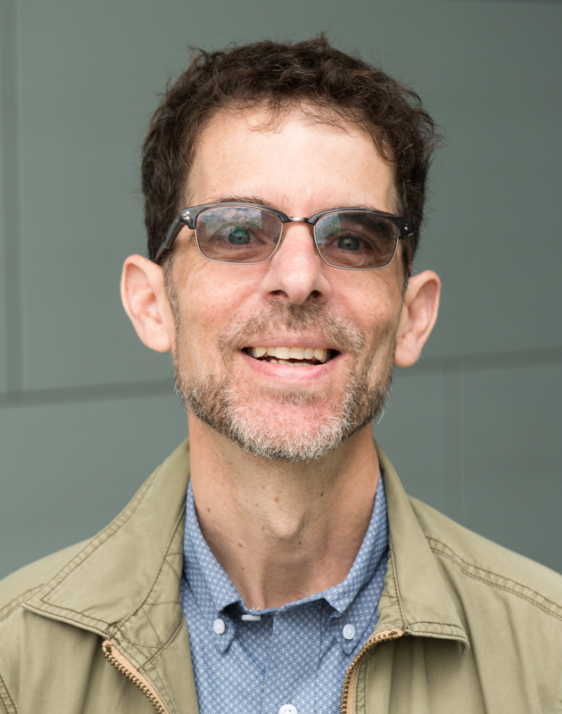
Stephen Vitiello is an electronic musician and media artist. His sound installations and multi-channel works are in the permanent collections of the Museum of Modern Art, the Whitney Museum and the Museum of Contemporary Art, Lyon. Recent exhibitions include a site-specific project for a space built in the 4th century in Poitiers, France as part of the exhibition, Traversées – Kimsooja.
CD and LP releases have been published by numerous labels, including New Albion, Sub Rosa, 12k, and Room 40. Over the last 25 years, Vitiello has collaborated with such artists and musicians as Pauline Oliveros, Ryuichi Sakamoto, Taylor Deupree, Joan Jonas, Tony Oursler, Dean Moss, Steve Roden and Jule Mehretu. Vitiello has been awarded a Guggenheim Fellowship for “Fine Arts,” a Creative Capital grant for “Emerging Fields” and an Alpert/Ucross Award for Music. Originally from New York, Vitiello is now based in Richmond, VA where he is a professor of Kinetic Imaging at Virginia Commonwealth University.